
Personal Info
Known For
Gender
Birthday
Place of Birth
Olesya Sudzilovskaya
Known for

KVN Major League
KVN is a Russian humour TV show and competition where teams compete by giving funny answers to questions and showing prepared sketches. The programme was first aired by the First Soviet Channel on November 8, 1961. Eleven years later, in 1972, when few programmes were being broadcast live, Soviet censors found the students' impromptu jokes offensive and anti-Soviet and banned KVN. The show was revived fourteen years later during the Perestroika era in 1986, with Alexander Maslyakov as its host. It is one of the longest-running TV programmes on Russian Television. It also has its own holiday on November 8, the birthday of the game, which KVN players celebrate every year since it was announced and widely celebrated for the first time in 2001.

Where's the Logic?
Humanity knows two types of logic: male and female. In the new TNT show, we do not push them together, but rather make them work for one common result. Star couples, partners on the set, just good friends and acquaintances will together try to build logical links between the most seemingly illogical events, objects or facts.
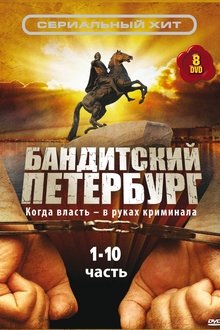
Gangster's Petersburg
A Russian detective series, based on 8 works of Andrei Konstantinov ("lawyer", "Justice / Attorney-2", "The Thief / Journalist-2", "Writer", "Inventor / Writer-2", "The prisoner "," Cop "," Scavenger ") and four works by other writers.
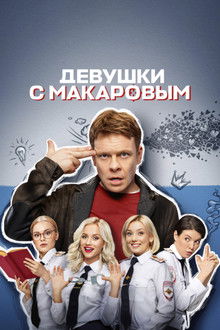
Makarov and The Girls
The head of the Criminal Investigation Department of the Butovo region, Makarov, is completely replaced by the personnel as a result of a conflict with the leadership. Instead of experienced male cops, four young students are singled out.
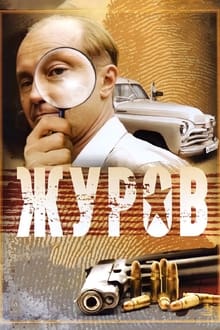
Zhurov
Ivan Ivanovich Zhurov — unlucky, but very experienced detective. He travels everywhere on his old "Pobeda", one brings up a daughter, loves to drink and has very troubled amur relations with his colleague. All this does not prevent him from masterfully disclosing the most complex and tangled loud criminal cases, for which, besides him, no one more risks to take.
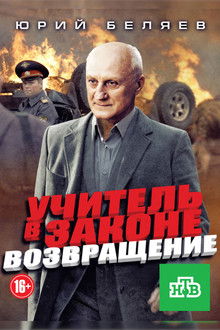
Учитель в законе. Возвращение
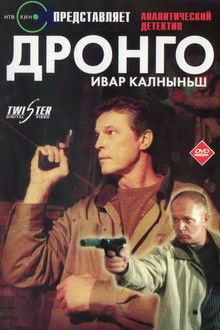
Drongo
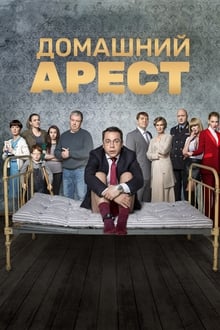
House Arrest
The current mayor of the city of Sineozyorsk, Arkadiy Anikeyev, is caught taking a bribe on an especially large scale, after which, by a court decision, he is placed under house arrest and must stay for a long time at his place of residence in a communal apartment. Arkadiy is abandoned by his wife, to whom all the property was recorded. Once in a communal apartment, Anikeyev runs into Ivan Samsonov, with whom they were neighbors in a communal apartment in childhood. Leaving aside disagreements, Anikeyev decides to help Samsonov become the new mayor of Sineozyorsk, so that he will help to remove all charges from him
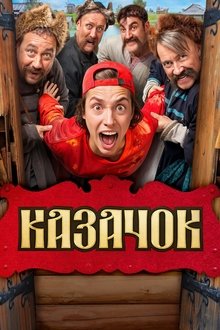
Cossack
The parents send the student Stepa to the village for summer holidays to his grandmother — as punishment. Here he is forced to abandon modern technological benefits and live by the rules of the village. Running away from local teenagers once again, Stepa tries to hide in a well, but falls into it. When he gets out, he realizes that he has found himself in a real Cossack village of the 17th century. At the most important historical moment of our country. By the will of fate, Stepa will learn a lot from her distant ancestors, find real friends and learn in practice the history lesson that was filled up at school.

The Frauds
Pavel and Natalya did not know each other, although they had been successfully working in the same field for a long time. They worked only with the richest clients and served them in the first place. Both were top class frauds. And while their paths did not cross, they lived quite happily. But everything changed when their next clients turned out to be husband and wife, and the unlucky thief Marina took away the million at stake right from under the noses of the professionals, without realizing what she had gotten herself into.

Pushkin's Fairy Tales. For Adults
In each episode, the action of Pushkin's fairy tales is transferred to our reality. The familiar Pushkin images will become even clearer: The Princess will turn out to be an instablogger, Elisha will be a rapper, and the Golden Cockerel will be a neural network.

An Imperfect Woman
Lyubanya, a hairdresser who has lost her job, and her eleven-year-old son find themselves in a difficult situation. She tries to borrow money from his girlfriend Simkina. She agrees to help, but only on the condition that Lyubanya will help her regain the man she loved, a certain Valeriy. Lyubanya must "accidentally" get acquainted with him and pretend to be his ideal, and when he falls in love with the "woman of his dreams" — leave him. Then Simkina will appear to "glue" Valeriy's broken heart, and at the same time their broken relationship. Out of desperation, Lyubanya joins in this game, but very quickly realizes that she has fallen in love. The heroine faces the question: how to tell Valeriy the truth about himself and their "casual" acquaintance?

Filatov
Dr. Filatov, a first—class gynecologist, a favorite of women, but at the same time a faithful family man, is suddenly abandoned by his wife. Trying to fill the void created by her departure, Filatov begins to look for a new love. But the more he gets to know the woman, the more he realizes that his wife is absolutely perfect and she must be returned at all costs.