Personal Info
Known For
Gender
Birthday
Place of Birth
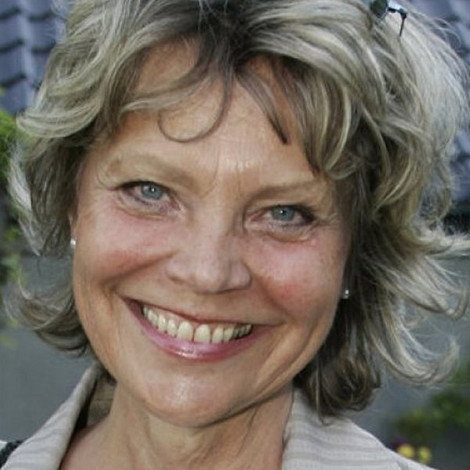
Helle Merete Sørensen
Known for

The House at Christianshavn
The series follows the residents of an apartment building on Copenhagen's Christianshavn, as they go about their daily lives and challenges. There is Olsen, a mover with an old fashion view of the world, Clausen who runs the local pet shop, Egon the career focused assistant, their wives who work hard to keep their spouses lives together, the young couple Tue and Rikke who recently moved in, the hard working caretaker Meyer, who never puts in to much effort, and of course Emma, the innkeeper of Rottehullet, where all the important decisions are made while running up the bar tab. The series was produced by Nordisk Film for Danmarks Radio TV station between the years 1970-77. The series' first director was Ebbe Langberg, then Erik Balling and Tom Hedegaard respectively. The series was conceived by an author team of well-known Danish authors such Leif Panduro, Benny Andersen, and Lise Nørgaard.

Taxa
TAXA is a Danish television drama made by Danmarks Radio with 56 episodes, written by Stig Thorsboe and produced by Rumble Hammerich. The series revolves around a small taxi central, CrownTaxi, in Copenhagen. The series was a success from the start, 14 September 1997 on DR1. The series was broadcast during the period 1997-1999 for a total of five series. CrownTaxi has its ups and downs and in the course of the series, following the various drivers, radio opertor Lizzie and boss Verner Boye-Larsen. They have all their problems both with clients and family life and constantly threaten the show's villain Hermann from the competing taxi firm, City Car, which wants to take over the CrownTaxi. TAXA was also screened in Sweden on SVT1.

Park Road

Bryggeren
A story about Carlsberg founder JC Jacobsen, his son Carl, and their struggle to create a brewing company, and simultaneously a look at fifty years of Danish history.

Nikolaj and Julie
Copenhagen thirtysomethings Nikolaj and Julie struggle with marriage, baby and work, plus friends of varying maturity.

Strisser på Samsø
Strisser på Samsø is a Danish television series in 12 episodes, written and directed by Eddie Thomas Petersen. Produced by Per Holst Filmproduktion, it was first broadcast on TV2 in 1997-1998. The story tells how Christian Torp, a police officer who has lost his wife in an unsuccessful robbery, brings his daughter Sille to the Danish island of Samsø looking for peace and quiet. They have difficulty in integrating into a society full of problems where everyone knows everything about everybody, but they find a friend in Ulla, a secretary. Among others, it stars Lars Bom, Amalie Dollerup and Jesper Milsted. The series was entitled "Island Cop" when broadcast in subtitled form on Ireland's TG4 channel.

Anthonsen

A Town in the Province
In 1970s Denmark, the criminal police in a provincial town solve different criminal cases, when the police was dominated by men and DNA was not yet a tool in investigation.

Boy
18-year old Christian has just graduated from high school. At his summer job he is seduced by the 36-year old single mother Sanne. Soon he is drawn into a world of sensuality and his acquaintance with Sanne turns into an intense love affair which forces Christian to deal with his newly discovered sides.

The Blessing
Overwhelmed and extra-sensitive, Katrine has a hard time coping when her more relaxed boyfriend, Andreas, takes a business trip just days after the birth of their first child. The fussy baby has difficulty breastfeeding, and vulnerable, insecure Katrine feels like a failure. When Katrine’s emotionally withholding mother Lise consents to stay for a few days, the two quickly fall into what are clearly familiar dysfunctional behavior patterns.

Shower of Gold
Four Danish kids find a cookie jar filled with cash while playing in the woods. They decide to keep the money, at least until a reward is offered. But the crooks want "their" money back and will do whatever necessary to accomplish this.

Skilsmissebilleder
Two couples are each heading for divorce. The academics Lene and Lars after less than two years of marriage, while working class Lone and Peter are to split after 12 years. How did it come to this? Switching between the two marriages, their stories are being uncovered from social, psychological, political and sexual perspectives. Does it come to a verdict on marriage as an institution?

Guldregn

Krigsdøtre
