
Personal Info
Known For
Gender
Birthday
Place of Birth
Paulo Hesse
Known for

O Machão

Desejos de Mulher
Andréa and Júlia are two estranged sisters. Until one of their lives changes when she discovers she is adopted and that her biological sister is living with her.

Tropical Paradise
The search for a successor provokes the beginning of a clash between two young and talented executives of his group: Daniel Bastos, a lad of simple origins and excellent character, who is not only handsome and charming, but also intelligent and skilled, and Olavo Novaes, an ambitious and unscrupulous man who is ready to fight for the position, at any cost. To fight against Olavo‘s treacherous plans, Daniel will have the help of the sweet and sensitive Paula, a young lady raised as an only child who founds, on the eve of her mother‘s death, that she is adopted and has a family. What Paula does not know is that she has an identical twin sister, the wicked Taís, who is as ambitious and unscrupulous as the man who becomes her main ally, Olavo Novaes. Antenor, for his part, decides on having an heir when he meets the headstrong and honest Lúcia, a woman who will make this cold businessman find true love is and a real reason to live.
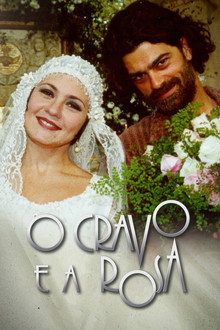
The Thorn and the Rose
A spoiled feminist, daughter of a rich father, even though she doesn't admit it, falls in love with a rustic farmer whom she marries.
Telerromance
O Velho, o Menino e o Burro

Meus Filhos, Minha Vida

Éramos Seis
Éramos Seis is a Brazilian period drama telenovela produced by SBT and originally broadcast from May 9 to December 5, 1994. Based on the 1943 novel of the same name by Maria José Dupré, it was adapted by Sílvio de Abreu and Rubens Ewald Filho, with direction by Henrique Martins and Del Rangel and general direction by Nilton Travesso. The telenovela stars Irene Ravache, Othon Bastos, Jandir Ferrari, Tarcísio Filho, Luciana Braga, and Leonardo Brício. Set in São Paulo between the 1920s and 1940s, the story follows Dona Lola, a devoted wife and mother who struggles to keep her family together despite financial hardship and personal tragedy. As her four children—Carlos, Alfredo, Isabel, and Julinho—grow into adulthood, each follows a different path shaped by love, ambition, and loss. Through decades of sacrifice and resilience, Lola witnesses the joys and sorrows of family life while enduring profound changes that ultimately leave her to reflect on a lifetime of devotion.

Razão de Viver

Salário Mínimo
Gaivotas
O Sheik de Ipanema

Água na Boca
After a period of study in Europe, Danielle arrives in Bento Gonçalves, Rio Grande do Sul, to teach gastronomy classes. Among her students is the clumsy Luca. As sour as a lemon, the young woman quickly clashes with the sweet-as-honey boy – so sweet it's almost cloying. Days later, the two attend the grape harvest festival. And the attraction, disguised as animosity – amidst the flour fight and pie-in-the-face – blossoms into romance. What Dani doesn't realize is that Luca is a descendant of the Bellini family, an Italian family who established the Mamma Mia Pizzeria in the same alley where the Cassoulet family, the young woman's clan, opened the Bistro Paris. The matriarchs Maria and Françoise were inseparable friends in childhood, but a love rivalry turned them into enemies, making their restaurants the stage for this amusing rivalry.
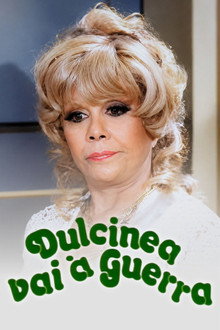
Dulcinéa Vai à Guerra
With new debts, the comedic Dulcinéa is struggling to save her theater once again when she meets the street children Caco, Minga, Cristina, Márcia, and Mico and gets the idea to put on a children's show to turn things around, but taming the little rascals is an arduous task. The new owner of the building, the Count of Castelnuovo, can't wait for the theater to close to build a commercial building, plotting to ruin Dulcinéa's plans and counting on the help of social worker Helena to get rid of the children. The Count also prevents his daughter, Jerusa, from dating the humble Thales because he wants her to marry the wealthy old man Camilo Batateira, putting the housekeeper Murcia to watch over her. There's also the romance between Carolina and Marcelo, thwarted by the wicked Ludmila, and the comical messes created by Lucrécia to prevent her son Mateus from marrying Mariana and leaving home.
