Personal Info
Known For
Gender
Birthday
Place of Birth
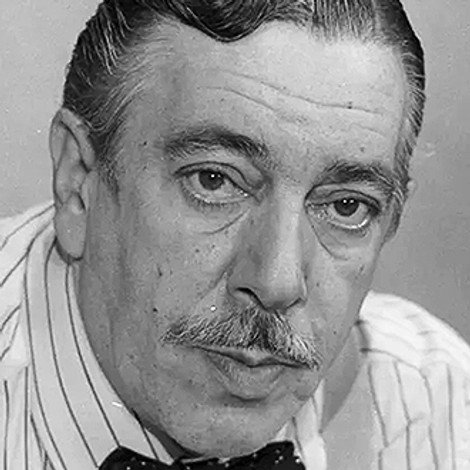
José Lewgoy
Biography
Known for

The Trapalhões
Os Trapalhões was a Brazilian comedy group and also a Brazilian television series created by Wilton Franco. Its members were Dedé Santana, Zacarias, Mussum and their leader Didi Mocó, that was played by Renato Aragão. The name Trapalhões is derived from the Portuguese verb atrapalhar, which means the opposite of helping, to do something the wrong way or to Those that confuse. The name is translated "Tramps" in English DVD subtitles. It was aired by Rede Globo from 1977 to 1999. On March 18, 1990, Zacarias died due to respiratory failure, but the group and the series didn't come to an end until July 29, 1994, when Mussum died due to an unsuccessful heart transplant.

Força de um Desejo
Set in the 19th century, the novel tells the story of an impossible romance. Inácio, a young man from a traditional family, falls in love with Esther, the owner of the most famous brothel in the Court.

Dancin' Days
A down-on-her-luck former inmate tries to reconnect with her daughter--to the objections of her sister who raised the girl, meets a millionaire, and transforms into a strong woman, returning to society at Dancin' Days nightclub's opening.

Tieta
Inspired on Jorge Amado's romance "Tieta do Agreste", the plot is set on the fictional city of Santana do Agreste, at Brazil's northwest, and has as main theme Tieta's life turnarounds. Twenty-five years after being chased out of town by her father Zé Esteves, she returns to her home town seeking revenge against everyone who mistreated her and laugh at her face in the past.

Hilda Hurricane
After breaking off her engagement on her wedding day and going directly to a prostitution house, a young model becomes the city's most famous harlot, known as "Hilda Hurricane", in the 50's Brazil. She could do fine if it wasn't for Malthus, a young novice said to be a saint, for whom she falls in love. However, the boy is kept under the strict, severe doctrine of Father Nelson, a conservative priest intolerant even to every minor sin. Things start getting harder when Roberto, Malthus' old friend and a communist reporter (the actual author of the story), tries to interview Hilda and disclosure the real reasons behind her radical change of mind. In the meantime, the middle-classes are terrified by the "leftist threat" in Brazilian politics.

Telerromance

Plumas & Paetês
After an accident, Marcela arrives in São Paulo and decides to assume a new identity. Torn between love, she plunges into a world that is not her own.

Mad Love
The young and rich Patricia, daughter of Ambassador André Dumont's first marriage, is in love with and reciprocated by Luiz Carlos, a poor boy, son of the family's maid, Isolda. Whoever doesn't like to see her with the maid's son is her stepmother, Renata Dumont, André's wife. Renata is an ambitious woman who hides her humble origins and a secret from the past that unites her with Isolda. Career, she married the diplomat André, from a traditional family, with whom she had a son, Lipe.
As Divinas… e Maravilhosas

Perigosas Peruas
Childhood friends Cidinha and Leda follow opposite paths, but envy the life the other has chosen. Belo's love and custody of their daughter lead them into a competition.

Anjo Mau
A poor young woman, unhappy with her inevitable destiny as a suburban housewife, gets a job as a nanny for a wealthy family and falls in love with her employer's brother, using every trick to win him over and ultimately become the lady of the mansion. .

Brava Gente
Brava Gente was a television series aired by TV Globo in Brazil between 2000 and 2003, initially as a special year-end. The program was adapted from stories and national stories, and plays by famous playwrights, screenwriters and signed by a number represented by several actors and actresses. The genres of the stories varied each week with the style of each director or author. Brava Gente in the stories ranged from comedies and dramas. In all 53 episodes were shown, broadcast on Tuesday nights.

Água Viva
Nelson, a fishing champion, and his brother Miguel, a renowned plastic surgeon, compete for the love of Lígia, an ambitious woman who seeks to climb the social ladder by any means necessary.

Cavalo de Aço

O Outro
Despite a striking physical resemblance, Paulo and Denizard live completely opposite lives in Copacabana. After an accident, their lives and those of their families take different paths.