Personal Info
Known For
Gender
Birthday
Place of Birth
Adoniran Barbosa
Known for

The Trapalhões
Os Trapalhões was a Brazilian comedy group and also a Brazilian television series created by Wilton Franco. Its members were Dedé Santana, Zacarias, Mussum and their leader Didi Mocó, that was played by Renato Aragão. The name Trapalhões is derived from the Portuguese verb atrapalhar, which means the opposite of helping, to do something the wrong way or to Those that confuse. The name is translated "Tramps" in English DVD subtitles. It was aired by Rede Globo from 1977 to 1999. On March 18, 1990, Zacarias died due to respiratory failure, but the group and the series didn't come to an end until July 29, 1994, when Mussum died due to an unsuccessful heart transplant.

Secrets of Sand
Twin sisters with contrasting personalities, Ruth and Raquel, rival in the fictional Pontal D'Areia, on the coast of Rio de Janeiro.
Os Inocentes
Xeque-Mate
Tilim
Ovelha Negra
Ceará contra 007
Bruma Seca
An executive inherits a mine and decides to visit it with his wife, with the help of an airplane pilot who knows the whole area. The group gets in trouble with the miners, and the situation escalates when they have to make a forced landing in the forest.

Candinho
Candinho is a hillbilly who leaves the countryside, taking his donkey along, and goes to São Paulo, trying to find his mother.
A Carrocinha
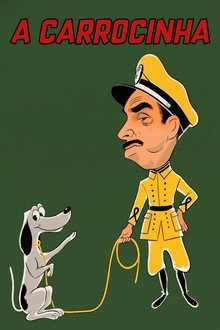
Man finds a job as a dog catcher, but feels sorry for the animals and sets them free.

The Awakening of the Beast
A psychiatrist experiments on four volunteers with LSD to examine '60s drug culture, soon unleashing an expert in depravity.

Pif-Paf

Esquina da Ilusão
This comedy tells the confusion created by Dante Rossi, owner of a pizza restaurant in Braz, namesake of a powerful industrial São Paulo. This coincidence, arranged by good luck, enabled him to lie for many years, writing letters to his brother in Italy in which he said that he had "made America". His brother, delighted with so many wonders, decides to visit the fake millionaire. But Dante can borrow with other immigrants without fortune, but attached to the idea of appearing great life.

Transversal do Tempo
The special documentary celebrates Elis Regina's 75th birthday and makes a parallel between Elis' extremely prevailing thoughts with those of João Marcello Bôscoli, Pedro Camargo Mariano and Maria Rita, her children, answering the same questions in the present time. All three talk about their childhood, their relationship with Elis and her artistic career.
