Personal Info
Known For
Gender
Birthday
Place of Birth
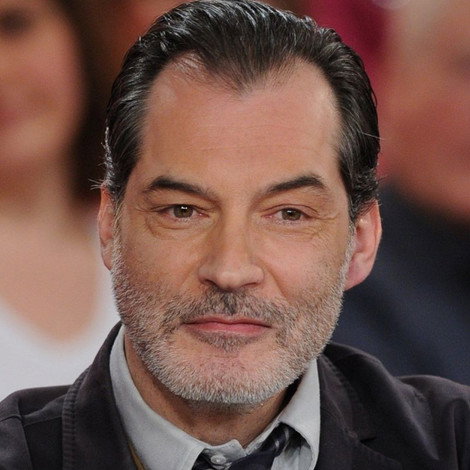
Samuel Labarthe
Known for

Murders in...
Murders in... is a collection of French-Belgian police TV movies taking place each time in a different French city and region.

The Little Murders of Agatha Christie
French adaptations of the stories by Agatha Christie.

The Art of Crime
Fired for insubordination, PJ Antoine Verlay, good cop but a blood strand and having difficulty working as a team, is attached to the OCBC (Central Office for the fight against Traffic in Cultural Goods) thanks to the intervention of the commander Pardo, his friend who becomes, therefore, his new superior. A clever investigator, but a stranger to everything related to culture, Antoine will have to work with Florence Chassagne, renowned art historian, who lives, speaks and breathes culture, to the point that - fruit of her great imagination - it happens to her in the midst of daydreams, to see and talk to the great artists who have disappeared as if they were familiar to her.

Crimes parfaits
Murderers think they have committed the perfect crime. But the investigators will do everything to find the flaw in the Machiavellian plan devised by each killer.

The Forest
In a small quiet village in the Ardennes, a sixteen-year-old girl disappears into the forest after calling her teacher in the middle of the night. Captain Gaspard Deker, a former soldier and newly arrived single father is conducting the investigation with Virginie Musso, the local cop. Also helping is the teacher, Eve Mendel, a solitary young woman with a mysterious past: she was found as a child by the villiage doctor wandering silently in the same forest.

Moka
Diane Kramer is led by one obsession: to find the driver of the mocha color Mercedes which hit her son and devastated her life. With a few belongings, some money and a gun, she goes to Evian, where she's learned the driver lives.

The Wagner Method
Police Captain César Wagner is a compulsive hypochondriac, obsessed with his work. His singular, distinctive style unsettles not only his suspects but also the members of his squad.

Dead Beautiful
As group leader of the Judicial Police in Paris, Martin is responsible for investigating the most atrocious and misogynistic crimes committed against society. Distrustful of everyone, he bears the marks of both his past successes and failures. Luckily, the ladies in his life are on hand to assist him.

Off Track
Elsa and Laurent, happy parents of Lucie, have lived a perfect love affair for twenty years. Until one morning, Elsa disappears without trace. Laurent's world collapses when the police inform him that Elsa was in fact a very different person from the one she pretended to be.

Le Zèbre
Hippolyte, the titular oddball, is a far from typical country lawyer. He has been happily married to the woman of his dreams for 15 years, but has an incurable penchant for practical (or rather impractical) jokes.

Sagan
France, 1950s. From the Quartier Latin to Saint-Tropez via New York, a young Parisienne becomes the icon of a whole generation. In 1954, 19-year-old Francoise Sagan shot to fame with her first novel, Bonjour Tristesse. Flamboyant, scandalous and underrated, Sagan lived her life at the furthest edge of excess. She won and lost fortunes at the roulette table, bought and crashed superb sports cars, drank, danced and partied, leaving a trail of lovers in her wake.
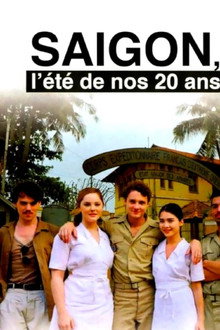
Saïgon, l’été de nos 20 ans

The Elegant Criminal
On 9 January 1836, Pierre Lacenaire goes to the guillotine, a murderer and a thief. He gives Allard, a police inspector, his life story, written while awaiting execution. He also asks Allard to care for Hermine, a lass to whom he has been guardian for more than ten years. In flashbacks, from the prison as Lacenaire writes, from Allard's study as he and Hermine read, and from other readers' memory after the book is published, we see Lacenaire's childhood as he stands up to bullies, including priests, his youthful thieving, his first murder, his brief army career, his seduction of a princess, and his affair with Avril, a young man who dies beside him.

Premier Suspect

De Gaulle, l'éclat et le secret
Explores the life of General De Gaulle, from the Appeal of June 18, 1940, to his departure from power in 1969. A dive into the military and political career of De Gaulle and an inside portrait of his private life.