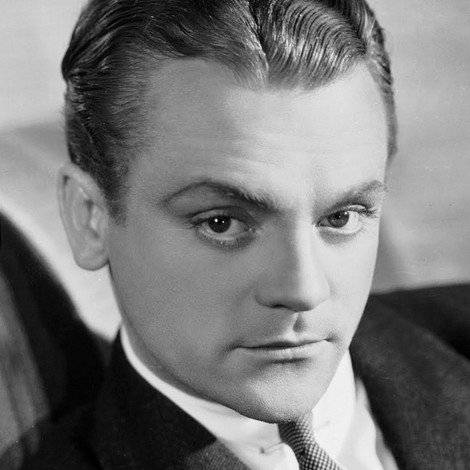
Personal Info
Known For
Gender
Birthday
Place of Birth
James Cagney
Biography
Known for

The Mike Douglas Show
The Mike Douglas Show is an American daytime television talk show hosted by Mike Douglas that originally aired only in the Cleveland area during much of its first two years on the air. It then went into syndication in 1963 and remained on television until 1982. It was distributed by Westinghouse Broadcasting and for much of its run, originated from studios of two of the company's TV stations in Cleveland and Philadelphia.

What's My Line?
Four panelists must determine guests' occupations - and, in the case of famous guests, while blindfolded, their identity - by asking only "yes" or "no" questions.

Robert Montgomery Presents
Robert Montgomery Presents is an American dramatic television series which was produced by NBC from January 30, 1950 until June 24, 1957. The live show had several sponsors during its seven-year run, and the title was altered to feature the sponsor, usually Lucky Strike cigarettes, for example, Robert Montgomery Presents Your Lucky Strike Theater, ....The Johnson's Wax Program, and so on.

The Ed Sullivan Show
The Ed Sullivan Show is an American TV variety show that originally ran on CBS from Sunday June 20, 1948 to Sunday June 6, 1971, and was hosted by New York entertainment columnist Ed Sullivan. It was replaced in September 1971 by the CBS Sunday Night Movie, which ran only one season and was eventually replaced by other shows. In 2002, The Ed Sullivan Show was ranked #15 on TV Guide's 50 Greatest TV Shows of All Time.

Parkinson
The final incarnation of Michael Parkinson's iconic talk show featuring an array of celebrities from every sphere.

The Oscars
An annual American awards ceremony honoring cinematic achievements in the film industry. The various category winners are awarded a copy of a statuette, officially the Academy Award of Merit, that is better known by its nickname Oscar.

The Kennedy Center Honors
The Kennedy Center Honors is an annual honor given to those in the performing arts for their lifetime of contributions to American culture.

MGM Parade
The original concept of the show was to allow the viewer to see the inner workings of a movie studio and featured interviews with MGM stars and explanations of how movies were made. Later, the format changed to show edited versions of MGM films.
Legends
The story of the big names that have shaped the musical genres, plus an occasional stopgap for the new rock 'n' roll - comedy.

The American Film Institute Salute to ...
In 1973 the American Film Institute initiated its Life Achievement Award, to be presented to a yearly recipient whose talent has fundamentally advanced the film art; whose accomplishments have been acknowledged by scholars, critics, professional peers and the general public; and whose work has stood the test of time.

Mutiny on the Bounty
Fletcher Christian successfully leads a revolt against the ruthless Captain Bligh on the HMS Bounty. However, Bligh returns one year later, hell bent on revenge.

Footlight Parade
A fledgling producer finds himself at odds with his workers, financiers and his greedy ex-wife when he tries to produce live musicals for movie-going audiences.

'G' Men
James “Brick” Davis, a struggling attorney, owes his education to a mobster, but always has refused to get involved with the underworld. When a friend of his is gunned down by a notorious criminal, Brick decides to abandon the exercise of the law and join the Department of Justice to capture the murderer.

One, Two, Three
In Cold War-era West Berlin, American Coca-Cola executive C.R. 'Mac' MacNamara is tasked with playing babysitter to his boss' spoiled 17-year-old daughter Scarlett, who proves more difficult than anticipated when she reveals that she is pregnant by a Communist.