Personal Info
Known For
Gender
Birthday
Place of Birth
Hans-Henrik Krause
Biography
Known for

The House at Christianshavn
The series follows the residents of an apartment building on Copenhagen's Christianshavn, as they go about their daily lives and challenges. There is Olsen, a mover with an old fashion view of the world, Clausen who runs the local pet shop, Egon the career focused assistant, their wives who work hard to keep their spouses lives together, the young couple Tue and Rikke who recently moved in, the hard working caretaker Meyer, who never puts in to much effort, and of course Emma, the innkeeper of Rottehullet, where all the important decisions are made while running up the bar tab. The series was produced by Nordisk Film for Danmarks Radio TV station between the years 1970-77. The series' first director was Ebbe Langberg, then Erik Balling and Tom Hedegaard respectively. The series was conceived by an author team of well-known Danish authors such Leif Panduro, Benny Andersen, and Lise Nørgaard.

Bryggeren
A story about Carlsberg founder JC Jacobsen, his son Carl, and their struggle to create a brewing company, and simultaneously a look at fifty years of Danish history.

Charlot og Charlotte
A road movie that tells the story of two very different young women, Charlot and Charlotte, who meet by chance and end up driving together across Denmark from Copenhagen to Skagen. Along the way, they meet a wide range of very different people, from the senile Birksted to the psychopathic mass murderer Poul-Teddy, to a theater troupe and the elderly residents of a nursing home run by a headstrong matron. The naive and provincial Charlotte learns spontaneity from the smart city girl Charlot, while Charlot, in turn, learns from Charlotte to appreciate the experiences close to home.

Blackout
During the occupation in 1944, filmmaker Otto Baumann is murdered. Detective Helge Nielsen stubbornly investigates the case — even as he's hunted by the Germans.

Hjerteflimmer
Hjerteflimmer

Sorte Shara
Based on a true story from the fateful day of August 29, 1943, when the Germans disarmed the Danish army and navy. The minesweeper MS 1 plays the leading role in the film about the ship that refused to surrender. The commander, Captain U.H. Gad, camouflaged the boat as a tugboat under the name 'Sorte Shara'. With Sweden as its destination, the boat set sail and experienced hours of excitement as it approached the German observation posts.
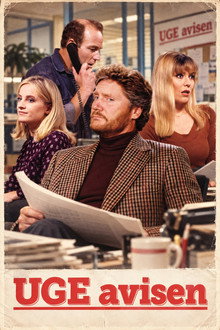
ugeavisen
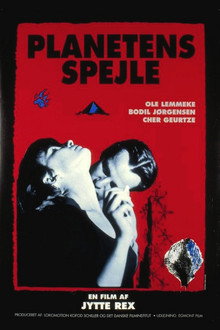
Mirror of the Planet
Jytte Rex' sixth feature explores the here and now, the once and future beyond, Death and Eros, and proof of God's existence to be found in the Black Holes in a universe of nothingness. Tangible human individuals like Adam, an astronome, and two small children move through the surreal landscapes of Jytte Rex' cinematic poetry. If a door opens, it is only to lead you into Eternity's ultimate maze.

I Stykker
Open marriages, friends and lovers, secrets and lies are all coming to light after a fatal accident during a party. Was it murder? Early Leif Panduro drama.

Sådan er det bare

Thelma og Irene
In the wake of a divorce, Thelma now lives alone with her teenage daughter Irene. Somewhat overwhelmed by the situation (and initially often hiding in bed), the two women embark on new experiences. The contours of new identities and a firmer footing as individuals gradually emerge.

Lady with the Light Gloves
During World War I, the engineer Torben returns home with secret papers from the Russian Tsar to the courier Tuschin, Torben's best friend. Tuschin is found murdered, however, and to solve the murder, Torben stays at his hotel. Here he meets several mysterious people, not least the breathtaking stenographer Inge. But in the hotel, no one is who they pretend to be.

I Adams verden
Some young squatters have occupied a building that the insurance company wants to demolish, but Adam Berg hesitates to call the police on them. A difficult policyholder wants more money for a claim than the company has paid out. A former schoolmate pesters Adam to allow him to take out insurance he is not actually entitled to. A young man, Tom, appears in Adam's world. Is Adam homosexual? And Adam meets the lawyer, Paul, who is dressed in women's clothing and, as a crossdresser, is known as Sonja.

3 years after
Soya's satirist take on variations of Danes, who willingly or unwillingly came to deal with German troops during the five year Second World War occupation.