Personal Info
Known For
Gender
Birthday
Place of Birth
Valsø Holm
Known for
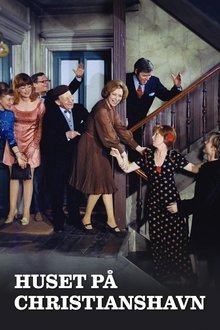
The House at Christianshavn
The series follows the residents of an apartment building on Copenhagen's Christianshavn, as they go about their daily lives and challenges. There is Olsen, a mover with an old fashion view of the world, Clausen who runs the local pet shop, Egon the career focused assistant, their wives who work hard to keep their spouses lives together, the young couple Tue and Rikke who recently moved in, the hard working caretaker Meyer, who never puts in to much effort, and of course Emma, the innkeeper of Rottehullet, where all the important decisions are made while running up the bar tab. The series was produced by Nordisk Film for Danmarks Radio TV station between the years 1970-77. The series' first director was Ebbe Langberg, then Erik Balling and Tom Hedegaard respectively. The series was conceived by an author team of well-known Danish authors such Leif Panduro, Benny Andersen, and Lise Nørgaard.
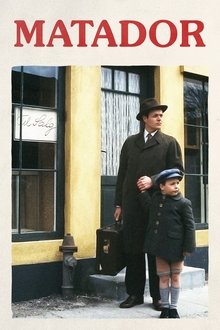
Matador
Matador is a Danish TV series produced and shown between 1978 and 1982. It is set in the fictional Danish town of Korsbæk between 1929 and 1947. It follows the lives of a range of characters from across the social spectrum, focusing specifically on the rivalry between the families of two businessmen: The banker Hans Christian Varnæs, an established local worthy, and social climber Mads Skjern, who arrives in town as the series opens. The name Matador was taken from the localised edition of the boardgame Monopoly, also the series' tentative English title. In addition, in contemporary Danish a "matador" is often used to describe a business tycoon, in the series referring to the character of Mads Skjern and his craftiness as a self-made entrepreneur. Directed by famed Danish film maker Erik Balling, Matador was the idea of author Lise Nørgaard who wrote the bulk of the episodes alongside Karen Smith, Jens Louis Petersen and Paul Hammerich. The series is one of the most well-known and popular examples of Danish television and represents the peak of longtime development of Danish TV drama by the public service channel Danmarks Radio. The series has become part of the modern self-understanding of Danes, partly because of its successful mix of melodrama and a distinct warm Danish humour in the depiction of characters, which were portrayed by a wide range of the most popular Danish actors at the time; but also not least because of its accurate portrayal of a turbulent Denmark from around the start of the Great Depression and through Nazi Germany's occupation of Denmark in World War II.
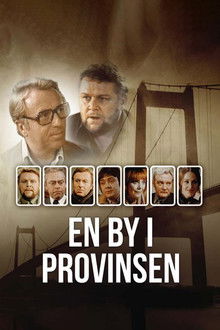
A Town in the Province
In 1970s Denmark, the criminal police in a provincial town solve different criminal cases, when the police was dominated by men and DNA was not yet a tool in investigation.
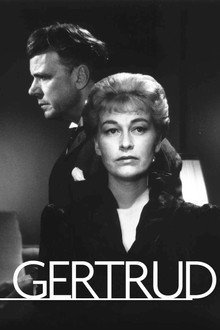
Gertrud
Hopeless romantic Gertrud inhabits a turn-of-the-century milieu of artists and musicians, where she pursues an idealized notion of love that will always elude her. She abandons her distinguished husband and embraces an affair with a young concert pianist, who falls short of her desire for lasting affection. When an old lover returns to her life, fresh disappointments follow, and Gertrud must try to come to terms with reality.
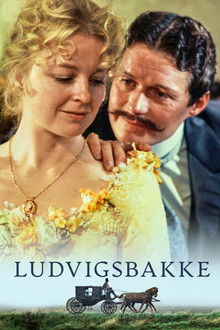
Ludvigsbakke
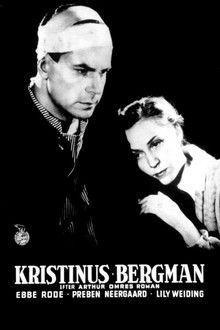
Kristinus Bergman
Danish noir crime drama with a poetic nerve. Two boys, Kristinus and Jakob (Rode and Neergaard) experienced a loveless and abusive childhood. Now as grown-ups, they are acting outside the law.
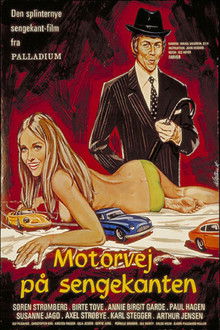
Bedside Highway
In this Danish sex comedy, precisely opposite goals lead a young official of the Department of Roads and Traffic and all the women of the local village to end up in the sack. His goal is to get them to sign papers allowing a new highway to go through the middle of town. Their goal is to get him to re-route the highway.
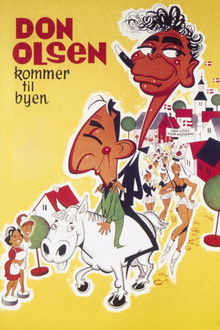
Don Olsen kommer til byen
Bank director L.W. Jacobsen resides in a small provincial town. He is not particularly interested in his wife, Elsebeth, but rather in teacher and city council member Miss Mortensen. Thorsen, the town's manufacturer, is a member of the same city council group as Jacobsen. Then Don Olsen comes to town. Olsen is not interested in the upper class, but rather in people. By chance, Thorsen and Olsen meet and soon become drinking buddies. Thorsen drags the milkman's horse home to his apartment in the middle of the night. The scandal is a reality. Thorsen wants to flee, but with Olsen's help, he instead woos the townspeople and Miss Mortensen under the motto "Make good times better."
Københavnerliv

The Olsen Gang
The first of 14 Olsen Gang films presents us with Egon Olsen, head of the gang, and his friends Benny and Kjeld, who want to become the best known gang in Denmark and eventually Europe by stealing a famous Bavarian work of art currently displayed in a Copenhagen museum. Although Egon's plan works out fine, there is only trouble ahead for the little gang.
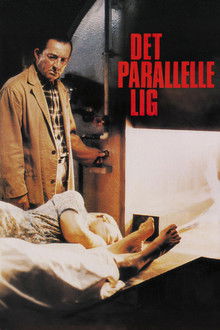
The Parallel Corpses
About a businessman who murders his stepdaughter after having an affair with her. A crematorium worker who secretly sells coffins to an undertaker discovers two bodies in one of the coffins one day. He suspects what has happened and tries to blackmail the murderer for money.
Dukkens død
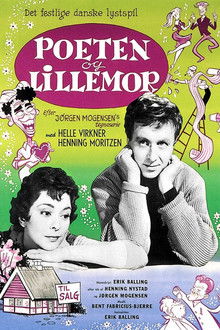
The Poet and the Little Mother
Poeten and Lillemor are making their living on his writing, but the general interest in modern poetry is low and their income very small. A creditor is dogging them, when a sudden bequest gives them some breathing-space. They buy an old house in a small village, where living is cheaper than in Copenhagen. The villagers are distrustful towards the newcomers. After a while the baker, the butcher and the grocer won't give Poeten and Lillemor credit anymore. Also the old creditor is back dogging them. Should Poeten renounce his high poetical standards and write simple verses for popular music, to get money?