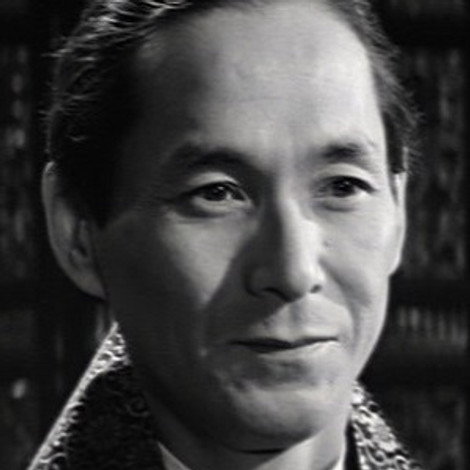
Personal Info
Known For
Gender
Birthday
Place of Birth
Tsutomu Shimomoto
Known for

Kita no kazoku
The 13th NHK Asadora. Starring Youko Takahashi in a story about a brother and sister coming of age in Hakodate and Kanazawa.

Kogarashi Monjiro
Monjiro was born into a poor farm family in Mikazuki Village, Nitta County, Ueshu, and abandoned his hometown when he was 10 years old. He has been traveling aimlessly with a long toothpick in his mouth. Monjiro avoided getting involved in anything, but wherever he went, he ended up getting involved in incidents

Fifth Movement
When a broadcasting company takes away its financial support from a symphony orchestra, some of the members refuse to admit defeat. The first violinist returns to his home and manages to get the orchestra back together for a grandiose performance, saved at the last minute by their original conductor -- and boding well for the future of the die-hard musicians.

Crest of Betrayal
Weaving two storylines together: the first is the story of 18th-century shogunate intrigue and loyalty, and the second is a ghost story about a beautiful woman who falls victim to passion and evil.

The Autumn in Tokyo
A unique drama that contrasts the lives of a family of elite salarymen in Tokyo and a family of landowners in Tokorozawa, Saitama, while exploring the timeless themes of drama such as human happiness, love and marriage in their everyday lives, told in a straightforward narrative style.

Story of a Prostitute
Volunteering as a "comfort woman" on the Manchurian front, where she is expected to service hundreds of soldiers, Harumi is commandeered by the brutal Lieutenant Narita but falls for the sensitive Mikami, Narita's direct subordinate. Seijun Suzuki's Story of a Prostitute is a tragic love story as well as a rule-bending take on a popular Taijiro Tamura novel, challenging military and fraternal codes of honor, as seen through Harumi's eyes.

House on Fire
In the 50s, the complicated life of a popular writer who must share his life with his family, his numerous mistresses and his work

犬笛-娘よ、生命の笛を吹け

Tenchu!
A ronin desperately seeks a way out of financial straits; he allies with the Tosa clan under the ruthless leader Takechi, who quickly takes advantage.


Yuganda tsuki

The Wolves
A group of five rookie insurance salespersons, driven to desperation by the impossibility of their work in Japan's failing postwar economy, form a plan to rob a cash delivery truck in order to provide for their families.

The Day the Sun Rose
Shinkichi, a peasant employed as a cloth-dyer, has a dream: in the midst of the civil war which ravages Japan, he hopes to revive the long-banned custom of the Kyoto Gion Festival, and by doing so, bring together the warring clans and rampaging brigands in peaceful celebration.

Children of Hiroshima
Shows the devastation caused by the atomic bomb, and by use of a fictional storyline, portrays the struggle of the ordinary Japanese people in dealing with the aftermath.

Ishigassen
Across the Inagawa River that runs through the center of the village, the children of the two villages scrambled for a swimming pool, and each time a stone battle took place. Takemaru, the only son of the priesthood of Tada Shrine, was weak and was always forced to carry stones. However, neither swimming nor stone-throwing was a secret to his sick mother, Kouko... Seishi Matsumaru, Ryuichi Yoshida, and Ado Matsuyama were adapted from "Tenmangu" and "Ishigassen", directed by Mitsuo Wakasugi of "Waran Hayashi", and photographed by Hanjiro Nakazawa of "The Last Women".