
Personal Info
Known For
Gender
Birthday
Place of Birth
Julio Chávez
Biography
Known for

Otro día perdido

Farsantes
Farsantes is a 2013 Argentine legal drama produced by Pol-ka Producciones and which aired on Canal 13.

Epitaphs
Epitafios is a 2004 13-episode, Argentinian crime fiction TV mini-series with the tagline: El Final Está Escrito ... The End Is Written. The series, which takes place in an unnamed South American city, was shot in Buenos Aires. The series was produced by HBO Latin America and Argentinian TV/film company Pol-Ka Producciones. It was written by Marcelo Slavich and Walter Slavich and directed by Alberto Lecchi and Jorge Nisco. Although all of the actors were Argentinian, a neutral Spanish was used instead of the local Rioplatense Spanish, avoiding colloquialisms such as the local vos in favor of the more common tú. The series debuted in Australia on SBS in May 2007 under the title If The Dead Could Speak. It premiered in Poland on Cinemax on November 6, 2008. In Germany, it premiered on November 6, 2009 on pay TV channel FOX under the title Epitafios - Tod Ist Die Antwort.

Signs
Antonio Cruz is a good country doctor who hides a secret that has filled him with resentment and anger. One day he snaps and decides to kill a neighbor for each sign of the zodiac. His sister Laura, a police officer, and her ex-husband Paul, the neighboring town prosecutor, investigate the mysterious crimes.

The Tiger
Miguel "The Tiger" Verón, a union leader from meat sector, has to risk everything against his employers and enemies from justice.

El maestro
El Maestro is an Argentine miniseries co-produced by Pol-ka Productions, Turner Broadcasting System, eltrece and Cablevisión, which is broadcast by TNT, since September 13, 2017. It stars Julio Chávez, in the role of Prat, a former classical dance dancer who knew how to be a world figure.

El Puntero
El Puntero was a 2011 Argentine miniseries, produced by Pol-Ka and starred by Julio Chávez and Gabriela Toscano. "Puntero" is a word from Argentine slang for a man who works as an intermediate between poor people and political parties, in a clientelist relation. The miniseries received the Golden Martín Fierro Award.

Trátame Bien
Tratame bien is an Argentine TV series made by Pol-Ka. It was awarded with seven Martín Fierro Awards in May 2010, including the Golden one.

El Pampero
An ill man takes a trip on his boat to remember quietly his life. Unexpectedly, a girl takes cover on the same boat. When the man finds her, she asks him for help because she will be charged for a crime she did not commit. On the way, they'll have several problems, being the first one the police officer friend of the owner of the boat.

The Other
Arriving at a distant town, a businessman decides to take the identity of a passenger who died during the bus trip.

Alma de artista

When I Look at Her
Javier, a plastic artist whose life goes by uneventfully, undertakes a strange project: to film his mother, an enigmatic and distant woman. He is not a filmmaker and improvises this task, which will bring an unexpected connection between the two.

No toquen a la nena
A man becomes overprotective of his daughter as a friend of his son comes to live at the family home.

Strange
The protagonist is Axel, aged about 40, a doctor who no longer practices his craft. He is living temporarily with his sister and her children. He doesn't do much, just exists a little between the living and their things. One day, he meets a young, pregnant woman. A relationship develops, a kind of love, and they live together, like driftwood temporarily clinging on to each other.
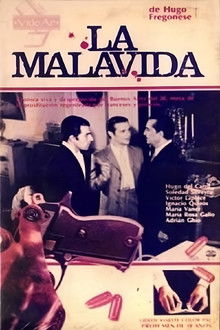
The Bad Life
Buenos Aires, 1920. The Franco-Argentine and Polish-Argentine mafia begin a war for the control of the traffic of women and prostitution, based on real events about the 1920s Buenos Aires Mafias war.