Personal Info
Known For
Gender
Birthday
Place of Birth
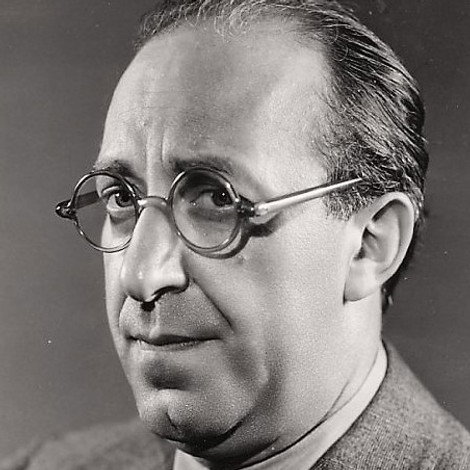
Ed Wynn
Biography
Known for

The Tonight Show Starring Johnny Carson
The Tonight Show Starring Johnny Carson is a talk show hosted by Johnny Carson under The Tonight Show franchise from 1962 to 1992. It originally aired during late-night. For its first ten years, Carson's Tonight Show was based in New York City with occasional trips to Burbank, California; in May 1972, the show moved permanently to Burbank, California. In 2002, The Tonight Show Starring Johnny Carson was ranked #12 on TV Guide's 50 Greatest TV Shows of All Time.

Bonanza
The High-Sierra adventures of Ben Cartwright and his sons as they run and defend their ranch while helping the surrounding community.

What's My Line?
Four panelists must determine guests' occupations - and, in the case of famous guests, while blindfolded, their identity - by asking only "yes" or "no" questions.

Wagon Train
The series initially starred veteran movie supporting actor Ward Bond as the wagon master, later replaced upon his death by John McIntire, and Robert Horton as the scout, subsequently replaced by lookalike Robert Fuller a year after Horton had decided to leave the series. The series was inspired by the 1950 film Wagon Master directed by John Ford and starring Ben Johnson, Harry Carey Jr. and Ward Bond, and harkens back to the early widescreen wagon train epic The Big Trail starring John Wayne and featuring Bond in his first major screen appearance playing a supporting role. Horton's buckskin outfit as the scout in the first season of the television series resembles Wayne's, who also played the wagon train's scout in the earlier film.

The Twilight Zone
An anthology series containing drama, psychological thriller, fantasy, science fiction, suspense, and/or horror, often concluding with a macabre or unexpected twist.
The Twilight Zone
An anthology series containing drama, psychological thriller, fantasy, science fiction, suspense, and/or horror, often concluding with a macabre or unexpected twist.

The Red Skelton Show
The Red Skelton Show is an American variety show that was a television staple for two decades, from 1951 to 1971. It was second to Gunsmoke and third to The Ed Sullivan Show in the ratings during that time. Skelton, who had previously been a radio star, had appeared in several motion pictures as well. Although his television series is largely associated with CBS, where it appeared for more than fifteen years, it actually began and ended on NBC. During its run, the program received three Emmy Awards, for Skelton as best comedian and the program as best comedy show during its initial season, and an award for comedy writing in 1961.

Rawhide
The tale of trail boss Gil Favor and his trusty foreman Rowdy Yates as they drives cattle across the old west. Along the way they meet up with adventure and drama.

The Ed Sullivan Show
The Ed Sullivan Show is an American TV variety show that originally ran on CBS from Sunday June 20, 1948 to Sunday June 6, 1971, and was hosted by New York entertainment columnist Ed Sullivan. It was replaced in September 1971 by the CBS Sunday Night Movie, which ran only one season and was eventually replaced by other shows. In 2002, The Ed Sullivan Show was ranked #15 on TV Guide's 50 Greatest TV Shows of All Time.

Burke's Law
Burke's Law is an American detective series that ran on ABC from 1963 to 1965 and was revived on CBS in the 1990s. The show starred Gene Barry as Amos Burke, millionaire captain of Los Angeles police homicide division, who was chauffeured around to solve crimes in his Rolls-Royce Silver Cloud II.

The Colgate Comedy Hour
The Colgate Comedy Hour is an American comedy-musical variety series that aired live on the NBC network from 1950 to 1955. The show starred many notable comedians and entertainers of the era, including Eddie Cantor, Dean Martin and Jerry Lewis, Fred Allen, Donald O'Connor, Bud Abbott and Lou Costello, Bob Hope, Jimmy Durante, Ray Bolger, Gordon MacRae, Ben Blue, Robert Paige, Tony Curtis, Burt Lancaster, Broadway dancer Wayne Lamb and Spike Jones and His City Slickers.