
Personal Info
Known For
Gender
Birthday
Place of Birth
Ewa Dałkowska
Biography
Known for


The Chairman's Ear
The series follows the chairman of the ruling political party in Poland (Mr Chairman). The narrative takes place primarily in his office where, joined by his assistant Mariusz, he hosts numerous visitors, including government officials and other public office holders.
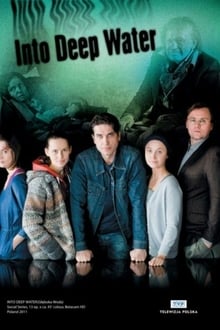
Into Deep Water
A group of social welfare workers led by their new director tries to provide necessary aid to people struggling with various problems.

Calling 07
The series centres around the investigations of Police Lieutenant Sławomir Borewicz. Each episode features a different case being solved by Borewicz.
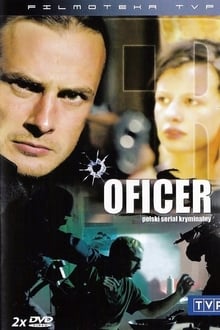
Officer
Polish crime / drama TV series portraying Warsaw police officers from Central Bureau of Investigations who got on the trail of counterfeit Euro banknotes which involves local gangsters and French crime syndicate.

Trzy młyny
Series based on the stories of Jarosław Iwaszkiewicz “Młyn nad Utrata” (1936), “Młyn nad Lutyniu” (1946) and “Młyn nad Kamienna” (1950). The action of the miniseries takes place from 1928 to the 1950s.

Nights and Days
Set in the Kalisz Region in the second half of the 19th century after the failure of the January Uprising in 1863, the miniseries presents a unique portrait of an oppressed society as told through the life of the Niechcic family.
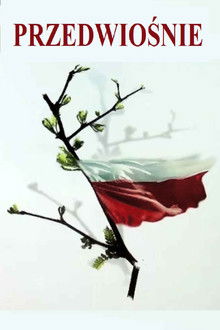
Przedwiośnie
Polish-born Russian subject Cezary Baryka comes of age during a tumultous period of ten years from 1914 to 1924, during which he witnesses revolution, rebirth of Poland, war with the Soviets and communist plots.
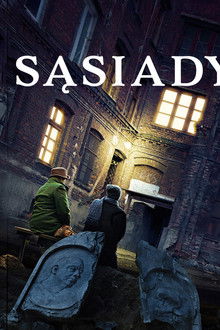
Neighborhooders
Ogrodowa Street in Lódz - just opposite a crowded shopping center, a state-of-the-art museum and a posh hotel - is where some of the city's poorest live, completely forgotten by the world. A heart-warming and funny portrait of people excluded from the mainstream of social life; people who might be more capable of sacrifice and love than those who pushed them to the sidelines of society.
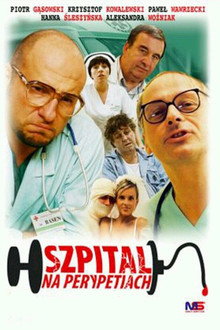
Szpital na perypetiach
Wir
Young Tomek is fascinated by his sweet and friendly mother, Anna, an attractive widow. She takes care of her son carefully, and in the evenings debates with her girlfriend Roza, a free and childless woman. But due to poor financial conditions he is sent to a boarding school where he wouldn't stay long; he must return home because his mother died. After returning, a surprise is waiting for him in the form of a little brother. He decides to take care of him and finds a job and a likely little boy's father who comes to claim his rights, decides to leave the house. When he visits the priest, he discovers that not only his brother is an illegitimate child. And Roza searches for comfort in his arms.
Torowisko
Using the backdrop of the banality and ordinariness of everyday life in a small provincial town, the film analyses the relationship between two women friends, who struggle to find their way in post-communist Poland. The small events of their lives represent universal feelings of being trapped and lost in a new world, in contrast to the successes of the dark side of democracy - drug dealing, crime and pornography. By its very nature, the film creates a picture of provincial Poland after democracy, but its charm is in the understated relationship between the two friends and the people around them and in the mosaic structure that builds up the film piece by piece.
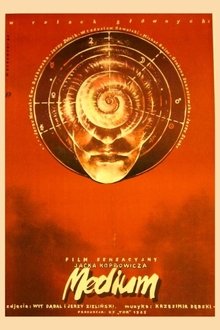
Medium
Story of four people in Sopot in 1933, mysteriously brought together to an old villa to reenact a murder ritual that took place 36 years earlier.

The Gorgon Case
In 1931, just before the New Year, in a house of architect Henryk Zaremba scream rips the night. The daughter of Zaremba is found killed in her bedroom, obviously killed with a pickaxe. The police arrives and starts the investigation. Rita Gorgonova, the governess of the girl and also lover of Zaremba becomes the main suspect.
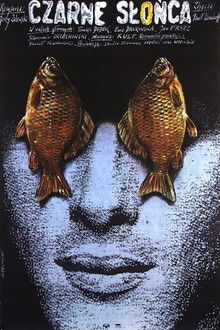
Czarne Słońca
Multiple recidivist Tadeusz Wilk out of jail thanks to an amnesty. He has no idea where to go and what to do with themselves. Post lays down back behind bars. Wolf meets Celine and tells the woman that she is his mother. Mysterious, strangely behaving stranger arouses more and more anxious new parents