Personal Info
Known For
Gender
Birthday
Place of Birth
Walter Jupé
Known for

Kleiner Mann – was nun?
The love story of Emma and Johannes begins during the hard years of the Great Depression. Emma repeatedly tries to encourage her husband, who is suffering terribly from unemployment. However, the crisis continues to intensify and social disintegration affects millions.

Hans Beimler, Kamerad

Das Abenteuer

Arnold Zweig
A short biography of Arnold Zweig, through the lens of East Germany state media.
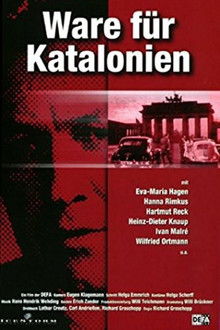
Ware für Katalonien
At the end of the 1950s, the production of optics in the German Democratic Republic has reached top quality and instigates interest in the West. When national demand rises strongly and at the same time the export to South America heavily decreases, the Volkspolizei - the GDR police force - starts to look into the case. Two seemingly unrelated cases are the starting point for the investigation by second lieutenant Schellenberg of the department for optics racketeering: An old woman who was arrested in the Berlin city railway for trying to smuggle a pair of binoculars to West Berlin, and a dead person in an area of allotments who was involved in obscure dealings with optical devices.
Fernsehpitaval
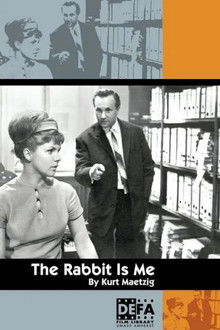
The Rabbit Is Me
Maria, a young student sees her brother Dieter going to prison for sedition against the state. She starts an affair with Paul, a judge who turns out to be the one who sentenced her brother, which eventually leads to a confrontation.
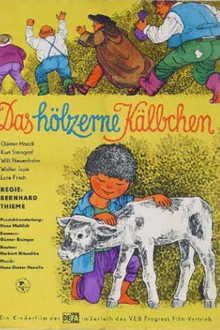
Das hölzerne Kälbchen
On a pasture in a small village stand the cows and calves of the herder Bürle. Since many years, there is also a wooden calve standing among them. One day, all calves are stolen, even the wooden one. Although they are innocent, all poor villagers are brought to trial. Thereupon, the farmers join forces and discover who really is responsible for the theft.
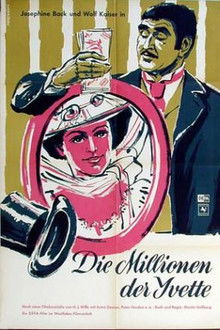
Die Millionen der Yvette
French milliner Yvette has a small fashion salon in Düsseldorf. The young gentlemen of society fall at her feet, but she is not accepted into their circles. That's why her former lover Maurice Daurignac manages to persuade her to pull off a big coup to get revenge on "high society". She pretends to be the heiress to ten million gold francs. A notary arrives from Paris accompanied by two supposed policemen and delivers the alleged money in a sealed parcel to the Bleichstetter bank in Düsseldorf, where it remains until the end of the inheritance process. The case drags on, and in the meantime the two are living large. When the bombshell bursts, Yvette has the young lawyer Dr. Hellmer to thank for the fact that she cannot be thrown to the angry citizens.
Das Loch in der Mauer
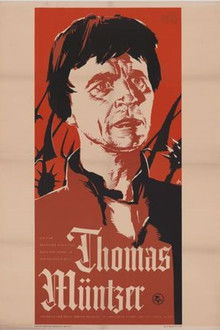
Thomas Müntzer
In 1523, young Thomas Müntzer arrives with his wife Ottilie in the Thuringian village Allstedt to assume the rectorate. As a follower of Luther′s teachings, he finds in the Bible not only reasons for clerical, but also for secular reforms. But when Luther turns away from the rural population after a discord with Müntzer, it is Müntzer who becomes the peoples′ spokesman. He is forced to go to Southern Germany, where he convenes with revolting farmers. But his way leads him back to Thuringia. In 1525, he and Heinrich Pfeiffer form the centre of the Thuringian peasant uprising in Mühlhausen, but their success is diminished by the fact that peasants and craftsmen don′t seem to be able to work together. In Frankenhausen, Müntzer becomes the leader of a peasants′ army that is set to fighting the ruler′s army – and sustains a devastating loss. Müntzer is arrested and sentenced to death by decapitation for his insurgency.
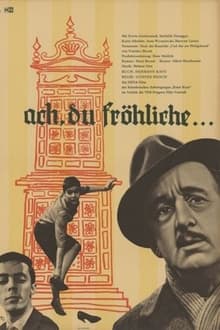
Ach, du fröhliche
It was supposed to be a cozy Christmas evening with the family. Labor Director Walter Lörke was particularly looking forward to it. But then his daughter Anne surprised him with her future son-in-law Thomas Ostermann. And that's not all: Lörke is to become a grandfather. This doesn't suit him at all, especially as the young man clearly shows his critical attitude towards the state whose ideals Lörke has fought for all his life. An argument ensues - on Christmas Eve. Lörke leaves the apartment in a rage. But he is driven by unrest: He wants to know what kind of person his future son-in-law is and why he has such a negative attitude towards the state. It turns out that Thomas has had bitter experiences with the opportunistic attitudes of many adults and that, although he was the best student in his class, he was not admitted to university because of his critical opinions.
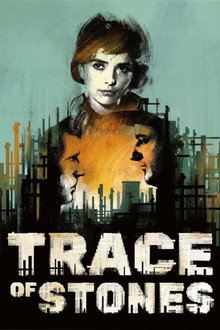
Trace of Stones
Bad planning and shortages prevail on an East German construction site. Foreman Hannes Balla uses unconventional methods to overcome the problems. New Socialist Unity Party secretary Werner Horrath is charged with bringing the rough-and-ready builder crew into line. The task seems doomed to fail as the two men compete for the affections of young engineer Kati Klee. But when she gets pregnant by married man Horrath, he is in danger of being expelled from the party, and Balla takes his side...
Bonner Pitaval - Die Affäre Heyde-Sawade
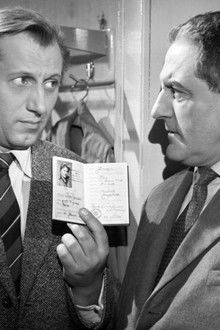
After participating in more than 100,000 euthanasia crimes during the Nazi era, the former SS psychiatrist and physician Dr. Werner Heyde leads an unmolested life in West Germany after the war under a false name ("Fritz Sawade"). With the help of confidants, he manages to get a job as a medical expert. His true identity remains in the dark for many years. His wife has him declared dead and draws the pension of a psychology professor's widow. After remaining unidentified for ten years, Dr. Heyde is unmasked and arrested one day and found dead in his cell shortly before the start of the trial. The film plot is based on the authentic case of Dr. Werner Heyde.
Like Father, Like Son
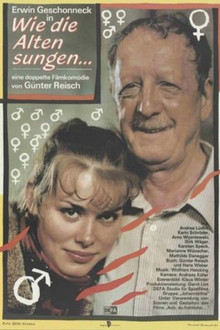
Grandpa Lörke is preparing for a contemplative, quiet Christmas Eve. But nothing comes of it, because his daughter Anne informs him that his 17-year-old granddaughter has disappeared.