Personal Info
Known For
Gender
Birthday
Place of Birth
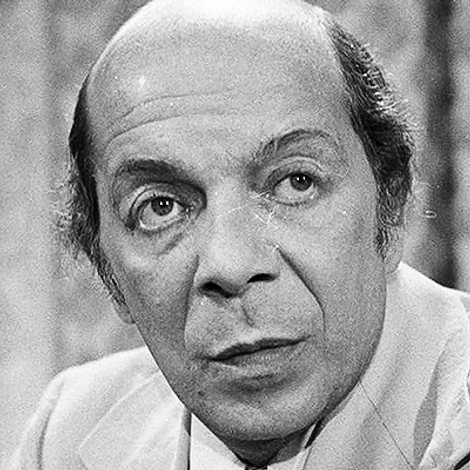
Ítalo Rossi
Biography
Known for

Her Own Destiny
A story about people who succeed in life thanks to nothing but their own efforts. Maria do Carmo is the main character of the telenovela; a mother of five who struggle to be successful in life, but whose most important will be recovering the love of her daughter who was kidnapped when she was just months old.

Chico Anysio Show

Belíssima
Júlia and Pedro suffer from the cruelty of their grandmother, Bia Falcão. Júlia runs the luxurious Belíssima factory and falls in love with Nikos, a friend of her sister-in-law Vitória.

Student's Heart
Biology professor Edu is an idealistic man who moves with his son Lipe to the charming, fictional town of Nova Aliança, in Minas Gerais, in search of a better quality of life. Edu is engaged to Amelinha, daughter of the wealthy and greedy rancher João Mourão. But this relationship becomes unstable when Edu falls in love with the dreamy lawyer Clara, daughter of Lígia and the experienced lawyer Raul Gouveia. Edu is a single father and tries to always be present in Lipe's life, attempting to keep him away from his mother, Mariana, whose drug addiction prevented her from raising her son. Edu's future father-in-law, João Mourão, is the biggest businessman in Nova Aliança: he owns a farm, a dairy, a meatpacking plant, and a transportation company. João takes issue with Edu when he discovers that the young man is a strong defender of nature and environmental protection laws, which turns him into a rival in the fight for a stretch of virgin forest.

Jerônimo, o Herói do Sertão

Transas e Caretas
The telenovela tells the story of Francisca Moura Imperial, a wealthy businesswoman, and her two sons: Jordão and Tiago, who show little interest in the family business. Jordão is the product of a whirlwind romance in Francisca's youth, while Tiago was born from her marriage to Roberto, a seductive man who moves in high society but is penniless. Francisca is preoccupied with her sons but cannot interfere in their lives as much as she would like. Eccentric and full of outlandish ideas, she decides to undergo plastic surgery, which makes her look 20 years younger, believing that this will bring her closer to Jordão and Tiago. Francisca's greatest concern is that at least one of her sons will marry and give her a grandchild, thus ensuring the continuation of the family name.

Araponga
The cunning Senator Petrônio Paranhos gives an interview to the beautiful journalist Magali Santanna, who is interested only in his affair with Arlete—an ambitious young woman intent on conceiving the older man's child via in vitro fertilization. To land this scoop, Magali agreed to interview the politician in a motel room, a condition he had insisted upon. However, Paranhos suffers a sudden collapse and dies during the interview. Detective Aristênio Catanduva, who had been keeping the senator under surveillance, investigates the case. Known by the codename "Araponga," he is a bumbling figure working for the Federal Police following his long service to the military regime.

Bravo!
A widowed conductor rediscovers love when he meets a young woman from the countryside, but doubts about his music make him question his competence and distance himself from the woman he loves.

Isaura: Slave Girl
Set in 19th-century Brazil during the waning years of slavery, Escrava Isaura tells the story of Isaura, a white-skinned enslaved woman raised with the manners and education of a noble lady. Though treated with affection by her mistress, Isaura remains legally enslaved and becomes the object of obsessive desire by Leôncio Almeida, the cruel heir to the plantation. After the death of her protector, Isaura falls under Leôncio’s control. Despite his attempts to seduce and dominate her, she resists, determined to preserve her dignity and freedom. Her father, Miguel, helps her escape to Recife, where she adopts a new identity and meets Álvaro, a wealthy and principled abolitionist who falls in love with her. Leôncio eventually tracks her down, leading to dramatic confrontations. In the end, Álvaro rescues Isaura by purchasing Leôncio’s debts, securing her freedom and affirming the story’s central themes of justice, love, and resistance against oppression.

A Rainha Louca

Esplendor
Millionaire Frederico Berger grapples with the trauma of a tragedy. The arrival of his housekeeper, Flávia Cristina, unjustly accused of a crime, transforms everyone's lives.

Toma Lá, Dá Cá
Brazilian comedy about two couples living next to each other in the same building. This show explores the antics between the two couples.

Vejo a Lua no Céu
Fernando, a confirmed romantic, will do anything for his beloved Suzana. However, to live out their romance, he will have to go against his father, who rejects Suzana because of her economic status.

Chico Total

Serras Azuis
The involvement of Lígia das Graças Paiva with Gaius Gutemberg Roldão. More than just children of rival families, they are survivors of a massacre that nearly wiped the city off the map. Under the curse that the blood of a Roldão cannot mix with that of a Paiva, both will face much trouble. However, the tragedy is softened by parallel stories: power struggles, union politics, revenge, betrayals, gossip, witchcraft, and even a character from Brazilian folklore: the headless mule.