
Personal Info
Known For
Gender
Birthday
Place of Birth
Hans Holt
Known for

Dalli Dalli

German Film Award
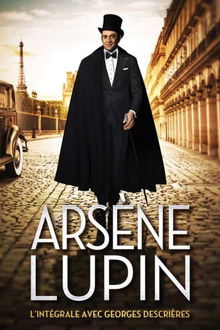
Arsène Lupin
Arsène Lupin is a French TV show which was co-produced with German, Canadian, Belgian, Dutch, Swiss, Italian and Austrian TV stations. It was only loosely based on Maurice Leblancs novels. Georges Descrières' portrayal of Arsène Lupin showed more similarity to Graf Yoster than to Maurice Leblanc's original. He behaved in the first place as a perfect gentleman who never got angry. He was always relaxed, because whatever could possibly had bothered him in daily life was taken care of by his butler. It wasn't questioned how he had come to his financial independence although the series sometimes discreetly implied that he was a professional criminal. Besides rescuing damsels in distress Lupin took on criminals, competing with their wit and intelligence. Either he stole paintings from rich people who had to be considered white-collar criminals or he acted as a detective who derailed criminal schemes. However, when he was attacked, he could defend himself effortlessly by using elegant jujutsu methods. Among the guest stars were German actors such as Günter Strack and Sky du Mont. Jean-Paul Salomé said in his commentary on the DVD version of his film Arsène Lupin he had like this series as a child. German TV, one the investors, would broadcast the show eventually between 18:00-20:00 o'clock because it was only allowed to show commercials within that very timeslot. For them to get a financial return on investment the show had to be appropriate for families and also for children who would watch it alone. Subsequently it was nearby to ask to defuse and flatten some of Leblanc's plots in order to avoid possible complaints that could force the station to broadcast the show beyond the "Vorabendprogramm".
Die liebe Familie
Der Feldherrnhügel
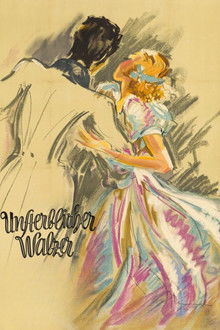
Immortal Waltz
Johann Strauss firmly established himself as the leader of a dance orchestra in Vienna in the 1840s. His sons Johann junior and Josef have clearly inherited their father's talent. Nevertheless, father Johann is strictly opposed to both of them training as composers.
Brüderlein fein
A young Viennese actor is having much success on the stage; but intrigue and confusion in his love life are making his life a living Hell.
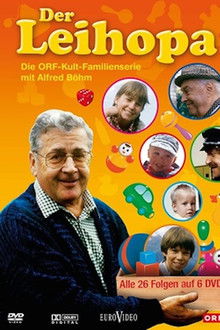
Der Leihopa
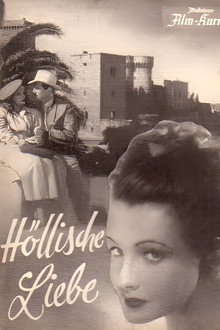
Höllische Liebe
In hell, equipped with the latest technological advances, the devils watch the happiness of a Viennese revue singer and her sculptor fiancé on a television screen. Some representatives are sent to Earth to seduce the singer and thus undermine the couple's love, but this soon leads to rebellion among the devilish emissaries, who want to emigrate.
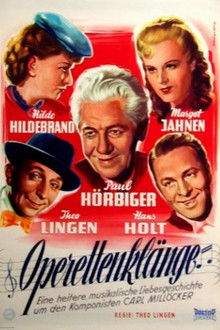
Glück muß man haben
Famous composer Millöcker saves lovesick clerk Ferdinand from killing himself and helps him impress and get close to Henriette, the rich heiress the boy adores. But one day Ferdinand overhears Millöcker confessing his own love to the girl.
Oppen und Ehrlich
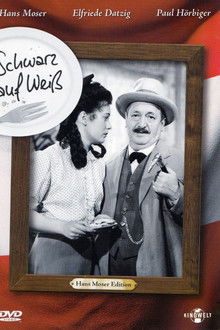
Schwarz auf weiß
Vienna, around 1900. The master baker Streussler’s most ardent wish is to see his daughter Nelly as a student at the university. With the help of his famous “streusel cake” he succeeds in luring all kinds of helpers for this endeavor into his house. But Nelly has entirely different plans: she is in love with the chimney sweep Heinz, the son of a neighbor, with whom Papa Streussler has been fighting for years. So it’s no wonder then, that the grump confectioner is doing everything he can to break up the relationship.
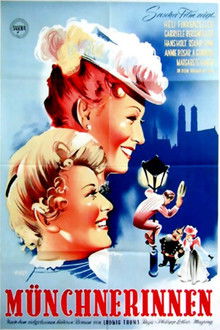
Münchnerinnen
The love between a noble student and the daughter of a coffee house owner, set against clichéd images of Munich at the turn of the century.