Personal Info
Known For
Gender
Birthday
Place of Birth
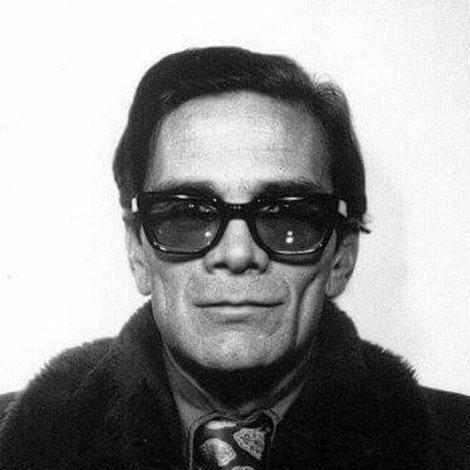
Pier Paolo Pasolini
Biography
Known for

Quelli che il cinema

Oedipus Rex
In pre-war Italy, a young couple have a baby boy. The father, however, is jealous of his son - and the scene moves to antiquity, where the baby is taken into the desert to be killed. He is rescued, given the name Oedipus, and brought up by the King and Queen of Corinth as their son. One day an oracle informs Oedipus that he is destined to kill his father and marry his mother. Horrified, he flees Corinth and his supposed parents - only to get into a fight and kill an older man on the road…

Arruso
In relation to some of Pasolini's visits to Palermo for this last film, in 2000 Ciprì and Maresco shot Arruso, which begins with a phrase by Pasolini ("I banished the word hope from my vocabulary") and consists of imaginary interviews with some local characters who are presumed to have had homosexual relationships with the director. The two record the testimonies, sometimes affectionate others less, of those who had the opportunity to meet him and know the trends on the occasion of that trip.

Callas Assoluta
This revealing documentary from director Philippe Kohly examines the storied life of renowned soprano Maria Callas, from her troubled childhood in New York City to her scandal-laden but triumphant international career in opera. Featuring archival interviews with Callas herself and footage of contemporaries such as her lover Aristotle Onassis, this celebration of "La Divina" pays tribute to her enduring legacy some three decades after her death.

The Decameron
A young Sicilian is swindled twice, but ends up rich; a man poses as a deaf-mute in a convent of curious nuns; a woman must hide her lover when her husband comes home early; a scoundrel fools a priest on his deathbed; three brothers take revenge on their sister's lover; a young girl sleeps on the roof to meet her boyfriend at night; a group of painters wait for inspiration; a crafty priest attempts to seduce his friend's wife; and two friends make a pact to find out what happens after death.

The Canterbury Tales
Glimpses of Chaucer penning his famous work are sprinkled through this re-enactment of several of his stories.

Cinéma et Réalité
In this documentary, giants of italian cinema such as Rossellini, De Sica, Fellini and Zavattini talk about the importance of cinema after WW2, and about huge moments of social rebellion. This movie gives the floor to the creators of italian neorealism.
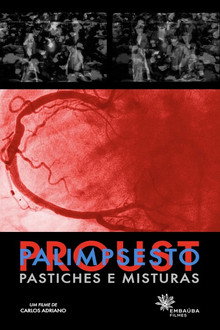
Proust Palimpsesto: Pastiches e Misturas
"Proust Palimpsesto: Pastiches e Misturas" (2026) is a Brazilian film essay directed by Carlos Adriano. The film, which explores the impossibility of filming Marcel Proust's "In Search of Time That Flew", is presented as a collage of archival images and theories.

Morceaux de Cannes
We thought we'd seen, read, and heard everything there was to see about the Cannes Film Festival, from the glitz and gossip to the scandals and censorship. And yet, Emmanuel Barnault's "Morceaux de Cannes" (Pieces of Cannes), by this leading expert on Italian and French cinema, convinces us otherwise. The third largest event in the world (after the Olympic Games and the FIFA World Cup) reveals its secrets only sparingly, as this film attests. The result of passionate research in the INA archives, these 52 minutes, without interviews or voice-over narration, string together rare and sometimes previously unseen footage. Taken together, they tell a surprising, original, and heartwarming story of the Festival. On the beach, on a street corner, in a restaurant, or in the privacy of a hotel room, these forgotten archives summon the greatest filmmakers, actors, and actresses of the last seventy years, from Jean Cocteau to David Lynch, for an anthology of the Festival's history.

Via Pasolini
A documentary featuring archival footage of Pasolini discussing his views on language, film, and modern society.

Love Meetings
Pier Paolo Pasolini sets out to interview Italians about sex, apparently their least favorite thing to talk about in public: he asks children if they know where babies come from; asks old and young women if they support gender equality; asks both sexes if a woman's virginity still matters, what do they think of homosexuality, if divorce should be legal, or if they support the recent abolition of brothels. He interviews blue-collar workers, intellectuals, college students, rural farmers, the bourgeoisie, and every other kind of people, painting a vivid portrait of a rapidly-industrializing Italy, hanging between modernity and tradition — toward both of which Pasolini shows equal distrust.


Notarangelo the Soul Hunter
David Griecos documentary showcases the underappreciated photography of Domenico Notarangelo, and through it, tells the story of Matera, it's people and it's history.

Salò: Yesterday and Today
A thirty-three-minute documentary featuring interviews with director Pier Paolo Pasolini, actor-filmmaker Jean-Claude Biette, and Pasolini friend Ninetto Davoli.

The Hunchback
Alvaro Cosenza, also known as the Hunchback from Quarticciolo, during Rome's occupation by Nazis in 1943, decides to revolt.