
Personal Info
Known For
Gender
Birthday
Place of Birth
Zofia Mrozowska
Known for
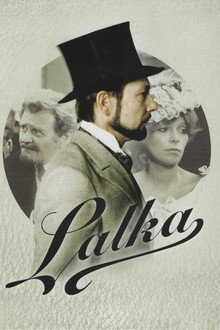
The Doll
The story of Stanisław Wokulski, a wealthy merchant who falls in love with a haughty aristocrat, Izabela Łęcka. Causing a misalliance in the late nineteenth century Warsaw. Young Wokulski is forced to work as a waiter, while dreaming of a life in science. After taking part in the failed uprising, he is sentenced to exile in Siberia. Upon return to Warsaw, he becomes a salesman. Marrying the late shop owner's widow, he becomes rich, He uses his money set up a partnership with a Russian merchant, met in the exile. The two makes a fortune supplying the Russian army. Wokulski falls in love with Izabela, daughter of the bankrupt aristocrat. In his quest to win her, he ventures theatres and aristocratic salons. To help her financially distressed father, he founds a company with the aristocrats as shareholders. Wokulski ability to make money is respected, but his lack of social rank is often brought. Izabela eventually accepts his affection, but without true devotion or love.

The Last Stage
Poland, during World War II. Martha Weiss, a Jewish woman, arrives at the Auschwitz extermination camp with her family. She is assigned the role of interpreter, but her loved ones are much less fortunate.

Polskie drogi
An epic, multi-threaded story about the fate of Poles during World War II. "Czas pogardy" was shown primarily from the perspective of two main characters - Lieutenant Władysław Niwiński and Leon Kuraś - a petty crook, but not without heroic traits. The authors of the series sought to show, in particular, everyday life under Nazi occupation in Poland.

Weekendy
An intimate psychological drama consisting of two separate stories, the heroes of which represent the attitudes of young people, which were rarely manifested in the early 1960s.

Wigilia
Chlopcy
The protagonists of the film are residents of a nursing home run by nuns. One of the nuns, Maria, wants to introduce discipline, but it is not easy. The elderly residents decide to fight for their independence. Their plans are thwarted by the departure of the leader of the rebellion. But the men will not give up so easily.

The Constant Factor
A young man is confronted with corrupt and vindictive colleagues at work and negligent officials at the hospital where his mother is dying. As he searches quixotically for a steadfast moral code by which to live, he suffers from the knowledge of human frailty and our darker inclinations to do harm.
Overdue Vacation
Maria, a veteran architect heading a design studio, finally secures approval for a long-awaited bearing factory project, but now faces a two-year deadline and staff eager for bonuses. She insists on a meticulously accurate plan that will delay opening yet save millions, drawing ire from her team and superiors who urge her to relent or take leave. When the industrial union ultimately backs her vision but replaces her as project lead, Maria rejoins the team as a regular member, steadfastly pursuing her principles while navigating the personal cost of her professional convictions.

Lokis: A Manuscript of Professor Wittembach
A pastor and ethnographer visits a remote corner of 19th-century Lithuania where folk customs associated with the area's pagan past still have a hold on the population.

Upiór w kuchni

Despite It All!
October 1918: Karl Liebknecht is released from prison and Berlin workers celebrate his release. Although WWI is almost over, the German Kaiserreich in vain sends its last reserves to the slaughter. The working class is in a rebellious mood; the uprising of Kiel’s sailors against war and militarism sets off a call for revolution led by Liebknecht. On November 9, Liebknecht declares the Free Socialist Republic of Germany. But pro-Kaiser military and right wing Social Democrats oppose him.

The Law and the Fist
At the end of World War Two, Polish people move to the western lands vacated by Germans. But some ruthless profiteers pose as government representatives and intend to make off with loot from a deserted town they took over. One honest man stands up against them because he believes these goods belong to the people.
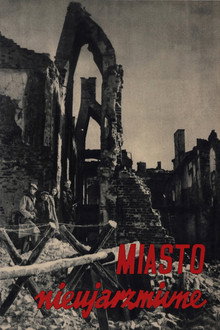
Unvanquished City
Warsaw after the fall of the Warsaw Uprising. The Germans expel the civilian population and then proceed to systematically destroy the city. The capital is transformed into a sea of rubble, among which a few survivors hide – modern-day Robinsons. One of them is Piotr Rafalski, who rescues Krystyna, a wounded Jewish woman. Three soldiers of the People's Army, cooperating with a Soviet telegraph operator, are also in the city.

The Contract
Bearing traces of the old Anton Chekhov play The Wedding, The Contract is set during an "arranged" ceremony. The bride and groom barely know each other, but this matters not at all to their tradition-bound families. At the last minute, the bride balks. Only slightly nonplused, the groom's father, a status-seeking doctor, decides to go ahead with the expensive reception anyway. Polish director Krzysz Zanussi uses this scenario to stick it to capitalist corruption, and to society's destruction of the individual spirit. Leslie Caron, the one recognizable member of the cast, is outstanding as a wealthy, over-the-hill ballerina who happens to be a kleptomaniac.