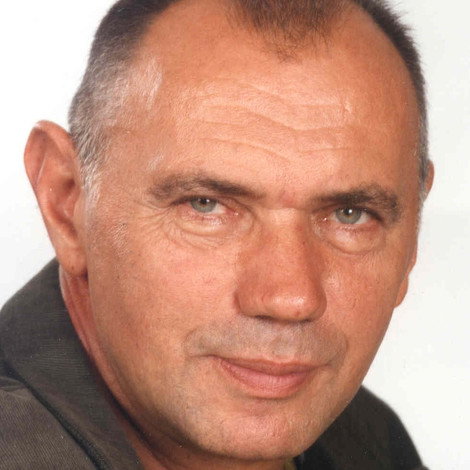
Personal Info
Known For
Gender
Birthday
Place of Birth
Gábor Koncz
Known for

Red Heat
A tough Russian policeman is forced to partner up with a cocky Chicago police detective when he is sent to Chicago to apprehend a Georgian drug lord who killed his partner and fled the country.

On the Roofs of Budapest
Gráci has been recently released from a reformatory school. His old gang would like to involve him in a new action, but he hesitates. His past record is bad enough already, and he would not like to get into new trouble.
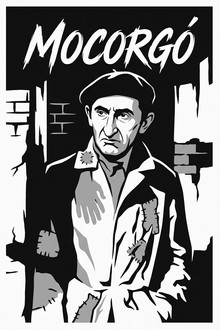
Mocorgó
Mocorgó, the well-meaning worker boy, is a tough guy. In his 40s he is still a mechanic's apprentice, but he is disappointed by his family, women and friends, and becomes a criminal. He goes to prison several times and tells the story of his life to the writer, who follows his story until 1956, until Mocorgó's death.


The Concert
Koncert is a 1962 Hungarian short film directed by István Szabó. In the film, several beach-goers have a go at playing creating an impromptu concert. The film was nominated for an Oscar for Best Live Action Short Film.
Epidemic
The film evokes the era of the 1831 cholera epidemic and the peasant uprising which followed it. The way of Doctor Balás, cholera commissioner, and district administrator Hunyor leads through the mountains of Zemplén and is lined by unburied corpses, peasants dying of the illness and of overdoses of bismuth, by the miserably starving population, the healthy digging mass-graves and by uncultivated lands.

Pillangó
Zsigmond Móricz wrote his novel Butterfly in just a few days in 1924. Móricz tells the story of a mighty love that triumphs over adversity and is all-powerful in the language of ordinary people. The love of Zsuzsika and Jóska is presented through the "lightning and veil-soft" emotions of the director, László Vitézy's television adaptation. After The Legend of Hortobágy (Komorló) and The Sky Bird, this is the third film made by László Vitézy based on the writings of Zsigmond Móricz.

Makra
The events of the story take place in the outskirts of working class people in the early nineteen fifties. Makra, a skilled worker in a factory, suddenly comes to close quarters with everything around him because his environment condemns and ridicules him for protecting a woman when his drunk fellows were going to rape her after his bachelor party.

A névtelen vár

Villa Negra
A past world is revived in the little cottage in the outskirts, next to the housing blocks under construction. Tamburás, the old hobo collects swerved youth: Diák, who desires freedom, the bus driver who is deprived of his license for having run over someone, and the rest. They have got an easy and unbound life there, with constant music, small thefts, occasional labour, tricks.

A falu jegyzője

Just Drop Dead!
Drop dead please! Following the sudden death of a mysterious engine driver in his sixties, the Wife, the Lover, her illegitimate Daughter and an increasing number of shady characters from his spurious past want to know the true identity of the man they loved. They are dying to know which of them was really loved by him, and where he has hidden the fantastic fruit of his double life. In their deadly struggle, our heroes find themselves in the center of a satirical crime comedy, the sinful roots of which stretch back to the eighties, the closing decade of the socialist era.

The Conquest
Filmed in commemoration of Hungary's 1100th anniversary and on the sites of the actual events, a cast of thousands authentically recreates the 896 AD arrival of the Magyar chief Arpad (Nero) and his seven tribes into the Carpathian basin from the steppes.

Glória
A TV movie version of István Örkény's short novel. The fate of Sister Glória, or Ilona Tarr, who has lived in a convent since her childhood, in the historical situation after 1948, when the nuns' orders were dissolved in our country. The film presents the reality of this extraordinary fate with lyrical beauty. At the age of 26, Gloria is taken out of the closed and safe world of the convent - both spiritual and everyday - and into a changing reality with shifting values. In the course of conflicts, while maintaining her individuality and integrity, she finally finds her place among everyday people.

I've Become a Cop
After World War II police forces increase the number of their permanent staff because of the corrupted general conditions. After a short instruction, recruits Sipos and Czöntör are also put into action against riotous groups, black-marketeers and burglars.