Personal Info
Known For
Gender
Birthday
Place of Birth
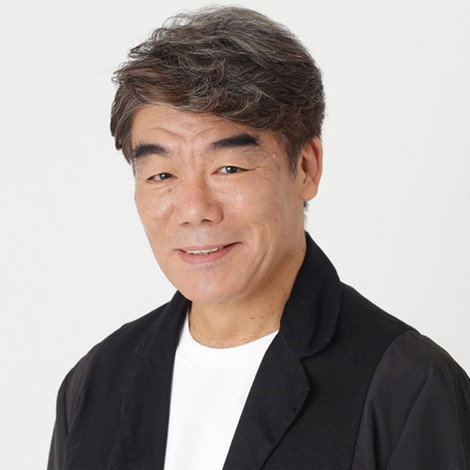
Takehiro Murata
Biography
Known for

Solitary Gourmet
Centered around typical Japanese food, a solitary salesman travelling through the country for business purposes, eats at its various establishments and experiences the various delicacies of Japanese cuisine.

CSI: Crime Scene Talks
Satoshi Itomura is an assistant police investigator who belongs to the Metropolitan Police Department’s Scientific Investigation Team. Reenactments, fingerprint and voice data collections, profiling... His team collects scientific evidence and pieces together fragments of information in order to help build evidences. However, Itomura often does not care about the scientific approach and instead pays a great deal of attention to the things that the victims always carried with them or treasured. And he focuses on these things because they usually carry the victim’s dying wishes, understanding that last message not only helps solve the cases but also brings closure to the depressed family of victims.


Junjo Kirari
The 74th NHK Asadora Drama is Junjo Kirari, which means something along the lines of "pure-hearted Kirari." The story is set in Okazaki City, Aichi Prefecture in the era around the Second World War. When the story opens in 1928, the heroine, Sakurako, is a very active seven-year-old girl. Indeed, even in the first episode she exhibits her confidence and enthusiasm. But above all else, Sakurako is interested in becoming a jazz pianist, and music features extensively in the plot.

Seven Detectives
Yū Amagi is a slightly eccentric detective who has been assigned to the Twelfth Section of the Tokyo Metropolitan Police Department's First Investigative Division from the Lost and Found Centre. The Twelfth Section is called the "graveyard of detectives" and ridiculed as the "banishment room where hardened detectives who cannot be fired are sent." Its assembled detectives Kōsuke Samura, Takumi Yamashita, Keita Nagasawa, Tamaki Mizuta, and Masatoshi Katagiri are elite and yet oddballs. Amagi appears fixated with time which seems to have no relation with a case. Raising questions about the timelines of the perpetrator and victim derived from the estimated time of death, time of crime, time of alibi, and time limit, he searches for the meaning of "blank time" which arises from this. He obsesses over the weight of every minute and second of time because of some incident.

Cold Case: Door of Truth
Yuri Ishikawa and her team try to crack unresolved cold cases in Kanagawa Prefecture, Japan.

Kumokiri Nizaemon
During the Kyoho period in the reign of Tokugawa Yoshimune, there is a gang of thieves active not just in Edo but also the Tokaido and the Nakasendo, and all across the Kansai region, stealing large sums of money with skillful techniques. They only target the very wealthy and never kill or injure people. They appear with the clouds and disappear like the mist. On the night that the beautiful Ochiyo is to become the bride of a dry goods dealer, a large amount of money hidden inside the shop is stolen. The gang disappears without injuring anyone. It was a two-year plan to marry Ochiyo off so that she could bring them in. The leader of this gang is Kumokiri Nizaemon, the greatest bandit of all time. He keeps a rein on his highly-skilled and notorious followers Nanabake no Ochiyo, Kinezumi no Kichigoro, Subashiri no Kumagoro, Ingakozo Rokunosuke and others.

Pom Poko
The Raccoons of the Tama Hills are being forced from their homes by the rapid development of houses and shopping malls. As it becomes harder to find food and shelter, they decide to band together and fight back. The Raccoons practice and perfect the ancient art of transformation until they are even able to appear as humans in hilarious circumstances.

Clouds Over the Hill
Saka no Ue no Kumo is an NHK 21st Century special drama which was aired over three years starting from November 29, 2009. The series runs 13 episodes at 90 minutes each. The first series, with 5 episodes, was broadcast in 2009, while series two and three, each with 4 episodes, were broadcast in late 2010 and 2011. While most episodes were shot in Japan, one of the episodes in series two was shot in Latvia. The TV series is based on the novel Saka no ue no kumo by Ryōtarō Shiba and adopted by Hisashi Nozawa. The theme song of the drama series is titled "Stand Alone". It was composed by Joe Hisaishi, written by Kundo Koyama and performed by British soprano singer Sarah Brightman.

No Side Game
Mr Kimijima's star at the conglomerate is on the rise until he objects to his manager's pet project. Consequently, he is transferred to a manufacturing factory out in the provinces. Moreover, he is given the reins of the company's rugby team. The team is in a slump and not doing well. He would like the team to begin winning again, but what does he know about a game of running and diving and groping?

Godzilla vs. Destoroyah
A burning Godzilla, on the verge of meltdown, emerges to lay siege to Hong Kong. At the same time horrifying new organisms are discovered in Japan. These crustacean-like beings are seemingly born of the Oxygen Destroyer, the weapon that killed the original Godzilla.

Godzilla vs. Mothra
Mothra's dark counterpart, Battra, emerges to eliminate humanity on behalf of the Earth. Two tiny fairies called the Cosmos offer their help by calling Mothra to battle the creature. Unfortunately a meteorite has awoken a hibernating Godzilla as a three way battle for the Earth begins.

Dakishimetai!
Asako Ikeuchi and Natsuko Hayakawa have been close friends for more than 25 years. Natsuko's husband Keisuke had affairs, so she asks Asako to let her stay at her house. Keisuke was once Asako's boyfriend. They will soon be 30 years old. There are other nice guys around Asako. It's a drama about their love and friendship.

Ningyo Sashichi Torimonocho

Sayoko is Back
Nishihama Junior High School is haunted by the legend of Sayoko. Every three years a student is chosen to play the role of Sayoko by his or her predecessor. Sayoko has three missions to accomplish. If they are completed it is to the advantage of the school. If not, the school is doomed... Shu has been chosen to be Sayoko. Disbelieving the legend, Shu lets his pal Rei assume the role. But, when the new term begins, one of the tasks has already been completed. By whom? This is just the prelude to a string of spooky happenings.