Personal Info
Known For
Gender
Birthday
Place of Birth
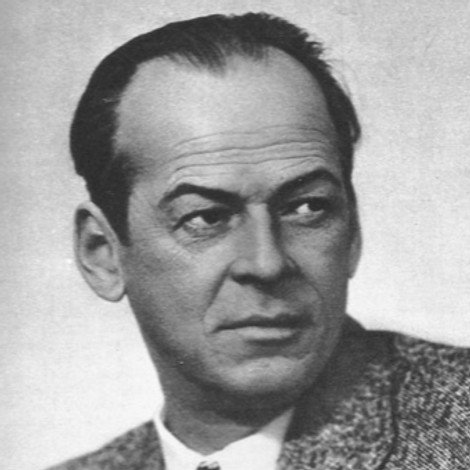
Nikolai Cherkasov
Biography
Known for

When Idols Were Gone

Don Quixote
Senor Quexana has read so many books on chivalry that he believes that he is the knight Don Quixote de la Mancha. So Don Quixote sets off on his horse, accompanied by his squire Sancho Panza on a mule, to perform valiant deeds. They mistakenly save the Lady Altisidora who is so amused that she invites them to visit the Duke to provide some merriment at court. Among other deeds, Don Quixote frees some prisoners, who then turn upon him, and Don Quixote attacks a windmill that he imagines is a monstrous wizard.


Ivan the Terrible, Part I
Set during the early part of his reign, Ivan faces betrayal from the aristocracy and even his closest friends as he seeks to unite the Russian people. Sergei Eisenstein's final film, this is the first part of a three-part biopic of Tsar Ivan IV of Russia, which was never completed due to the producer's dissatisfaction with Eisenstein's attempts to use forbidden experimental filming techniques and excessive cost overruns. The second part was completed but not released for a decade after Eisenstein's death and a change of heart in the USSR government toward his work; the third part was only in its earliest stage of filming when shooting was stopped altogether.

All Remains to People
Renowned scientist Dronov works in Novosibirsk on the creation of ultra-modern engine. He has a bad heart, he was afraid not to have time to finish the job, and test engine at a factory in Moscow, unfortunately, is not the first time passes unsuccessfully. Dronov abandons the rest of the work, even the leadership of the Institute entrusts to his disciple Morozov.

Мелодии Дунаевского
The film uses fragments of feature films and materials of the Gosfilmofond of the Russian Federation. In addition to the actors listed above, the following actors tell about the composer: directors Grigory Alexandrov and Ivan Pyriev, songwriters Mikhail Matusovsky and Vasily Lebedev-Kumach.

His Excellency
This 1928 film features stylized cinematography and actors from the Moscow Art Theater in a fiction story based on the life of Jewish Labor Bund member Hirsch Lekert who attempted to assassinate the Vilna governor in 1902 to avenge the flogging of workers who participated in a May Day rally.

Alexander Nevsky
When German knights invade Russia, Prince Alexander Nevsky must rally his people to resist the formidable force. After the Teutonic soldiers take over an eastern Russian city, Alexander stages his stand at Novgorod, where a major battle is fought on the ice of frozen Lake Chudskoe. While Alexander leads his outnumbered troops, two of their number, Vasili and Gavrilo, begin a contest of bravery to win the hand of a local maiden.

They Knew Mayakovsky

Ivan the Terrible, Part II: The Boyars' Plot
This is the second part of a projected three-part epic biopic of Russian Czar Ivan Grozny, undertaken by Soviet film-maker Sergei Eisenstein at the behest of Josef Stalin. Production of the epic was stopped before the third part could be filmed, due to producer dissatisfaction with Eisenstein's introducing forbidden experimental filming techniques into the material, more evident in this part than the first part. As it was, this second part was banned from showings until after the deaths of both Eisenstein and Stalin, and a change of attitude by the subsequent heads of the Soviet government. In this part, as Ivan the Terrible attempts to consolidate his power by establishing a personal army, his political rivals, the Russian boyars, plot to assassinate him.

Brother
The chairman of the factory committee of one of the Leningrad factories, Fyodor Gorbachev, a weak-willed man who was unable to completely overcome his petty-proprietor psychology, is visited from the village by his brother Sergei, a former kulak and trader. His arrival brings quarrels and discord into the friendly Gorbachev family. At Fyodor's request, the factory director hires Sergei, but demands a favor in return.


Moon on the Left
The main character, the chairman of the district revolutionary tribunal, Comrade Kovalev, believes that a true revolutionary should have only one love - revolution. And women, especially attractive ones, are a great hindrance to Comrade Kovalev. But he is unable to connect theory with practice. Love overcomes the ridiculous prejudices of the hero, who along the way achieves his real victory - the defeat of the White bandit gang...
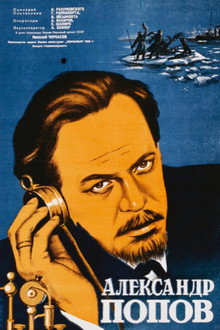
Alexander Popov
A biographical film about the life and work of the outstanding physicist-electrical engineer, inventor of radio communications Alexander Semenovich Popov.

Concert on the Screen
Film-Concert. The program includes scenes from plays, ballets, and operas; folk songs and romances; B. Eder with a group of trained lions; S. Obraztsov's puppet theater; and dances by soloists of the I. Moiseyev Ensemble. The host is Nikolai Cherkasov.