Personal Info
Known For
Gender
Birthday
Place of Birth
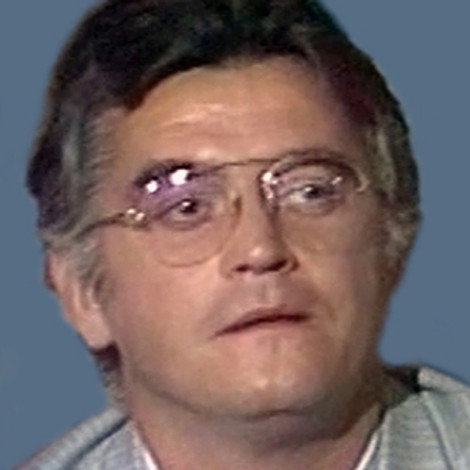
Eckhard Becker
Known for

Polizeiruf 110
Polizeiruf 110 is a long-running German language detective television series. The first episode was broadcast 27 June 1971 in the German Democratic Republic, and after the dissolution of Fernsehen der DDR the series was picked up by ARD. It was originally created as a counterpart to the West German series Tatort, and quickly became a public favorite.

Cascade Backwards
Maja Wegner is in her late thirties and a single mother of a teenage daughter. To give her stale life a new direction, she decides to start all over again in the big city. She sells her house in the countryside, quits her job, and moves with her daughter to Berlin. There, she finds a job as a conductor for the railroad company. Although Maja soon finds new friends in her apartment building, the search for a new life partner does not come off so easily.

Apache
The story of Ulzana, an Apache chief who has reached a rapprochement with the local Mexican population and generously extends it to whites who travel through the territory. His people have become inured to the treacherous ways of the white man, however, and are now reliant on them for booze, 'relief flour' and beef steak.

Battle of Moscow
The Battle of Moscow is a 1985 Soviet multi-part war narrative, presenting a dramatized account of the 1941 Battle of Moscow and the events preceding it. The battle was the first major defeat of German Wehrmacht in the Second World War.

Levin's Mill
In a small village in West Prussia in the 1870s, Germans, Poles, Gypsies and Jews live together as neighbors. One night Johann, a German mill-owner, secretly opens the dam gates and floods the mill of his Jewish rival Levin. After his business is ruined and his calls for justice go unanswered, Levin leaves town.

Geheimcode B/13
Colonel Maratka and Major Kalasz, employees of the Czechoslovakian defense forces, are facing a difficult task. They must complete a mission that is important for the security of their country. The Prague headquarters of the state security service had previously received information from the GDR that West German military intelligence had apparently succeeded in deciphering the secret code B/13 used in the field of missile armament.

My Zero Hour
Germany in 1943. The Berlin worker Klaus Hartung is deployed as a soldier to the Eastern front during World War II. During a tour, he is captured by a Russian patrol. While in captivity, Hartung comes to the conclusion that he has to come through and actively take part in the effort to end the war. He consents to abduct a German officer together with two Russian soldiers. During their adventurous mission, the men who at first had been enemies, become sincere friends.

Du und ich und Klein-Paris
When Angelika moves to Leipzig, she is forced to rent a room at Mrs. Häublein’s for a start, since her parents will not follow until a few months later. Fellow tenant Thomas, a philosophy student, is not at all enthused about his new, pretty housemate. Because of Angelika he has to move into a smaller room. Furthermore, he is annoyed at her many male acquaintances, without sensing that his aggression might be prompted by jealousy. When Angelika’s father comes for a visit, he asks Thomas to keep an eye on his daughter. Thomas takes this assignment very seriously and finally realizes that he has fallen in love with Angelika.

Käthe Kollwitz – Pictures of a Life
Kathe Kollwitz was 47 years old, and already a well established artist in Germany and abroad when Peter, her youngest son, volunteered to join the German army in WWI and was killed two weeks later. This painful tragedy changed Kollwitz's life and art forever.

The House on the River
1942. The members of the Voß family, mother, two daughters, a daughter-in-law, and a son-in-law, are living in a house at the river. A fellow soldier of son Paul, who fights at the eastern front, delivers his greetings and an embroidered Russian blouse for Emmi, Paul′s wife. Daughter Agnes, whose husband is also fighting in the war, receives a fur vest from the junior partner who is stalking her. Obviously, the vest is also loot from the eastern front. When the family receives news that Emmi′s husband has been killed in action, the war finally enters the house at the river. Emmi commits suicide while Agnes′s husband returns as a cripple from the war front. At home, he has to learn what a price his wife had to pay for the "Russian fur".

Der kleine Herr Friedemann
The Lübeck merchant Friedemann owes his crippled figure to a wet nurse "devoted to drink". He lives a secluded life with his three simple-minded sisters and his bedridden mother, loving only the theater and music. Only Gerda, the unhappy wife of the district commander of Rinnlingen, makes him blossom...