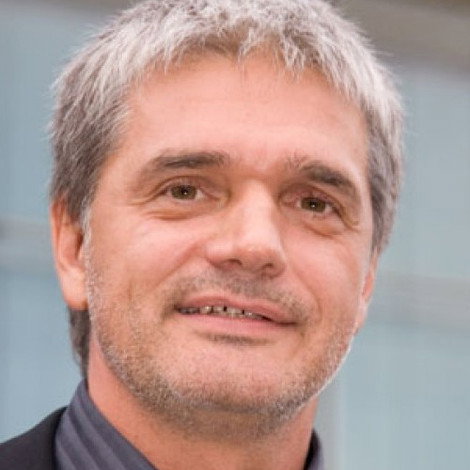
Personal Info
Known For
Gender
Birthday
Place of Birth
Konstantin Lavronenko
Biography
Known for

KVN Major League
KVN is a Russian humour TV show and competition where teams compete by giving funny answers to questions and showing prepared sketches. The programme was first aired by the First Soviet Channel on November 8, 1961. Eleven years later, in 1972, when few programmes were being broadcast live, Soviet censors found the students' impromptu jokes offensive and anti-Soviet and banned KVN. The show was revived fourteen years later during the Perestroika era in 1986, with Alexander Maslyakov as its host. It is one of the longest-running TV programmes on Russian Television. It also has its own holiday on November 8, the birthday of the game, which KVN players celebrate every year since it was announced and widely celebrated for the first time in 2001.

Russian Affairs
Moscow, present day. The city of big money, passion, gorgeous women and wealthy men, receptions and dangerous intrigue. Dasha, an art historian from the province, who came to the capital, dreams of a new, better life, but a mysterious and cruel incident will change everything.
Russian Affairs
Moscow, present day. The city of big money, passion, gorgeous women and wealthy men, receptions and dangerous intrigue. Dasha, an art historian from the province, who came to the capital, dreams of a new, better life, but a mysterious and cruel incident will change everything.
Russian Affairs
Moscow, present day. The city of big money, passion, gorgeous women and wealthy men, receptions and dangerous intrigue. Dasha, an art historian from the province, who came to the capital, dreams of a new, better life, but a mysterious and cruel incident will change everything.

Ekaterina
1745. The reigning Empress Elizabeth Petrovna is infertile. The only heir is her feeble-minded nephew Peter III. Elizabeth cannot allow Peter to ascend to the throne, so she decides to marry the tsarevich, wait for the birth of her son, and then take the boy and raise him as a real Russian emperor herself. Brides are coming to St. Petersburg. Among them is the lovely Fike - the young Princess Sofia Frederica from the impoverished branch of the Prussian kings.

Chikatilo
He killed and went unpunished for more than ten years, and more than fifty people died at his hands. An innocent man was convicted and shot instead. For a long time, the murders he committed could not be combined into one case. Maniacs of this caliber simply did not exist in the USSR, so law enforcement agencies were not ready to fight the "Rabid Beast", as journalists later dubbed it. Vigilantes, police officers, investigators from the prosecutor's office, psychiatrists were involved in the capture of Chikatilo, and new investigative techniques were developed that will help save innocent people.

Russian Rollercoasters

Artist
March 1944. At the front, the Red Army is conducting a confident offensive. The Allies are about to open a second front, and it seems that the final defeat of Nazi Germany is very close. However, the joy of the coming victory is overshadowed by a series of daring and brutal murders. No one has ever managed to see the bandits up close. According to the scant testimony of random eyewitnesses, the composition of the attackers is constantly changing. And every time they leave portraits of the dead at the crime scene. For these drawings and cruelty, the gang was nicknamed "Death's Head", and its leader was called an Artist.

The Hero
An alumni of the Russian Foreign Intelligence Service who is settled in Europe gets a call from his father who was considered dead and he sets on a mission to find him with the help of his first love.

Archangel
Fluke Kelso, a dissipated, middle-aged former Oxford historian, who is in Moscow to attend a conference on the newly opened Soviet archives, receives in his hotel a very unexpected visitor.

Liquidation
Liquidation is a highly popular Russian television series, which parallels the famous The Meeting Place Cannot Be Changed with notable ethical shift. In the "Meeting Place", chief of criminal investigations Gleb Zheglov had a modus operandi "Thief must go to prison, no matter how I put him there". In Liquidation, chief of criminal investigations David Gotsman's motto has changed to "Thief must go to prison, but lawfully so". The stars of the film include famous Russian actors such as Vladimir Mashkov and Konstantin Lavronenko. Sergei Makovetsky had to replace Andrey Krasko, who died of heart attack during the filming.

The Blackout
In the near future, life on earth is destroyed except for a small area in Eastern Europe. Russian military fights off hoards of remaining humans controlled by aliens and work to prevent a successful invasion by an alien force set on conquering the plant.

Coma
A young and talented architect comes to his senses after a horrific accident only to find himself in the odd dystopian world. A world that is filled with the memories of all current coma patients. Just like a human memory this world is fragmental, chaotic and unstable. This is COMA: icecaps, rivers and cities can all exist in a space of a single room and laws of physics are no longer laws as they can be bent.

The Blackout
Contact between most towns on Earth has been severed. A small ring-like area in Eastern Europe still has electricity, and maybe even life is being reported from space. What military forces find outside the ring is shocking.

Ranevskaya
Despite her parents' ban, 20-year-old Faina Feldman is going to conquer theatrical Moscow. The capital greets her with hostility, but Faina doesn't care much, especially since real friends and mentors appear in her life who teach, help, and patronize. Every minor success is followed by a serious life drama. Revolution, then war... and each time there is a serious struggle for life, which is based on fragile hope, a great love for the theater and absolute faith in one's own destiny.