Personal Info
Known For
Gender
Birthday
Place of Birth
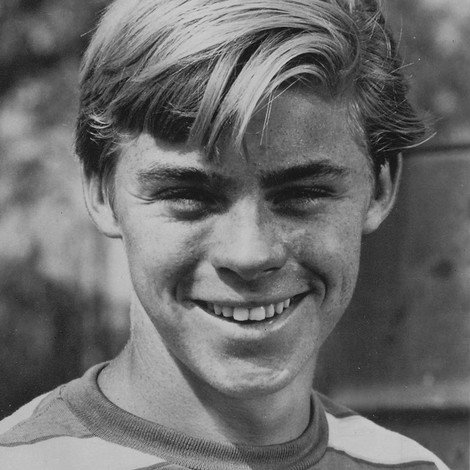
Luke Halpin
Biography
Known for

Studio One
An American radio–television anthology series, created in 1947 by Canadian director Fletcher Markle, who came to CBS from the CBC. Studio One, presented by Westinghouse, was one of the first of the anthology TV programs. The episodes were often abridged remakes of movies from years gone by and many future well-known television and movie actors appeared in the productions.

Naked City
Naked City is a police drama series which aired from 1958 to 1963 on the ABC television network. It was inspired by the 1948 motion picture of the same name, and mimics its dramatic “semi-documentary” format. In 1997, the episode “Sweet Prince of Delancey Street” was ranked #93 on TV Guide’s “100 Greatest Episodes of All Time”.

Route 66
After discovering that his late father has gone through most of the family fortune, Tod Stiles hits the title trans-America highway in his Corvette in search of adventure with friend Buz Murdock, a survivor of New York's mean streets. The two work odd jobs as they meet and interact with colorful characters and find themselves plunged into one situation after another, some of them romantic, some of them very dangerous. Later, Linc Case, a Vietnam war hero trying to find himself, takes over as Tod's travel companion.

Flipper
Flipper, from Ivan Tors Films in association with Metro-Goldwyn-Mayer Television, is an American television program first broadcast on NBC from September 19, 1964, until April 15, 1967. Flipper, a bottlenose dolphin, is the companion animal of Porter Ricks, Chief Warden at fictional Coral Key Park and Marine Preserve in southern Florida, and his two young sons, Sandy and Bud. The show has been dubbed an "aquatic Lassie", and a considerable amount of juvenile merchandise inspired by the show was produced during its first-run.

Judd, for the Defense
High-priced Houston lawyer Clinton Judd and his assistant Ben Caldwell take difficult cases throughout the U.S.

Everglades
The Everglades is an American crime-adventure television series that aired in first-run syndication for one season from 1961–62 and in reruns. Ron Hayes starred as Constable Lincoln Vail, a law enforcement officer of the fictional Everglades County Patrol who traveled the Florida Everglades in an airboat, a vehicle which was often the focus of the program. Hayes, a northern California actor and stuntman, was an avid outdoorsman and conservationist. Gordon Casell appeared in five of the 38 half-hour episodes as Chief Anderson, Vail's superior. Steve Brodie made three appearances as Captain Andy Benson; Dan Chandler was twice cast as Vail's sidekick, airboat guide Pete Hammond. Future film star Burt Reynolds appeared twice in the role of Lew Johnson and once as Trask. Guest stars included R.G. Armstrong, Victor Buono, Roger C. Carmel, Paul Carr, Jack Cassidy, Lonny Chapman, John Doucette, Penny Edwards, Frank Ferguson, Luke Halpin, Douglas Kennedy, Robert Knapp, Paul Lambert, Tyler McVey, Mala Powers, Chris Robinson, Johnny Seven, Ray Teal, Bill Travers, and Dawn Wells. The show was produced by Ivan Tors and distributed by Ziv-United Artists.

Death Valley Days
Death Valley Days is an American radio and television anthology series featuring true stories of the old American West, particularly the Death Valley area. Created in 1930 by Ruth Woodman, the program was broadcast on radio until 1945 and continued from 1952 to 1970 as a syndicated television series, with reruns continuing through August 1, 1975. The series was sponsored by the Pacific Coast Borax Company and hosted by Stanley Andrews, Ronald Reagan, Robert Taylor, and Dale Robertson. With the passing of Dale Robertson in 2013, all the former Death Valley Days hosts are now deceased.

Hallmark Hall of Fame
Long-running anthology program sponsored by Hallmark Cards. Beginning in 1951 and continuing into 2019, the series received 80 Emmy Awards, 24 Christopher Awards, 11 Peabody Awards, 9 Golden Globes, and 4 Humanitas Prizes. Early seasons were a weekly live drama, eventually transitioning to videotaped and then filmed productions broadcast as occasional specials.

Primus
Primus is a syndicated sea adventure series which aired in 1971–1972. It told the adventures of Carter Primus. The series was produced by Ivan Tors and one season was shot.

Flipper
Sandy is distraught when, having saved Flipper by pulling out a spear, his father insists the dolphin be released. A grateful Flipper, however, returns the favor when Sandy is threatened by sharks.

Shock Waves
Visitors to a remote island discover that a reclusive Nazi commandant has been breeding a group of zombie soldiers.