Personal Info
Known For
Gender
Birthday
Place of Birth
Georges Audoubert
Known for
Midi trente

Discorama

At Theatre Tonight
At Theater tonight is a TV show broadcasted from 25th August 1966 to 21st September 1985. The show is broadcast plays recorded in two or three days, during public performances at the Théâtre Marigny on the Champs-Élysées, or sometimes Edouard VII theater.
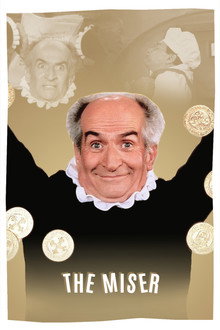
The Miser
The children of Harpagon, Cléante and his sister Elise, are each in love but they still haven’t spoken to their father yet. Harpagon is a miser who wants to choose the right man and the right woman for his children. Based on Molière’s play.
Les Cent Livres des Hommes
Les Cent Livres des Hommes (ORTF, 1969-1973) was a series of literary programs created by Claude Santelli and Françoise Verny, and produced notably by Santelli, Jean Archimbaud, and Serge Moati. Planned for one hundred episodes but completed at thirty-nine, the series aimed to introduce great literary works, 'chefs-d’œuvre', to a younger audience through a mix of dramatization, reading, and documentary techniques. It marked a transfer of cultural legitimacy from writers and critics to a generation of television producers, offering a new model of educational and creative literary broadcasting - 'télévision d’auteur'.
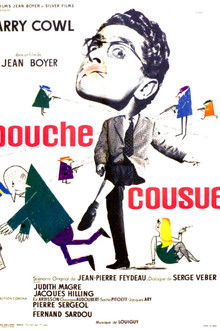
Mum's the Word
Martin is a nurse in a private clinic in Paris. The victim of a serious concussion, an unidentified casualty, arrives in the emergency room one night. He is operated on immediately. When he wakes up, half-unconscious, he tells Martin a confused story about stealing jewels from a maharajah visiting Marseille... before falling into total amnesia. Real and fake policemen interrogate Martin, gangsters kidnap him to get him to reveal precious information, but... the nurse keeps his mouth shut!
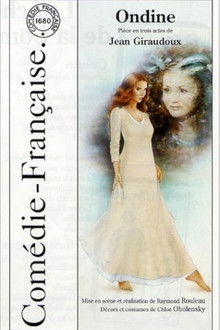
Ondine
In the forest, knight-errant Hans meets and falls in love with Ondine, a water-sprite who is attracted to the world of mortal man.
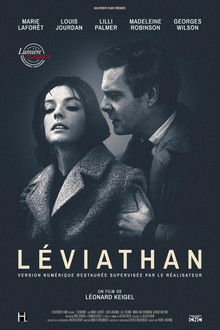
Dark Journey
In this movie based upon Julian Green's novel, we follow Paul's downfall as he is torn between his love for Angele, a local prostitute, as he finds out too late, and Madame Grosgeorge's love for him.

My Wife's Husband
After thirteen years in Germany, Fernand is coming back to his wife and his restaurant. But since his disparition, his wife as made her life with a norman chef, sympathetic but a specialist of butter's cooking when Fernand cook only with oil!
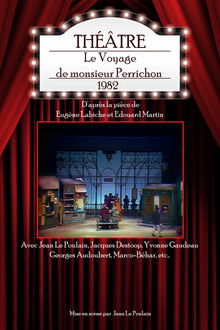
Le Voyage de monsieur Perrichon
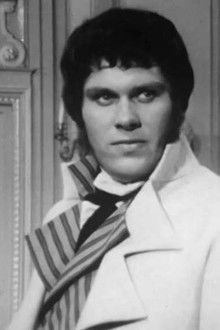
Cadoudal

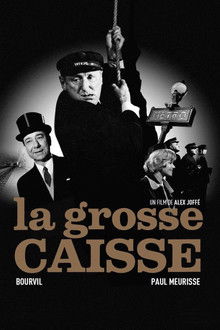
The Big Swag
Louis Bourdin, a modest ticket puncher on the Paris metro, is so enamoured of crime fiction that he decides to write his own novel, expecting that one day he will be as famous as Auguste Le Breton. After months of painstaking research, he pens a work of fiction that describes in meticulous detail a train robbery on his stretch of the metro. Unfortunately, Louis has no success getting the book published, as no one seems to believe the robbery is possible. To prove them wrong, Louis decides to enact the robbery himself, with the help of some professional crooks. As luck would have it, Paul Filippi, the aristocrat of crime, has just been released from prison and is preparing his next criminal exploit. To his mind, Louis has conceived the perfect robbery...
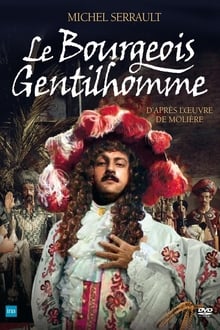
Would-Be Gentleman
Le Bourgeois gentilhomme satirizes attempts at social climbing and the bourgeois personality, poking fun both at the vulgar, pretentious middle-class and the vain, snobbish aristocracy. The title is meant as an oxymoron: in Molière's France, a "gentleman" was by definition nobly born, and thus there could be no such thing as a bourgeois gentleman.