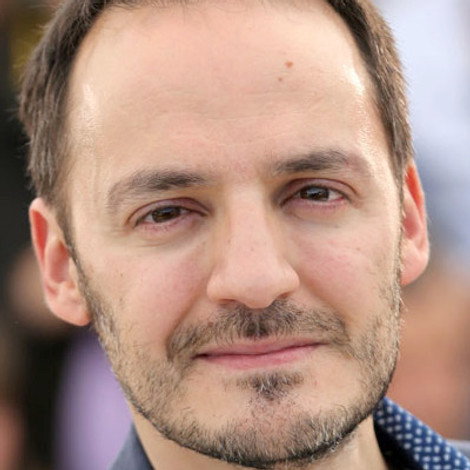
Personal Info
Known For
Gender
Birthday
Place of Birth
Fabrizio Rongione
Biography
Known for

A French Village
The stories of the people of Villeneuve, a fictional subprefecture, in the Jura, in German–occupied France during the Second World War.

Mafiosa
By the will of her dead uncle who was murdered Sandra Paoli is propelled to the head of a powerful mafia clan. She becomes a respected, but also hated, woman in a world of men, murder and criminality.

The Leopard
Amid the unification of 1860s Italy, a Sicilian prince grapples with the collision between his family's ancient privilege and revolutionary change.

Young Mothers
Housed in a shelter for young mothers, Jessica, Perla, Julia, Ariane, and Naïma, all of whom have grown up in difficult circumstances, struggle to obtain a better life for themselves and their children.

Happening
France, 1963. Anne is a bright young student with a promising future ahead of her. But when she falls pregnant, she sees the opportunity to finish her studies and escape the constraints of her social background disappearing. With her final exams fast approaching and her belly growing, Anne resolves to act, even if she has to confront shame and pain, even if she must risk prison to do so.

Azor
Yvan De Wiel, a private banker from Geneva, is going to Argentina in the midst of a dictatorship to replace his partner, the object of the most worrying rumors, who disappeared overnight. Between hushed lounges, swimming pools, and gardens under surveillance, a remote duel takes place between two bankers who, despite different methods, are the accomplices of a discreet and merciless form of colonization.

Two Days, One Night
Sandra is a young woman who has only one weekend to convince her colleagues they must give up their bonuses in order for her to keep her job — not an easy task in this economy.

Rose Island
In 1968, engineer Giorgio Rosa established the independent state called "The Isle of Roses" off the coast of Rimini, built on a platform outside the territorial waters, with Esperanto as the official language. The Italian authorities did not take it well because the micronation was seen as an expedient to not pay taxes on the revenues obtained thanks to the arrival of numerous tourists and curious people.
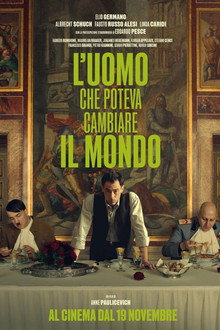
The Man Who Could Have Changed the World
Based upon the true story of Ranuccio Bandinelli, an antifascist Archaeology and History of Art teacher who sought to steer clear of politics but who found himself appointed, ex-officio, as Hitler and Mussolini’s official guide during their visit to Rome and Florence.

Diaz - Don't Clean Up This Blood
On July 19–21, 2001, over 200,000 people took to the streets of Genoa to protest against the ongoing G8 summit. Anti-globalization activists clashed with the police, with 23-year-old protester Carlo Giuliani shot dead after confronting a police vehicle. In the aftermath, the police organized a night raid on the Diaz high school, where around a hundred people between unarmed protesters—mostly students—and independent reporters who documented the police brutality during the protests had took shelter. What happened next was called by Amnesty International "the most serious breach of civil liberties in a democratic Western country since World War II."

The Return
Teresa, a mother from the Lazio suburbs, finds herself making an extreme gesture to defend her family from an unscrupulous loan shark. After serving her prison sentence, she must face the return to everyday life.

The Kid with a Bike
Abandoned by his father, a young boy is left in the hands of an unqualified childcare provider.

Don't Do That!
Joël is jealous and violent. After one crisis too many, Nicole, his young wife, returns to live with her parents with their three-year-old son. Joël hangs on, begs, threatens. One day, he kidnaps the little boy.

Max
During World War II, in a sealed room, a brutal psychological duel unfolds between Jean Moulin, the leader of the French Resistance, and Klaus Barbie, the Chief of the Gestapo.

The Flood
1792. Louis XVI, his wife Marie Antoinette, and their children have been arrested and imprisoned in the Tour du Temple, a sinister chateau in Paris, awaiting their trial. Far from the splendour of Versailles, they are isolated and vulnerable for the first time in their lives.