Personal Info
Known For
Gender
Birthday
Place of Birth
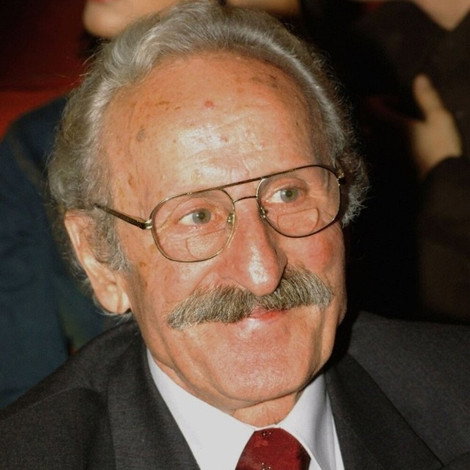
Franciszek Pieczka
Biography
Known for

Ranczo
Ranczo ["Ranch"] is a Polish television comedy series, directed by Wojciech Adamczyk, that has aired since March 2006 on TVP1. It follows the story of Lucy Wilska, a Polish-American who has inherited her grandmother's country home in the fictional small town of Wilkowyje. She arrives in Wilkowyje intent on selling the cottage but, after seeing the charm of the village, decides to stay.
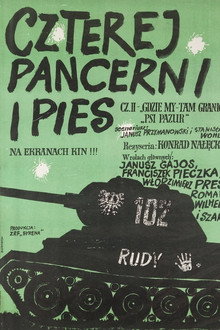
Four Tank-Men and a Dog
Czterej pancerni i pies was a Polish black and white TV series based on the book by Janusz Przymanowski. Made between 1966 and 1970, the series is composed of 21 episodes of 55 minutes each, divided into three seasons. It is set in 1944 and 1945, during World War II, and follows the adventures of a tank crew and their T-34 tank in the 1st Polish Army. Although both the book and the TV series contain elements of pro-Soviet propaganda, they have achieved and retain a cult series status in Poland, Soviet Union and other Eastern Bloc countries. The T-34 tank Rudy with the identifying number "102", a German Shepherd dog from Siberia Szarik and to a lesser extent the crew Jan Kos, Gustaw Jeleń, Grigorij Saakaszwili, Tomasz Czereśniak, and their commander and mentor Olgierd Jarosz, as well as other heroes of the series, have become icons in Polish popular culture.

Doktor Ewa
Doctor Ewa Lipska, an attractive young woman just after graduation, with interesting professional prospects for the future, chooses the job of a village doctor. Brought up in a big city, she settles in the small town of Międzybórz in the Łódź Province. She is forced not only to overcome the daily difficulties resulting from medical practice in a rural health center, but also to learn to talk to people of a different mentality and gain the trust of her patients.

Hotel pod żyrafą i nosorożcem
After graduating, Ania and Roman Miłobędzcy moved to the Beskid Mountains to fulfill their youthful dreams. It was here that their children were born. After a dozen or so years of farming in the Beskid meadows, they were close to bankruptcy. They took advantage of a proposal from businessman Bury and traded their Beskid farm for a villa in a town near Warsaw. Their children, Ola, Janek, and Zuza, were deeply affected by the move. The family's hopes were mixed with sadness. The parents' plan proved a disaster. Instead of a villa, they found a dilapidated wooden house, inhabited, moreover, by the quirky and eccentric Franciszek Alba. It quickly became clear that the Miłobędzcy family had fallen victim to a fraud.

Ziemia obiecana

Blisko, coraz bliżej
The story stretches from 1863 to 1945. Its main characters are representatives of the Pasternik family, who live in the fictional village of Wielowice near Pszczyna. The protagonist of the first three episodes is Franciszek Pasternik, the following parts tell about the fate of his many children and even more grandchildren. The viewer follows their history against the backdrop of great changes and historical events that influenced the lives of Silesian Poles. So there is the Kulturkampf, Prussian rugi, the revolution of 1905, World War I and the Silesian Uprisings.

Trzy młyny
Series based on the stories of Jarosław Iwaszkiewicz “Młyn nad Utrata” (1936), “Młyn nad Lutyniu” (1946) and “Młyn nad Kamienna” (1950). The action of the miniseries takes place from 1928 to the 1950s.
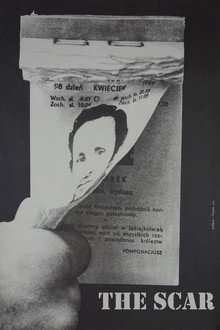
The Scar
When a political decision is made as to the location of a new large chemical factory, Stefan Bednarz is put in charge of it. This honest communist party man has to confront the local community opposing the construction.
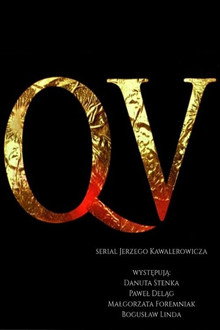
Quo Vadis

Liberation - Part 4 : The Battle of Berlin
In this the fourth episode, “Battle of Berlin,” the Soviets start their assault on Berlin, and Stalin negotiates with the other Allies.

Quo Vadis
Ancient Rome, during the time of Emperor Nero. Vinicius, a young patrician, falls in love with the beautiful Lygia, the daughter of a Barbarian commander who was killed in battle, and wants her for his concubine. For Lygia, a Christian, being a pagan's concubine is a severe sin and disgrace. However, when Vinicius is wounded, Lygia cares for him, and starts to reciprocate his feelings. Vinicius, in return, becomes interested in Christian learning and asks Apostle Peter to teach him. In the meantime, Emperor Nero accuses Christians of having started a great fire in Rome. He encourages the imprisonment, torture and murder of his Christian subjects.

Legenda
Three children strike a deep friendship after a chance encounter during World War 2.
The Case of Bronek Pekosinski
Bronek Pekosinski lives in Zamosc, Poland. He is probably 83 years old. He has no family and does not really know who he is. Everything about his life is fictitious: symbolic is the date of birth - the day World War II broke out, as well as his surname - after PKOS, an abbreviation of a charitable institution, and the place of birth - the Nazi concentration camp, from where his mother threw him over a barbed wire fence. Even his friends and guardians turned out to be false. Only his loneliness and his hump seem to be authentic. Two great powers have vied for young Bronek's soul: Roman-Catholic church and a totalitarian state. He fell into alcoholism. Partially paralyzed as the effect of cerebral hemorrhage, he is fired with an ambition of acquiring a mastery in a game of chess.

All Souls' Day
A pair of lovers go off to a small hotel in a little town. The memories of war, however, intrude on their idyll. The girl and boy relive certain wartime experiences in flashback. She was a communist who drove a boy loving her to give himself up.