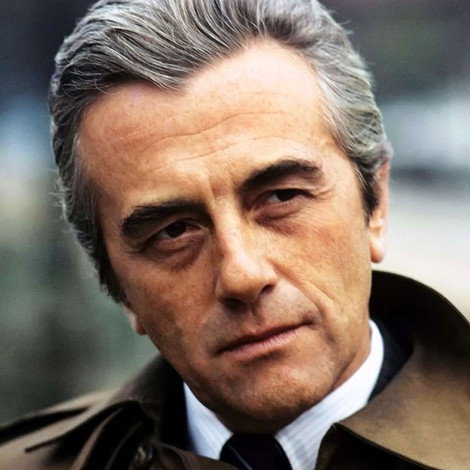
Personal Info
Known For
Gender
Birthday
Place of Birth
Andrzej Łapicki
Biography
Known for

Theatre Macabre
Horror legend Christopher Lee hosts this anthology in the tradition of Alfred Hitchcock Presents, each half-hour episode adapting a story from a classic author, with tales by Edgar Allen Poe, Fyodor Dostoevsky, Ambrose Bierce, Robert Louis Stevenson, and Oscar Wilde.

On The Set
Reportage from the set of the film "Everything for Sale", focusing on the director - Andrzej Wajda. At one stage of the filming, Wajda planned to include all the documentary material shot by Ziarnik in his film. Ultimately, however, he changed the concept.


Look Out, Hooligans!
A staged documentary that started the Polish Black Series. The film takes the form of a warning against indifference to the rogue behavior of hooligan groups and their pernicious effect on young people flowing into the cities.

Debutante
Ewa is a young ambitious engineer who starts to work for the team of an acclaimed architect Jerzy. Gradually she becomes aware of the bizarre relations he has with his wife and lovers.

Ziemia obiecana

Suspended
Anna, a nurse, meets her wartime lover Marcel in 1951. Learning that he has been sentenced to death for his role in the Home Army, she hides him in her cellar for five years. She gets pregnant with his child and has the baby out of the wedlock. Despite the hardships and gossip she holds much better than he. In 1956 when the political climate changes, he resurfaces and is arrested, but then acquitted by the court.

Makbet
A staging of William Shakespeare's tragedy, directed in 1969 by Andrzej Wajda. The roles of Macbeth and Lady Macbeth are played by Tadeusz Łomnicki and Magda Zawadzka - actors who at that time gained popularity in the series "Pan Wołodyjowski". This perverse use of the artists' images by the director was intended to serve an interpretation of the tragedy that emphasizes Shakespeare's question: where does evil in man come from?

The Gorgon Case
In 1931, just before the New Year, in a house of architect Henryk Zaremba scream rips the night. The daughter of Zaremba is found killed in her bedroom, obviously killed with a pickaxe. The police arrives and starts the investigation. Rita Gorgonova, the governess of the girl and also lover of Zaremba becomes the main suspect.

Lava
On the eve of the Day of the Dead, among mysterious old rituals of the Vilnius region, ghosts of the past and present start to appear.

The Last Days
Romance brings two warring families together in this historical drama. As citizens fight for independence in 1810s Lithuania, Tadeusz, the son of a murderer, and Zosia, a young woman, come together for a wedding against a backdrop of changing politics, ancient traditions, and the uncertain future of a country.

Two Hours
Follows the lives of people shortly after World War 2 as they try to adjust to their new lives. Completed in 1946, it was banned from release by the communist government of Poland until 1957 in edited form.

Kordian
The staging of "Kordian" by Juliusz Słowacki, refers to the November Uprising and attempts to understand the reasons for its defeat. It tells the story of a young boy who attempts to liberate the Polish nation, while struggling with internal dilemmas and moral difficulties.

Salto
A man jumps off a moving train and goes to a small town to face its inhabitants, who seem familiar, but odd.

The Promised Land
At the turn of the century, Lodz, Poland, was a quick-paced manufacturing center for textiles, replete with cutthroat industrialists and unsafe working conditions. Three young friends, a Pole, a Jew, and a German, pool their money together to build a factory.