
Personal Info
Known For
Gender
Birthday
Place of Birth
Adolfo Marsillach
Biography
Known for

Double Feature
Director José Luis Garci has turned his camera inward on filmmakers and screenwriters to portray them as so self-absorbed in the creative process that there is no other world, no other human relationship that can compete. As José (Adolfo Marsillach) and Federico (Jesus Puente) work together on a new screenplay, their interactions with their family (José's teen daughters, Federico's wife) disappear under the all-consuming task of creation. The daughters give up and go off on their own, and the wife joins a convent while Federico barely notices. And when the producer is interrupted by profound grief at the sudden death of his older son, he almost automatically returns to thinking about the film project when the funeral has ended. Garci honors many great directors at the beginning of this film, and the film continues to play out as an elaboration on this homage -- an illustration both of the dedication and the cost of filmmaking, no judgments given.

Jeromín
In the biography of John of Austria the Spanish hero of Flanders, brother of Philip II, as an argument, the tape is a praise of Spain Emperor Charles V and the values of Franco.

Mi calle
Life events around a city street and its residents are told along the years while time goes by, wars break out and end and life evolves.

Esquilache
In the 18th century in Madrid, the Marquess of Esquilache, King Charles III of Spain's former minister, bans on wearing the popular wide collar with a long coat and brimmed hat. Along with other measures provoke a massive riot in the city.

Ramon y Cajal

Police Calling 091
A police inspector makes his service in a patrol car attenging emergency calls. A memory hauns him, the death of her daughter, who was killed hit by a car that fled. The car is located and the inspector goes there and confrontation will be violent.

The Black Tulip
Aristocrat Guillaume de Saint Preux leads a double life as a masked bandit known as the Black Tulip. The Black Tulip only robs rich aristocrats, so the local peasants regard him as a hero. Baron La Mouche is convinced Guillaume is the Tulip. During a robbery, he scars the Tulip's face, and hopes to use this to expose Guillaume, but Guillaume is one step ahead.

Innerzeitigkeit (Temporalidad interna)
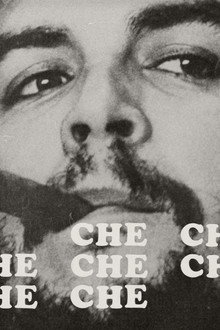
Che Che Che

Champagne for Savages
A diverse group of friends gather to celebrate a witless woman's birthday in this comedy drama set in France during World War II. The guests include an uncle who is a Nazi collaborator, a blind war veteran, a simpering physician, an arrogant educator, a patriotic girl, and the husband of the guest of honor. When some German soldiers are killed outside the house, the group is told by the Gestapo that they must choose among themselves two who will be shot if the killer is not caught. If two victims are not chosen, all seven at the party will be captured. Things sound pretty grim, but the black comedy begins when all seven try to save themselves by any means possible.

The Long Winter
In 1939, Ramón was a young man, caught up in his Barcelona family's involvement on the Republic side in the brutal Spanish Civil War. He and his family fled into exile ahead of Franco's troops. Now it is many years later, and he has come back to see how his old homestead fared in the intervening years. The only person he can find who is able to remember those years clearly is his family's old butler Claudio.
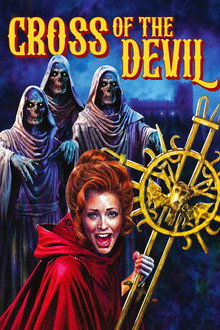
Cross of the Devil
A British novelist travels to Spain to visit his sister. However, when he arrives he discovers that she has been murdered by a gang of devil-worshiping bandits called the Devil's Cross.

The Powerful Influence Of The Moon
The film is an image of the Spanish society in form of various anecdotes which happen to the inhabitants and their neighbours of a finca in Madrid.

The Burned City
The film depicts ten years of Catalan history, from 1899 with the defeat of the Spanish side in the Cuban War of Independence to the Tragic Week 1909.