Personal Info
Known For
Gender
Birthday
Place of Birth
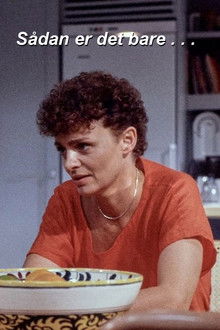
Bjørn Watt-Boolsen
Known for
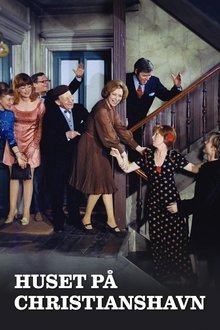
The House at Christianshavn
The series follows the residents of an apartment building on Copenhagen's Christianshavn, as they go about their daily lives and challenges. There is Olsen, a mover with an old fashion view of the world, Clausen who runs the local pet shop, Egon the career focused assistant, their wives who work hard to keep their spouses lives together, the young couple Tue and Rikke who recently moved in, the hard working caretaker Meyer, who never puts in to much effort, and of course Emma, the innkeeper of Rottehullet, where all the important decisions are made while running up the bar tab. The series was produced by Nordisk Film for Danmarks Radio TV station between the years 1970-77. The series' first director was Ebbe Langberg, then Erik Balling and Tom Hedegaard respectively. The series was conceived by an author team of well-known Danish authors such Leif Panduro, Benny Andersen, and Lise Nørgaard.
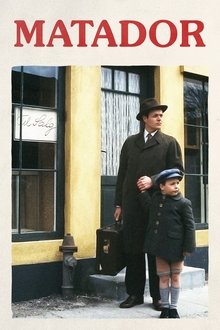
Matador
Matador is a Danish TV series produced and shown between 1978 and 1982. It is set in the fictional Danish town of Korsbæk between 1929 and 1947. It follows the lives of a range of characters from across the social spectrum, focusing specifically on the rivalry between the families of two businessmen: The banker Hans Christian Varnæs, an established local worthy, and social climber Mads Skjern, who arrives in town as the series opens. The name Matador was taken from the localised edition of the boardgame Monopoly, also the series' tentative English title. In addition, in contemporary Danish a "matador" is often used to describe a business tycoon, in the series referring to the character of Mads Skjern and his craftiness as a self-made entrepreneur. Directed by famed Danish film maker Erik Balling, Matador was the idea of author Lise Nørgaard who wrote the bulk of the episodes alongside Karen Smith, Jens Louis Petersen and Paul Hammerich. The series is one of the most well-known and popular examples of Danish television and represents the peak of longtime development of Danish TV drama by the public service channel Danmarks Radio. The series has become part of the modern self-understanding of Danes, partly because of its successful mix of melodrama and a distinct warm Danish humour in the depiction of characters, which were portrayed by a wide range of the most popular Danish actors at the time; but also not least because of its accurate portrayal of a turbulent Denmark from around the start of the Great Depression and through Nazi Germany's occupation of Denmark in World War II.
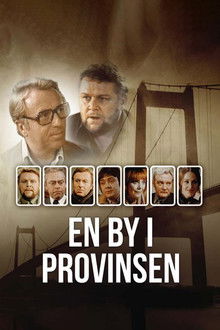
A Town in the Province
In 1970s Denmark, the criminal police in a provincial town solve different criminal cases, when the police was dominated by men and DNA was not yet a tool in investigation.
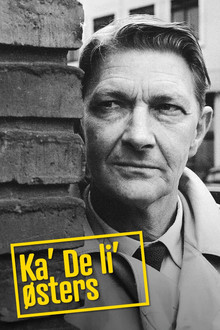
Ka' De li' østers
A crime-series in six parts. A woman has been killed in a apartment. The murder squad are on the case.
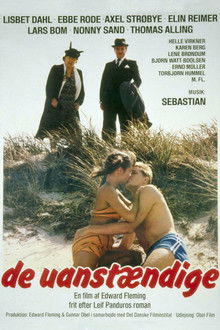
Topsy Turvy
An uptight young man and his equally uptight family moves next door to a hedonistic clan, including the beautiful, sexy Topsy, who charms the new neighbor boy Tom. But Tom discovers that the price of loving Topsy may be higher than he's willing to pay -- she insists on absolute honesty and a life and love without possession or exclusivity.
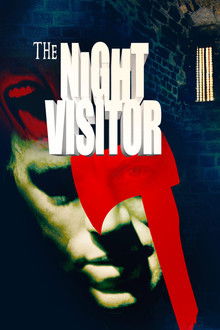
The Night Visitor
An insane Swedish farmer escapes from an asylum to get revenge on his sister, her husband and others.
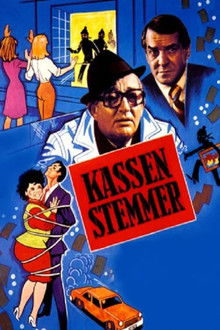
Kassen stemmer
Three young men discover a scam that three somewhat older gentlemen from Aarhus' upper class have set up to avoid bankruptcy. The gentlemen directors have both accounts and safe deposit boxes at the bank branch where one of the young men works, so it seems only natural to give the swindlers a taste of their own medicine, so to speak. The situation is further complicated when a journalist gets wind of the double heist and wants his share of the pie.
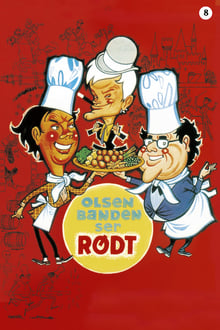
The Olsen Gang Sees Red
Egon and the gang are hired to stage a robbery of an antique Chinese vase for an economically challenged baron. Naturally they fooled, which infuriates Egon. The gang tries to get back at the baron by switching the vase with a cheap Hong Kong copy. One attempt is made during the barons hunting party, where Egon ends up being bricked up in the catacombs. In another attempt, the gang has to coordinate breaking through several walls at The Royal Theater in Copenhagen with the "Elverhøj" overture.
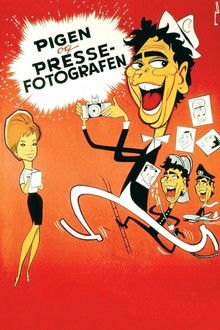
The Girl and the Press Photographer
Bastian and Lene are a good couple, as a journalist and press photographer. They take turns to get ideas for how to get a scoop for the magazine "Tit og Lyt". They agree to play husband and wife so that Bastian can get an apartment. Lene is deeply in love with Bastian why she gets their mutual friend Soren to send a man from the housing authority. He says that they most have one child to stay in the apartment.
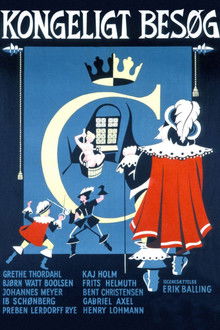
Kongeligt besøg
In the year 1646, Denmark is at peace. Only recently have the last occupying troops left Jutland, leaving behind the sad traces of iron heels. The administration has partially collapsed, the kingdom is short of money, and what money there is is unevenly distributed. This is the unusual and sad background to this unpretentious account.
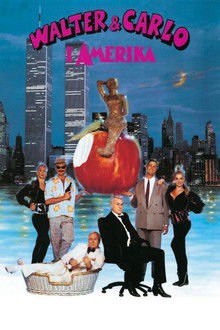
Walter and Carlo in America
The steward Walter and the cobbler Carlo is tasked to provide not the Little, but the High Mermaid to two agents in Kennedy airport in New York. Already on arrival complicate the hapless heroes into a series of spy intrigue involving agents from both sides of the Iron Curtain