Personal Info
Known For
Gender
Birthday
Place of Birth
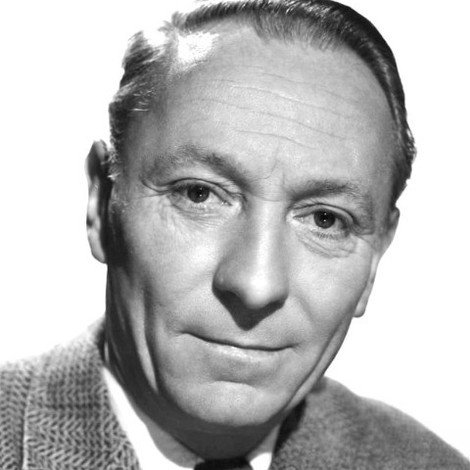
William Hartnell
Biography
Known for

Doctor Who
The adventures of The Doctor, a time-traveling humanoid alien known as a Time Lord. He explores the universe in his TARDIS, a sentient time-traveling spaceship. Its exterior appears as a blue British police box, which was a common sight in Britain in 1963 when the series first aired. Along with a succession of companions, The Doctor faces a variety of foes while working to save civilizations, help ordinary people, and right many wrongs.

No Hiding Place
No Hiding Place is a British television series that was produced at Wembley Studios by Associated-Rediffusion for the ITV network between 16 September 1959 and 22 June 1967. It was the sequel to the series Murder Bag and Crime Sheet, all starring Raymond Francis as Detective Superintendent, later Detective Chief Superintendent Tom Lockhart.

The Army Game
Follows the exploits of Hut 29, a dysfunctional group of soldiers and their National Service conscription into the British Army during the post war years.

Tales of the Tardis
Classic Doctor Who duos are reunited as they board a very special TARDIS on a nostalgic voyage through space and time.

Ghost Squad
Ghost Squad, known as G.S.5 for its third series, was a crime drama series about an elite division of Scotland Yard that ran between 1961 and 1964. Each episode the Ghost Squad would investigate cases that fell outside the scope of normal police work. Despite the show and characters being fictional, an actual division did exist within the Metropolitan Police Service at the time. Inspiration for the series was taken from a book of the same name, written by John Gosling — a retired police officer and former member of the team. Although the real-life squad only operated in London, the fictionalised team travelled internationally; however — as was typical of the time — most foreign locations were actually a combination of stock footage and sets at Independent Artists Studio at Beaconsfield and Elstree Studios. Music was by Philip Green. The show was produced by ITC Entertainment, along with Rank Organisation TV and ATV. It was the first ITC show filmed to fit the one hour time-slot — setting the trend for the majority of ITC's future output. Another common ITC trait was to feature an American, in this case Michael Quinn, in a leading role so as to increase the chances of international sales. At 6' 3", Quinn often towered over his co-workers. This was especially noticeable in the first series title sequence showing him walking through a crowd walking in the opposite direction. He frequently smoked in the show as did many others. The second series had a different title sequence and Neil Hallett sometimes replaced Quinn. Hallett looked more like a spy while Quinn looked a bit like a playboy. Quinn was replaced by Australian actor, Ray Barrett in the third series. Ray Austin played Billy Clay in and was also Stunt Director on all series bringing the action to life. Austin went on to become a renowned TV director in Hollywood and the UK.

Doctor Who: Galaxy 4
On an arid planet, the TARDIS trio encounter the Drahvins and the Rills; two species stranded on a planet doomed to explode. Both need the Doctor's help, but the Drahvin leader, Maaga, wants only her people to make it out alive.

Doctor Who: The Day of the Doctor
In 2013, something terrible is awakening in London's National Gallery; in 1562, a murderous plot is afoot in Elizabethan England; and somewhere in space an ancient battle reaches its devastating conclusion. All of reality is at stake as the Doctor's own dangerous past comes back to haunt him.

Doctor Who: Resurrection of the Daleks
Captured in a time corridor, the Doctor and his companions are forced to land on 20th century Earth, diverted by the Doctor's oldest enemy - the Daleks. It is here the true purpose of the time corridor becomes apparent: after ninety years of imprisonment, Davros, the ruthless creator of the Daleks, is to be liberated to assist in the resurrection of his army. Not even the Daleks foresee the poisonous threat of their creator. Indeed, who would suspect Davros of wanting to destroy his own Daleks - and why? Only the Doctor knows the truth. Will he descend to Davros' level of evil to stop him?

Doctor Who: The Doctors Revisited
As the Doctor's newest companion, Clara Oswald, steps into the TARDIS, take a look back at previous companions that have won over The Doctor's hearts in Doctor Who: The Companions. Along the way, companions past and present talk about how the show has changed their lives, and how they've never quite managed to leave the TARDIS behind.

The Mouse That Roared
The Duchy of Grand Fenwick decides that the only way to get out of their economic woes is to declare war on the United States, lose and accept foreign aid. They send an invasion force (in chain mail, armed with bows and arrows) to New York and they arrive during a nuclear drill that has cleared the streets.

Doctor Who: Twice Upon a Time
As the Twelfth Doctor nears regeneration, he stumbles on his first incarnation, also refusing to change. It takes a captain, a glass avatar and a familiar face to convince the Doctors the universe still needs them.

Doctor Who: Galaxy 4
The TARDIS lands on a planet on the verge of total annihilation as it drifts too close to the three suns which its orbits.

The Lure

Doctor Who: The Chase
The Doctor and his companions are pursued through time and space by the Daleks on the desert planet Aridius and beyond.

Odd Man Out
Belfast police conduct a door-to-door manhunt for an IRA gunman wounded in a daring robbery.