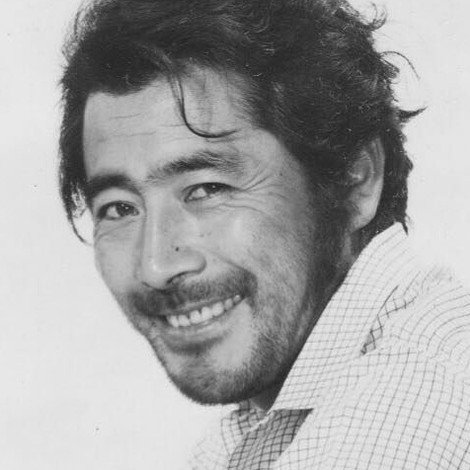
Personal Info
Known For
Gender
Birthday
Place of Birth
Toshirō Mifune
Biography
Known for

Seven Samurai
A samurai answers a village's request for protection after he falls on hard times. The town needs protection from bandits, so the samurai gathers six others to help him teach the people how to defend themselves, and the villagers provide the soldiers with food.

High and Low
A Yokohama shoe executive faces a wrenching choice when kidnappers mistakenly seize his chauffeur’s son but demand the ransom anyway.

Shōgun
An English navigator becomes both a player and pawn in complex political games in feudal Japan.

Red Beard
Aspiring to an easy job as personal physician to a wealthy family, Noboru Yasumoto is disappointed when his first post after medical school takes him to a small country clinic under the gruff doctor Red Beard. Yasumoto rebels in numerous ways, but Red Beard proves a wise and patient teacher. He gradually introduces his student to the unglamorous side of the profession, ultimately assigning him to care for a prostitute rescued from a local brothel.

Rashomon
Four people recount different versions of the story of a man's murder and the rape of his wife.

V.I.P. Schaukel
V.I.P.-Schaukel is a 45 minute documentary-family-news-talk show starring Margret Dünser as Host. The series premiered on Sun May 09, 1971 on ZDF and Folge 37 - Final Show last aired on Fri May 09, 1980.

Midway
This war drama depicts the U.S. and Japanese forces in the naval Battle of Midway, which became a turning point for Americans during World War II.

Yojimbo
A nameless ronin, or samurai with no master, enters a small village in feudal Japan where two rival businessmen are struggling for control of the local gambling trade. Taking the name Sanjuro Kuwabatake, the ronin convinces both silk merchant Tazaemon and sake merchant Tokuemon to hire him as a personal bodyguard, then artfully sets in motion a full-scale gang war between the two ambitious and unscrupulous men.
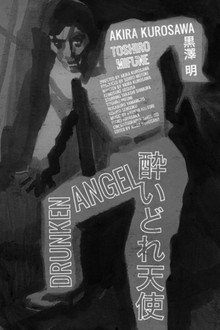
Drunken Angel
In postwar Tokyo, a blunt, alcohol-soaked doctor diagnoses a swaggering young yakuza with tuberculosis, forging an uneasy bond that’s tested when the gangster’s ruthless former boss returns and drags him back toward the swampy underworld he can’t escape.
The 47 Ronins of Ako
Set in the eighteenth century, during the reign of the fifth Tokugawa shōgun Tokugawa Tsunayoshi. Akō-han is demolished by the Tokugawa shogunate. Hotta Hayato is a ronin who is living a desperate life because of his sad past. But one day he starts working for Chisaka Takafusa, the Chief retainer of the Uesugi clan. The Uesugi clan and Chisaka are wary of Ōishi Kuranosuke and Ako Roshi's movements, so Chisaka orders Hotta to observe Ōishi Kuranosuke.

Epic Chushingura
Daichūshingura is a television dramatization of the events of the Forty-seven Ronin. The first episode aired on January 5, 1971, and the 52nd and final episode appeared on December 28 of the same year. The NET network broadcast it in the Tuesday evening 9:00–9:56 prime-time slot in Japan. The series featured an all-star cast. The central actor was Toshiro Mifune, who portrayed Ōishi Kuranosuke; Yoko Tsukasa his wife; and kabuki actor Onoe Kikugorō VII their son Chikara.

Throne of Blood
Returning to their lord's castle, samurai warriors Washizu and Miki are waylaid by a spirit who predicts their futures. When the first part of the spirit's prophecy comes true, Washizu's scheming wife, Asaji, presses him to speed up the rest of the spirit's prophecy by murdering his lord and usurping his place. Director Akira Kurosawa's resetting of William Shakespeare's "Macbeth" in feudal Japan is one of his most acclaimed films.

Tuesday Suspense Theater
"Tuesday Suspense Theater" was broadcast every Tuesday from 21:00 to 22:54 ( JST ) on the Nippon Television network for 24 years from September 29 , 1981 to September 27, 2005. It was a two-hour drama slot. As a general rule, suspense dramas with one complete episode (very rarely, two parts) were broadcast every week from 21:00 to 22:54 ( JST ). It is a broadcast frame. Some episodes also aired horror, historical dramas, and special effects dramas.

Samurai Rebellion
The mother of a feudal lord's only heir is kidnapped by the lord. Her husband and his samurai father must decide whether to accept the unjust decision, or risk death to rescue her.

Sanjuro
In this companion piece and sequel to "Yojimbo," jaded samurai Sanjuro helps an idealistic group of young warriors weed out their clan's evil influences, and in the process turns their image of a proper samurai on its ear.