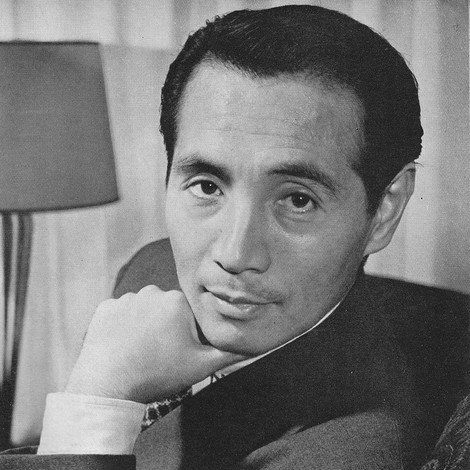
Personal Info
Known For
Gender
Birthday
Place of Birth
Masayuki Mori
Biography
Known for

Rashomon
Four people recount different versions of the story of a man's murder and the rape of his wife.

Ugetsu
In 16th century Japan, peasants Genjuro and Tobei sell their earthenware pots to a group of soldiers in a nearby village, in defiance of a local sage's warning against seeking to profit from warfare. Genjuro's pursuit of both riches and the mysterious Lady Wakasa, as well as Tobei's desire to become a samurai, run the risk of destroying both themselves and their wives, Miyagi and Ohama.

Love Letter
Five years after the end of the Second World War, Reikichi, a repatriated veteran, translates love letters for Japanese women to American GIs, while searching for his lost love, Michiko.

The Bad Sleep Well
In this loose adaptation of "Hamlet," illegitimate son Kôichi Nishi climbs to a high position within a Japanese corporation and marries the crippled daughter of company vice president Iwabuchi. At the reception, the wedding cake is a replica of their corporate headquarters, but an aspect of the design reminds the party of the hushed-up death of Nishi's father. It is then that Nishi unleashes his plan to avenge his father's death.

Battle Troop
Three IJN flyers Mikami (Susumu Fujita), Kawakami (Masayuki Mori) and Murakami (Akitake Kono) are good friends, and they are all renowned for their torpedo techniques. Mikami is posted as a staff officer at a base on an island in the Pacific. Kawakami and Murakami later joins him as the base squardron is reinforced. The enemy task force approaches the island and all three of them attack the fleet, killing themselves in the process.

Reminiscence
Kazuo Miyagawa’s prizewinning black-and-white cinematography draws out the moral shadings of Nobel laureate Yasunari Kawabata’s 1952 novel Thousand Cranes, a quietly devastating story of a young man, orphaned during the war, who stumbles into a passionate yet tragic relationship with his late father’s mistress and her daughter.
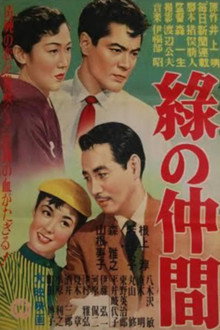
Green Friends

The Aristocrat's Stairs
A romantic tale depicting the beautiful and tragic love between a young man and woman from aristocratic families who are caught in the crossfire of the February 26 Incident.
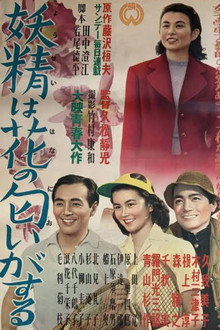
Yōsei wa hana no nioi gasuru
A romance between a female student and a young professor, where friendship, temptation, and jealousy intertwine.

The End of the War
A man driven mad amid the ravages of war, a woman who never found true love, and an innocent young man—all drawn once again to the military port now returned to peace.

Good-Bye!
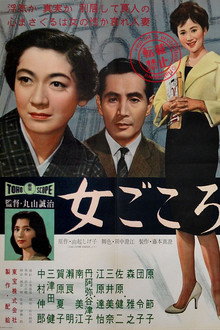
A Woman's Heart
Married for almost a decade, a couple with a son have their life thrown for a loop when the wife Isoko comes across a photo of her university professor husband Asakichi with a younger woman named Terue, alongside a gift and a letter. When the husband is confronted he admits to merely loving his wife non-romantically, prompting her to take her son and leave the house. While she returns to her previous job and is staying at the company's dormitory, her husband is being visited by the other woman, who wants to tend to him, and his students.


Beauty and the Thief
The picture belongs to the jidai gekki (historic) genre. It is a powerful story of violence and eroticism, picturing a world at once sordid and poetic, with two central themes which intermingle to compound an admirable panel of a critical period in Japanese history: the great famine in the mid 19th Century.
