Personal Info
Known For
Gender
Birthday
Place of Birth
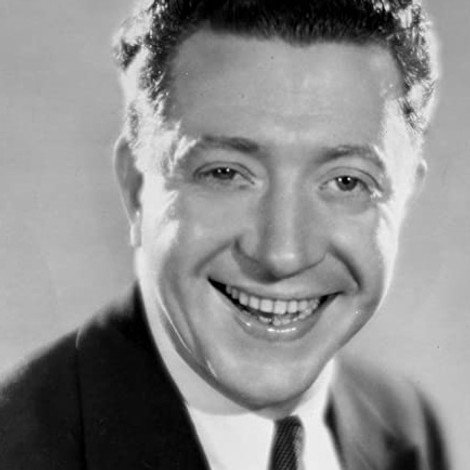
Frank McHugh
Biography
Known for

Studio One
An American radio–television anthology series, created in 1947 by Canadian director Fletcher Markle, who came to CBS from the CBC. Studio One, presented by Westinghouse, was one of the first of the anthology TV programs. The episodes were often abridged remakes of movies from years gone by and many future well-known television and movie actors appeared in the productions.

The Lucy Show
The Lucy Show is an American sitcom that aired on CBS from 1962–68. It was Lucille Ball's follow-up to I Love Lucy. A significant change in cast and premise for the 1965–66 season divides the program into two distinct eras; aside from Ball, only Gale Gordon, who joined the program for its second season, remained. For the first three seasons, Vivian Vance was the co-star. The earliest scripts were entitled The Lucille Ball Show, but when this title was declined, producers thought of calling the show This Is Lucy or The New Adventures of Lucy, before deciding on the title The Lucy Show. Ball won consecutive Emmy Awards as Outstanding Lead Actress in a Comedy Series for the series' final two seasons, 1966–67 and 1967–68.

Route 66
After discovering that his late father has gone through most of the family fortune, Tod Stiles hits the title trans-America highway in his Corvette in search of adventure with friend Buz Murdock, a survivor of New York's mean streets. The two work odd jobs as they meet and interact with colorful characters and find themselves plunged into one situation after another, some of them romantic, some of them very dangerous. Later, Linc Case, a Vietnam war hero trying to find himself, takes over as Tod's travel companion.

The Defenders
The Defenders is an American courtroom drama series . It starred E. G. Marshall and Robert Reed as father-and-son defense attorneys who specialized in legally complex cases, with defendants such as neo-Nazis, conscientious objectors, civil rights demonstrators, a schoolteacher fired for being an atheist, an author accused of pornography, and a physician charged in a mercy killing.

Armstrong Circle Theatre
Armstrong Circle Theatre is an American anthology drama television series which ran from 1950 to 1957 on NBC, and then until 1963 on CBS. It alternated weekly with The U.S. Steel Hour.

The Millionaire
An anthology series that explored the ways sudden and unexpected wealth changed life for better or for worse. It told the stories of people who were given one million dollars from a benefactor who insisted they never know him, with one exception.

F Troop
F Troop is a satirical American television sitcom that originally aired for two seasons on ABC-TV. It debuted in the United States on September 14, 1965 and concluded its run on April 6, 1967 with a total of 65 episodes. The first season of 34 episodes was filmed in black-and-white, but the show switched to color for its second season.

Tales of Tomorrow
Tales of Tomorrow is an American anthology science fiction series that was performed and broadcast live on ABC from 1951 to 1953. The series covered such stories as Frankenstein, starring Lon Chaney, Jr., 20,000 Leagues Under the Sea starring Thomas Mitchell as Captain Nemo, and many others featuring such performers as Boris Karloff, Brian Keith, Lee J. Cobb, Rod Steiger, Bruce Cabot, Franchot Tone, Gene Lockhart, Walter Abel, Leslie Nielsen, and Paul Newman. The series had many similarities to the later Twilight Zone which also covered one of the same stories, "What You Need". In total it ran for eighty-five 30-minute episodes.

Lancer
Lancer is an American Western series that aired on CBS from September 1968, to May 1970. The series stars Andrew Duggan, James Stacy, and Wayne Maunder as a father with two half-brother sons, an arrangement similar to the more successful Bonanza on NBC.

Outlaws
Outlaws is an NBC Western television series, starring Barton MacLane as U.S. marshal Frank Caine, who operated in a lawless section of Oklahoma Territory about Stillwater. The program aired 50 one-hour episodes from September 29, 1960, to May 10, 1962. The first season was shot in black-and-white, the second in color. Co-starring with MacLane in the 1960–1961 season was Don Collier as deputy marshal Will Foreman. In the second season, MacLane left the program, and Collier was promoted to full marshal, with Bruce Yarnell joining the cast as deputy marshal Chalk Breeson. Jock Gaynor appeared in the first season as deputy Heck Martin, the on-screen nephew of Will Foreman. Slim Pickens appeared as "Slim" in the second season. Judy Lewis also appeared the second season as Connie Masters, an employee of the Wells Fargo office in Stillwater. The dog who appeared in Walt Disney's Old Yeller was also cast in The Outlaws. Others who appeared on the program on at least three occasions were Vic Morrow, Cliff Robertson, Pippa Scott, and Harry Townes. In addition, John Anderson, Edgar Buchanan, Jackie Coogan, Bruce Gordon, Robert Harland, Robert Lansing Cloris Leachman, Robert Karnes, Brian Keith, Larry Pennell, Chris Robinson, William Shatner, Ray Walston, Jack Warden, and David Wayne each appeared twice in the series.

Cain's Hundred
A former underworld lawyer goes to work for the Federal Government, determined to bring 100 top criminals to justice.
