Personal Info
Known For
Gender
Birthday
Place of Birth
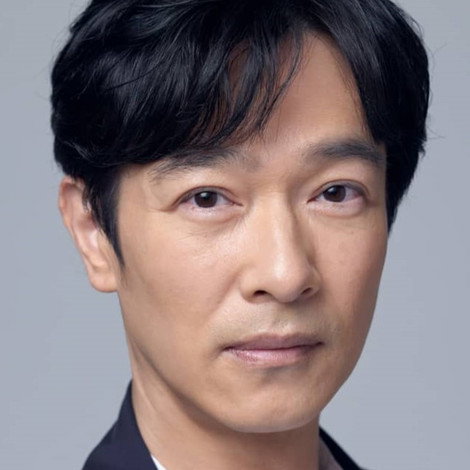
Masato Sakai
Biography
Known for

KochiKame
Ryotsu Kankichi, or Ryo-san for short, is an unconventional cop working at the local police station who loves money. Together with famous celebrities like Nakagawa and Reiko, his strict boss Police Chief Ohara, and other wildly unique characters, he gets everyone caught up in all sorts of hijinks!

Vivant
Yusuke Nogi of Ryosho's Energy Development Division said that 10 times the official down payment was mistakenly sent to GFL, a local infrastructure company involved in a solar energy plant to be built in the Balkan Republic in Central Asia. Suspected of involvement, he heads to the Balkan Republic to collect the difference of $90 million. With the cooperation of his CIA friend Sam, Nogi obtained information that the terrorist al-Zaer had laundered the full amount of the contract money into diamonds and brought it out.

Legal High
A lawyer with a big personality works with an straightlaced recent law graduate on various law cases in Japan.

NHK Kōhaku Uta-Gassen
NHK Kōhaku Uta-Gassen (NHK紅白歌合戦, "NHK Red and White Song Battle"), more commonly known simply as Kōhaku, is an annual New Year's Eve television special held on December 31 every year, and produced by Japanese public broadcaster NHK. It is broadcast live simultaneously on NHK General TV, BS4K, BS8K, and NHK radio (nationally) and internationally on NHK World Premium and some overseas (mainly cable) broadcasters who buy the program. The program divides the most popular music artists of the year into competing teams of red and white. The "red" team or "akagumi" (紅組) is composed of all female artists (or groups with female vocals), while the "white" team or "shirogumi" (白組) is all male (or groups with male vocals).

Hanzawa Naoki
Hanzawa Naoki works as a loan manager at the Osaka Nishi branch of Tokyo Central Bank. One day, Hanzawa makes a loan contract for 500 million yen with Nishi Osaka Steel Company. Hanzawa didn't want to approve the loan, but he had to due to the branch manager's order. Nishi Osaka Steel Company seems financially stable, but the company actually hides massive amounts of debt through fraudulent accounts. The company is caught. Three months later, Nishi Osaka Steel Company goes bankrupt. The bank's branch manager is Asano. He is an ambitious man and tries to shift the blame to Hanzawa. Hanzawa then attends an inquiry about the loan failure at the bank's headquarters in Tokyo. Hanzawa denies fault and promises to retrieve the 500 million yen loan. He did this because it's the only way for Hanzawa to survive as a banker.

Atsuhime
The 47th NHK Taiga Drama is a life story of Princess Atsu, who was born in Kagoshima Prefecture, then called Satsuma, and became the wife of Tokugawa Iesada, the 13th shogun of the Tokugawa shogunate. She accedes to the highest rank in Ooku, the inner palace of the Edo castle where women related to the reigning shogun resided. Iesada dies soon after their marriage and Atsuhime assumes the name Tenshoin at the age of 23. She exerts herself for the Tokugawa clan and for the nation during the upheaval in the Meiji Restoration, headed by those from Satsuma.

Sanadamaru
Spanning over 50 episodes, we follow the historical fiction of the Sanada clansmen as they plotted and fought their ways to survive the changing political alliances during the Warring States Period of Japan.

Audrey
Mizuki is a would-be actress who has yet to attain her goal, struggles to keep the dream in her heart alive while dealing with the reality of her normal life, far away from lights, cameras, and action she longs for. Despite words of warnings from her family, which includes her birth and step mothers, intended to keep her from reaching her destiny, she actually makes it onto a set of one of the film companies in Tokyo. She experiences the peaks and valleys of a starting actress, but receives a blow when news of the company collapses and eventually closes. Mizuki returns home, but, the fire once lit, still burns.

Dr. Coto's Clinic
Dr. Goto Kensuke transfers to a remote island clinic after an incident at his Tokyo hospital. His first task: winning over the wary locals.

Shinsengumi!
Shinsengumi! is a Taiga drama television series produced by Japanese broadcaster NHK. It was a popular drama about the Shinsengumi, a Japanese special police force from the Bakumatsu period.

Aoi Bungaku Series
An animated adaptation of six classical Japanese literature pieces, including No Longer Human (Ningen Shikkaku) and Run, Melos (Hashire, Melos) by Osamu Dazai, Kokoro by Natsume Souseki, Hell Screen (Jigoku Hen) and The Spider's Thread (Kumo no Ito) by Ryunosuke Akutagawa and In the Forest, Under Cherries in Full Bloom (Sakura no Mori no Mankai no Shita) by Ango Sakaguchi.