Personal Info
Known For
Gender
Birthday
Place of Birth
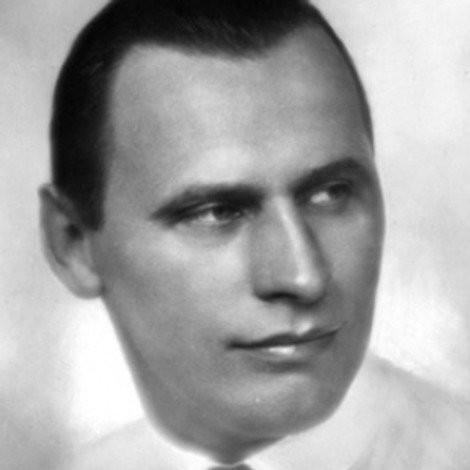
Fritz Rasp
Biography
Known for

Scene of the Crime
Tatort is a long-running German/Austrian/Swiss crime television series set in various parts of these countries. The show is broadcast on the channels of ARD in Germany, ORF in Austria and SF1 in Switzerland.

German Film Award

The Commissioner
Der Kommissar is a German television series about a group of detectives of the Munich homicide squad. All 97 episodes, which were shot in black-and-white and first broadcast between 1969 and 1976, were written by Herbert Reinecker and starred Erik Ode as Kommissar Herbert Keller. Keller's assistants were Walter Grabert, Robert Heines, and Harry Klein who, in 1974, was replaced by his younger brother Erwin Klein.

Metropolis
In a futuristic city sharply divided between the rich and the poor, the son of the city's mastermind meets a prophet who predicts the coming of a savior to mediate their differences.
Gestern gelesen

Alarm

Youth

Charley's Aunt
Charley Wyckham and Jack Chesney pressure fellow student Fancourt Babberly to pose as Charley's Brazilian Aunt Donna Lucia. Their purpose is to have a chaperone for their amorous visits with Amy and Kitty, niece and ward of crusty Stephen Spettigue. Complications begin when Fancourt, in drag, becomes the love object of old Spettigue and Sir Francis Chesney.

Emil and the Detectives
When a suspicious man bribes Emil with chocolate in return for a bundle of cash, the young lad thinks of a plan to catch him.
Maria Stuart

Spring Awakening
Moritz Stiefel faces expulsion due to poor marks. When he is caught with an essay titled “Shame and Lust”, he is indeed kicked out – instead of classmate Melchior Gabor, who actually penned it. Gabor was drawing on his experiences with neighbourhood girl Wendla. Then Wendla turns up pregnant. Stiefel descends into despair ... Exploitation between Eros and Thanatos in this “sexual tragedy of youth” based on Frank Wedekind’s play. Setting the film in the 1920s provided a chance to explore “modern” youth culture, complete with cigarettes, jazz music, the gramophone, and a goodly bit of alcohol. Richard Oswald, a master of films of manners and young sex beginning in the 1910s, fully explores the temptations of the youthful body, even early childhood flirtatiousness. At the same time, with his target audience in mind, the film laments the bigotry and double standards of the adult world.
Das Abschiedsgeschenk
Onkel Bräsig
The clever Zacharias Bräsig is a good friend to all and tries to help out, where he can. Bräsig also meddles in the relationships of young people, so that by the end of the film, there's a double marriage.

Am grünen Strand der Spree
Am grünen Strand der Spree was a five-part German television movie which first aired in 1960. It was based on a novel by Hans Scholz and has been called a Straßenfeger in German, a television program that was watched by so many, the streets were empty. It was produced by German broadcaster Nord- und Westdeutscher Rundfunkverband in Cologne, Germany.
