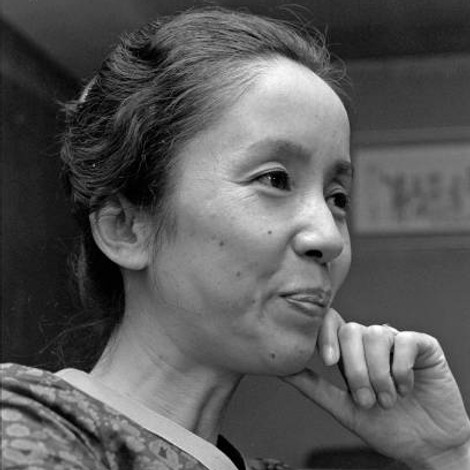
Personal Info
Known For
Gender
Birthday
Place of Birth
Tomoko Naraoka
Biography
Known for

ありがとう

Ponyo
When Sosuke, a young boy who lives on a clifftop overlooking the sea, rescues a stranded goldfish named Ponyo, he discovers more than he bargained for. Ponyo is a curious, energetic young creature who yearns to be human, but even as she causes chaos around the house, her father, a powerful sorcerer, schemes to return Ponyo to the sea.

Princess Go
Princess Go was the youngest of the most famous three sisters in Japanese history, who each led a remarkable life in an age of turmoil and civil war. Go loses her parents in the war, marries three times, and feuds with her own sister in competing for power. Go's husband becomes the second Tokugawa Shogun and she ensures her prominence as she gives birth to a son who later becomes the third Shogun and a daughter, a wife of the Emperor. The drama describes the age of the civil war through the eyes of Princess Go, who plays a significant part in establishing the age of peace that lasts over 200 years in Japan.


Antarctica
Set in the 1950's, a Japanese Antarctic research exploration team and 19 dogs that accompanied the team are stationed at the Showa Base in Antarctica. After a year, the exploration team is ordered to withdraw from the Antarctic station due to severe weather conditions. The dogs have to be left behind. The following year, the next team arrives at the Showa Base station and a miraculous reunion occurs between a dog handler accompanying the new tean and two dogs, Taro and Shiro, that are brothers.

The Autumn in Tokyo
A unique drama that contrasts the lives of a family of elite salarymen in Tokyo and a family of landowners in Tokorozawa, Saitama, while exploring the timeless themes of drama such as human happiness, love and marriage in their everyday lives, told in a straightforward narrative style.

The Takatsu River
Set along the river basin of Shimane Prefeture's Takatsu River, a government-protected river, this drama portrays various people living in an area burdened by decreasing population as they carry on the tradition of "Kagura" Shinto music and dance which is said to be the roots of Kabuki. Directing from his own screenplay is Nishikori Yoshinari of Railways. Saito Manabu (Komoto Masahiro) operates a ranch on a mountain and worries his son Tatsuya (Ishikawa Raizo) has been making a habit of skipping Kagura practice. Then Manabu learns his alma mater elementary school will be closed down.

Julie the Wild Rose
Eleven-year-old Julie Braun lives in the lush green mountain pastures of Austria's Southern Tyrol. Her parents are killed by Italian soldiers, and she is sent to Vienna to live with her relatives, the Clementes. She befriends cousins Johan and Tanya but has trouble adjusting to life with Uncle Karl and Aunt Klara. As Austria is plunged into World War I, Karl is fired from his job at a glass factory, and Julie's new family is forced into a life of hardship.

Railroad Man
A railway stationmaster at a dying end-of-the-line village in Hokkaido is haunted by memories of his dead wife and daughter. When the railroad line is scheduled to be closed, he is offered a job at a hotel, but he is emotionally unable to part with his career as a railroader. His life takes a turn when he meets a young woman with an interest in trains who resembles his daughter.

Ballad of Orin
Expelled from her group for losing her virginity, blind travelling musician Orin endures a life of hardship, abuse, and poverty while wandering the countryside, finding brief companionship with an army deserter, and struggling against a society that marginalises her.

Dodes'ka-den
On a Tokyo dump’s shantytown edge, interwoven vignettes follow residents scraping by: a boy who “drives” an imaginary trolley, a homeless father and son designing a dream house, a young woman brutalized at home, drunks, schemers, and saints of small kindnesses. Kurosawa crafts a ragged mosaic of hardship, fantasy, and flickers of grace that keep people moving forward.

Ishigassen
Across the Inagawa River that runs through the center of the village, the children of the two villages scrambled for a swimming pool, and each time a stone battle took place. Takemaru, the only son of the priesthood of Tada Shrine, was weak and was always forced to carry stones. However, neither swimming nor stone-throwing was a secret to his sick mother, Kouko... Seishi Matsumaru, Ryuichi Yoshida, and Ado Matsuyama were adapted from "Tenmangu" and "Ishigassen", directed by Mitsuo Wakasugi of "Waran Hayashi", and photographed by Hanjiro Nakazawa of "The Last Women".

The Scent of Incense
After her mother runs away from home, Tomoko is raised to be a geisha. One day Tomoko meets her mother in a red-light district in Tokyo and her life deeply gets in trouble.
