Personal Info
Known For
Gender
Birthday
Place of Birth
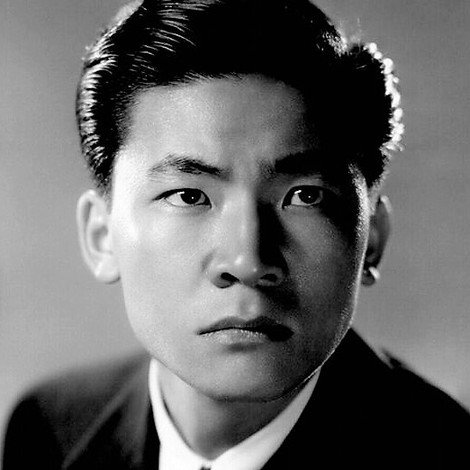
Victor Sen Yung
Biography
Known for

The Mike Douglas Show
The Mike Douglas Show is an American daytime television talk show hosted by Mike Douglas that originally aired only in the Cleveland area during much of its first two years on the air. It then went into syndication in 1963 and remained on television until 1982. It was distributed by Westinghouse Broadcasting and for much of its run, originated from studios of two of the company's TV stations in Cleveland and Philadelphia.

Perry Mason
The cases of master criminal defense attorney Perry Mason and his staff who handled the most difficult of cases in the aid of the innocent.
Perry Mason
The cases of master criminal defense attorney Perry Mason and his staff who handled the most difficult of cases in the aid of the innocent.

Bonanza
The High-Sierra adventures of Ben Cartwright and his sons as they run and defend their ranch while helping the surrounding community.

Hawaii Five-O
Hawaii Five-O is an American police procedural drama series produced by CBS Productions and Leonard Freeman. Set in Hawaii, the show originally aired for 12 seasons from 1968 to 1980, and continues in reruns. Jack Lord portrayed Detective Lieutenant Steve McGarrett, the head of a special state police task force which was based on an actual unit that existed under martial law in the 1940s. The theme music composed by Morton Stevens became especially popular. Many episodes would end with McGarrett instructing his subordinate to "Book 'em, Danno!", sometimes specifying a charge such as "murder one".

Get Smart
Maxwell Smart, a hilariously inept and maladroit secret agent for CONTROL, battles the nefarious—though equally incompetent—KAOS.
Get Smart
Maxwell Smart, a hilariously inept and maladroit secret agent for CONTROL, battles the nefarious—though equally incompetent—KAOS.

The Rifleman
The Rifleman is an American Western television program starring Chuck Connors as rancher Lucas McCain and Johnny Crawford as his son, Mark McCain. It was set in the 1880s in the town of North Fork, New Mexico Territory. The show was filmed in black-and-white, half-hour episodes. "The Rifleman" aired on ABC from September 30, 1958 to April 8, 1963 as a production of Four Star Television. It was one of the first prime time series to have a widowed parent raise a child.

Thriller
Thriller is an American anthology television series that aired during the 1960–61 and 1961–62 seasons on NBC. The show featured host Boris Karloff introducing a mix of self-contained, macabre weird-horror and morbid, hitchockian crime stories, in some of which he also starred.

The Wild Wild West
During the administration of President Ulysses Grant, Secret Service agents James West and Artemus Gordon solve crimes, protect the President, and foil the plans of megalomaniacal villains to take over all or part of the United States.

Gomer Pyle, U.S.M.C.
Gomer Pyle, U.S.M.C. is an American situation comedy that originally aired on CBS from September 25, 1964, to May 2, 1969. The series was a spinoff of The Andy Griffith Show, and the pilot was aired as the finale of the fourth season of The Andy Griffith Show on May 18, 1964. The show ran for five seasons and a total of 150 episodes. In 2006, CBS Home Entertainment began releasing the series on DVD. The final season was released in November 2008. The series was created by Aaron Ruben, who also produced the show with Sheldon Leonard and Ronald Jacobs. Filmed and set in California, it stars Jim Nabors as Gomer Pyle, a naive but good-natured gas-station attendant from the town of Mayberry, North Carolina, who enlists in the United States Marine Corps. Frank Sutton plays Gomer's high-octane, short-fused Gunnery Sergeant Vince Carter, and Ronnie Schell plays Gomer's friend Gilbert "Duke" Slater. Allan Melvin played in the recurring role of Gunnery Sergeant Carter's rival, Sergeant Charley Hacker. The series never discussed nor addressed the then-current Vietnam War, instead focusing on the relationship between Gomer and Sergeant Carter. The show retained high ratings throughout its run.
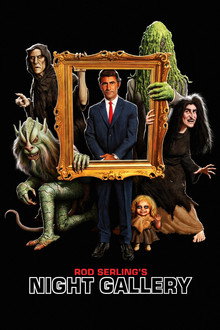
Night Gallery
Rod Serling narrates an anthology of fantasy, horror and sci-fi stories from a set resembling a macabre museum. A chilling work of art serves as the connective link between the stories.

Police Woman
Sergeant “Pepper"” Anderson, an undercover cop for the Criminal Conspiracy Unit of the Los Angeles Police Department, poses undercover from mob girl to prostitute.

Here's Lucy
Lucille Ball's third network sitcom, following I Love Lucy (1951–57) and The Lucy Show (1962–68).
Here's Lucy
Lucille Ball's third network sitcom, following I Love Lucy (1951–57) and The Lucy Show (1962–68).