Personal Info
Known For
Gender
Birthday
Place of Birth
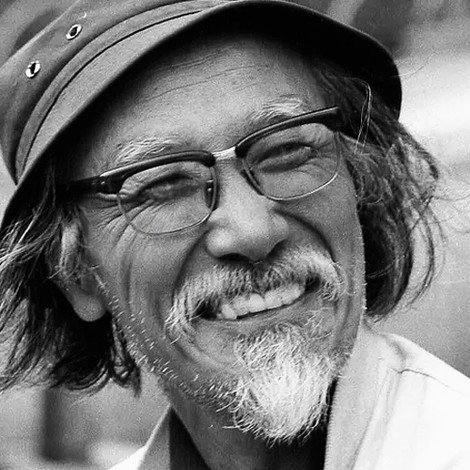
Seijun Suzuki
Biography
Known for

Tales of the Bizarre
Inspired by American TV movies like "Hitchcock Theater" and "The Twilight Zone," the show features multiple works with Tamori as the storyteller and actors as the main characters. While horror and supernatural themes are predominant, a variety of genres like comedy and drama are also produced. Most episodes, however, have a bad ending.

La Belle Fille Masquée Poitrine
The eleventh entry in the Toei Fushigi Comedy Series. Yuko Murikami stops by a shrine to pray for the new school year. Yuko accidentally breaks the bell and drops it on top of a turtle's head. Because she is the only person that stopped by the shrine in a long time, he grants her the power to become a superheroine, based on another ancient deity. It is her job to protect her neighborhood from the threats it faces. By yelling "Cosmo Magic! Métamorphose!!", she transforms into the Masked Beauty Poitrine!

Good Mourning
Minori Amano becomes a widow on her honeymoon. Still, she becomes part of the Amano family's funeral home business. From now on, the woman not only has to fight with eccentric clients, but the rest of the Amano family who have a lot to say about running the business.

Yurika-chan
An exciting 'psychic movie' starring Kanako Enomoto, adapted from the manga series by Yukio Tamai. Police detectives searching for clues related to a serial murder case seek out help from high schooler Yurika, who possesses latent split personality psychic abilities. The mystery deepens once Yurika is brought face-to-face with the crime scenes.

Double Bed
Kato is a small time TV producer. He has a wife Masako, and a young son Taro. Kato also has a friend Yamazaki who he knew since college. Yamazaki has a girl friend Riko who lives with her younger sister Yuko who's an actress. Yamazaki is a lyric writer/womanizer and he starts to have an affair with Masako, but he's still going out with Riko.

SOAR: I Wish You Were Here
A tragic love story set in a mountain village in the Showa era, waiting for a fiancé who died in the war, but it is more than that. It breaks through the existing concept of a film with a beginning, middle, and end, and like Fellini or Godard... Hara Masato's cosmic film philosophy on the theme of "human history and media" unfolds like a symphony.

Sleepless Town
Kenichi is a half-Japanese, half-Chinese man of the underworld. You can sell him anything except children's organs. His domain is in Kabukicho, a gangland controlled by various Shanghai gangs intent on taking control. His former partner-in-crime, Fu-Chun, is rumored to have returned to Kabukicho, having fled years earlier after killing the number two of gangland boss, Yuan. Yuan wants to get even and attempts to do so by using Kenichi.


Sure Death 6
When an artist dies, the official cause of death is judged to be a stroke, but his daughter suspects foul play. She recruits the services of an assassin, who by chance encounters an old friend...

Boy
Jun, a 16-year-old teen, refuses to stand while the national anthem is being played at his graduation ceremony. This event will totally change his life, as he involuntarily becomes the new hero of a rebel anti-system youth. Singer Muy's pop music and his friend, Nozomi, with whom he shares his sadness and hatred for the society that surrounds them, help him bear his terrible loneliness.

The Rain Women
Rain in Tokyo area. Two girls holed up in their tiny apartment. They go out, steal cabbages, hit a supermarket and kill a cow. The sun comes out and changes everything.
I Can't Wait Until It's Dark!
Three cinephile university students have a go at making their own Super-8 film.

Blessing Bell
Existential study on a newly unemployed factory worker who silently moves through the city, unknowingly influencing other people's lives.

Twist & Shoot: Mister Suzuki
Seijun Suzuki became a cinema legend in the 1960s with a handful of pop-art films. So how can you make a portrait of this iconoclastic director without also adopting a 'style to kill' documentary convention, as well as testimonies from a variety of leading figures in contemporary Japanese and international filmmakers.

Milocrorze: A Love Story
Following a scene where a young boy falls in love with the title character, only to have his heart broken by her, the film introduces us to three young men who are all in Milocrorze thrall, either literally or figuratively.