Personal Info
Known For
Gender
Birthday
Place of Birth
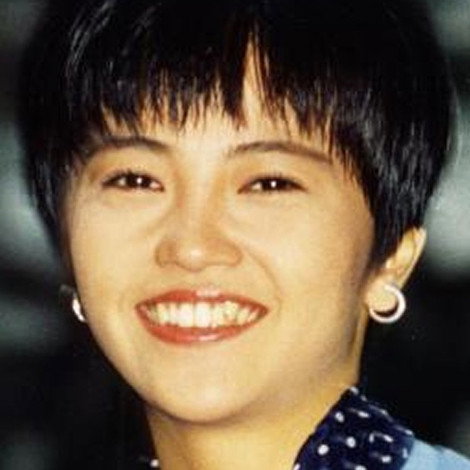
Haruko Sagara
Known for

Tales of the Bizarre
Inspired by American TV movies like "Hitchcock Theater" and "The Twilight Zone," the show features multiple works with Tamori as the storyteller and actors as the main characters. While horror and supernatural themes are predominant, a variety of genres like comedy and drama are also produced. Most episodes, however, have a bad ending.

Sukeban Deka II: Legend of the Iron-Masked Girl
Sukeban Deka II in 1985-1986 starred Yoko Minamino as the second "Sukeban Deka", a mysterious girl with an iron mask named Yoko Godai who takes on the identity of Asamiya Saki after being freed from her mask; She will get the help of two other sukeban: Kyoko "Okyo" Nakamura (Haruko Sagara), and Yukino Yajima (Akie Yoshizawa, from jpop band Onyanko Club which will appear in two episodes).

Hana no Asuka-gumi!
While the adults were devouring the country in peace the young girls are now plunging into the Sengoku Period. A domination of fear and terror by the Zenchura, a federation of banchos nationwide, began. With 80% of the nation's middle schools already under its control. Yet, there was one girl who was determined to crush those wicked ambitions. Her name is Asuka Kuraku.
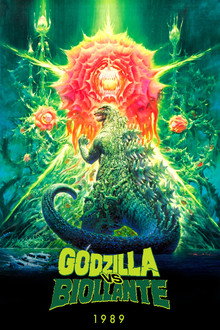
Godzilla vs. Biollante
After the previous Godzilla attack, a miniature arms race ensues to collect his cells. Concerned over Godzilla's possible return, the Japanese government uses the cells to create a new bio-weapon, ANEB (Anti-Nuclear Energy Bacteria). They seeks the aid of geneticist Genshiro Shiragami, who's experiments result in a new mutation.

The Only One I Can't See
A private lawyer (Hiroshi Mikami) who is infatuated with the widow of the Mamiya conglomerate (Emi Shindo) and aims for her inheritance. But he had multiple personalities. One day, university student Kawashima Megumi is mistaken for her older sister, Maiko. She is given a key to a coin locker, and finds inside the diary of Maiko's real father, a zaibatsu leader. Using her sister's name, Megumi gets close to the widow of the zaibatsu leader.

Tokyo Elevator Girl
Tsukasa leaves her hometown to work in Tokyo. While there, she is on her own facing the fascination and challenges of the working world. Her experiences gained, together with what she sees in others, gradually lead her to grow up. She is no longer in the midst of illusions and misconceptions.

Sakura Momoko Land: Taniguchi Rokuzo Shoten

There's Always Tomorrow, We Have Tomorrow
Ashita Ga Arusa is a Japanese television drama series first aired on NTV in 2001.

Endless Waltz
Biopic about jazz saxophonist Kaoru Abe and his wife, noted writer Izumi Suzuki.

The Misery of Others is as Sweet as Honey
A woman cartoonist struggles to make her way in the face of social restrictions. Her home office is the setting for encounters with editors, assistants and even her mother-in-law, and it’s often hard to distinguish friend from foe. Yet her ability to deal with problems somehow makes our own difficulties more bearable.
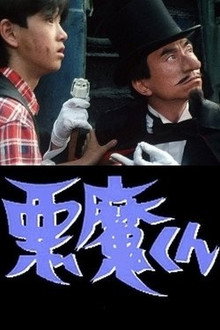
Monday Drama Land: Akuma-kun
Akuma-kun was adapted into a live action TV movie by Toei Company, three years before the anime. It aired on September 15, 1986 as part of Fuji TV's Monday Drama Land, which also previously aired a TV movie adaptation of GeGeGe no Kitaro. Akuma-kun's name is Shingo Itō.
Anata Dake Mienai

Shin dosei jidai

Good-bye Dear Friend
A young college student forms an unlikely friendship with the bartender at a "yakuza" bar.