Personal Info
Known For
Gender
Birthday
Place of Birth
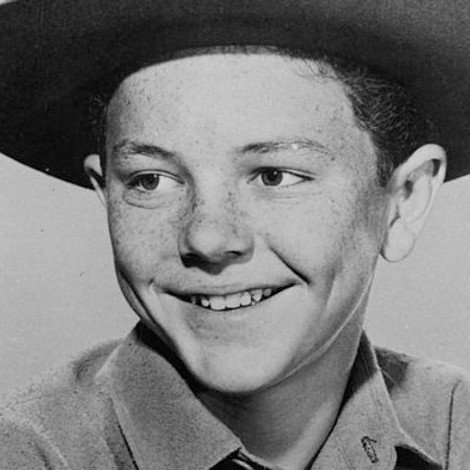
Richard Eyer
Biography
Known for

Wagon Train
The series initially starred veteran movie supporting actor Ward Bond as the wagon master, later replaced upon his death by John McIntire, and Robert Horton as the scout, subsequently replaced by lookalike Robert Fuller a year after Horton had decided to leave the series. The series was inspired by the 1950 film Wagon Master directed by John Ford and starring Ben Johnson, Harry Carey Jr. and Ward Bond, and harkens back to the early widescreen wagon train epic The Big Trail starring John Wayne and featuring Bond in his first major screen appearance playing a supporting role. Horton's buckskin outfit as the scout in the first season of the television series resembles Wayne's, who also played the wagon train's scout in the earlier film.

Climax!
Climax! is an American anthology series that aired on CBS from 1954 to 1958. The series was hosted by William Lundigan and later co-hosted by Mary Costa. It was one of the few CBS programs of that era to be broadcast in color. Many of the episodes were performed and broadcast live.

Combat!
Combat! is an American television program that originally aired on ABC from 1962 until 1967. The show covered the grim lives of a squad of American soldiers fighting the Germans in France during World War II. The program starred Rick Jason as platoon leader Second Lieutenant Gil Hanley and Vic Morrow as Sergeant "Chip" Saunders.

Dr. Kildare
The story of a young intern in a large metropolitan hospital trying to learn his profession, deal with the problems of his patients, and win the respect of the senior doctor in his specialty, internal medicine.

Wanted: Dead or Alive
Wanted: Dead or Alive is an American Western television series starring Steve McQueen as the bounty hunter Josh Randall. It aired on CBS for three seasons from 1958–61. The black-and-white program was a spin-off of a March 1958 episode of Trackdown, a 1957–59 western series starring Robert Culp. Both series were produced by Four Star Television in association with CBS Television. The series launched McQueen into becoming the first television star to cross over into comparable status on the big screen.

Rawhide
The tale of trail boss Gil Favor and his trusty foreman Rowdy Yates as they drives cattle across the old west. Along the way they meet up with adventure and drama.

Father Knows Best
Family man Jim Anderson copes with the everyday problems among his wife Margaret and their three children as they experience day-to-day changes.

Gunsmoke
Gunsmoke is an American radio and television Western drama series created by director Norman MacDonnell and writer John Meston. The stories take place in and around Dodge City, Kansas, during the settlement of the American West. The central character is lawman Marshal Matt Dillon, played by William Conrad on radio and James Arness on television.

The 20th Century Fox Hour
The 20th Century Fox Hour is an American drama anthology series televised in the United States on CBS from 1955 to 1957. Some of the shows in this series were restored, remastered and shown on the Fox Movie Channel in 2002 under the title Hour of Stars. The season one episode Overnight Haul, starring Richard Conte and Lizabeth Scott, was released in Australia as a feature film.

Mr. Novak
Mr. Novak is an American dramatic series starring James Franciscus in the title role, which aired on NBC for two seasons, from 1963 to 1965.

Westinghouse Desilu Playhouse
Westinghouse Desilu Playhouse is an American television anthology series produced by Desilu Productions. The show ran on CBS television between 1958 and 1960. Two of its 48 episodes served as pilots for the 1950s television series The Twilight Zone and The Untouchables.

Stoney Burke
Stoney Burke is an American western television series broadcast on ABC from October 1, 1962 until May 20, 1963. Six years before the premiere of his CBS crime drama, Hawaii Five-0, Jack Lord starred in the title role.

Lux Video Theatre
Lux Video Theatre is an American anthology series that was produced from 1950 until 1959. The series presented both comedy and drama in original teleplays, as well as abridged adaptations of films and plays.

Arrest and Trial
Arrest and Trial is a 90-minute American crime/legal drama series that ran during the 1963-1964 season on ABC, airing Sundays from 8:30-10 p.m. Eastern.

Cavalcade of America
Cavalcade of America is an anthology drama series that was sponsored by the DuPont Company, although it occasionally presented a musical, such as an adaptation of Show Boat, and condensed biographies of popular composers. It was initially broadcast on radio from 1935 to 1953, and later on television from 1952 to 1957. Originally on CBS, the series pioneered the use of anthology drama for company audio advertising. Cavalcade of America documented historical events using stories of individual courage, initiative and achievement, often with feel-good dramatizations of the human spirit's triumph against all odds. This was consistent with DuPont's overall conservative philosophy and legacy as an American company dating back to 1802. The company's motto, "Maker of better things for better living through chemistry," was read at the beginning of each program, and the dramas emphasized humanitarian progress, particularly improvements in the lives of women, often through technological innovation.