
Personal Info
Known For
Gender
Birthday
Place of Birth
Haruka Ayase
Biography
Known for
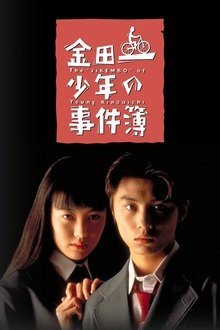
The Files of the Young Kindaichi
A young man who showed little promise while a high school student becomes a master detective, just like his grandfather.
NHK Kōhaku Uta-Gassen
NHK Kōhaku Uta-Gassen (NHK紅白歌合戦, "NHK Red and White Song Battle"), more commonly known simply as Kōhaku, is an annual New Year's Eve television special held on December 31 every year, and produced by Japanese public broadcaster NHK. It is broadcast live simultaneously on NHK General TV, BS4K, BS8K, and NHK radio (nationally) and internationally on NHK World Premium and some overseas (mainly cable) broadcasters who buy the program. The program divides the most popular music artists of the year into competing teams of red and white. The "red" team or "akagumi" (紅組) is composed of all female artists (or groups with female vocals), while the "white" team or "shirogumi" (白組) is all male (or groups with male vocals).

Jin
After awakening in the Edo era, a neurosurgeon uses his medical knowledge to help those around him while searching for a way back to the present day.

Yae's Sakura
Yae no Sakura is a 2013 Japanese television series. It is the 52nd NHK taiga drama. The story focuses on Niijima Yae, who is portrayed by Haruka Ayase.
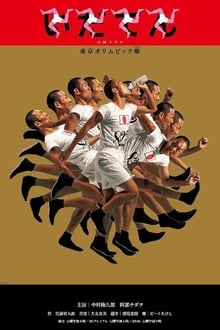
Idaten: Tokyo Olympics Story
Traces Japan’s history with the Olympic games and the 1964 Tokyo Olympics for viewers before Tokyo hosts the event again in 2020. The first half tells the story of marathon runner Kanakuri Shiso, who became one of the first Japanese nationals to participate in the Olympics in Stockholm in 1912. The second half features Tabata Masaji, the coach who laid the foundations of Japanese swimming and helped bring the games to Tokyo for the first time in 1964.
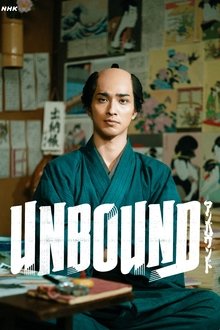
Unbound
In 18th-century Edo, Tsutaya Juzaburo rises from a poor background to become a leading publisher. Despite political changes threatening his career, he works to shape Edo’s cultural scene through innovative books and collaborations with artists.

Moribito: Guardian of the Spirit
The heroine Balsa is a skilled bodyguard and a masterful spear-wielder. One day she rescues Prince Chagum who has fallen into a river. The prince is carrying a mysterious spirit egg in his body, and is in danger of being assassinated by his father, the Mikado, who fears this will damage his imperial prestige. Balsa embarks upon a perilous journey when she accepts the queen’s plead to protect her son from her husband.

Hotaru no Hikari: It's Only a Little Light in My Life
Hotaru works for a famous interior design company. It's a glamorous job, but Hotaru's private life is totally the opposite of glamorous. She lives alone, and when she isn't working, she's mostly lazing about her rented house in training wear. She's really not interested in doing anything, much less dating. "I'd rather lay around than fool around," is her motto. One day her landlord's son comes to inspect the rental property, not knowing that someone is living there. He is shocked at the mess, but not as shocked as Hotaru, as he turn's out to be her fastidious boss, Takano.

Stepmom and Daughter Blues
Eight-year-old Miyuki lost her mother several years ago and has since lived with just her father, Ryoichi. One day, she is suddenly introduced to Akiko, who is to be her new mother. Akiko uses her stellar business skills to try to win the little girl over, only to fail miserably. Ryoichi tries to reason with Miyuki, but to no avail. Akiko changes tactics and tries to get Shimoyama, a woman in the neighborhood who knows Miyuki well, on her side.
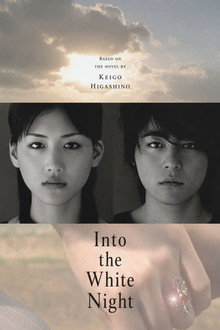
Into the White Night
What happens with two children commit two different muders in order to protect each other? Does salvation exist for them? In order to walk beneath the sun once more, Ryouji and Yukiho find themselves in a twisted web from which neither can escape without abandoning the other. Having no one but each other, this drama follows the events the follow that fateful day… 14 years ago.

MR.BRAIN
Ryusuke Tsukumo is a quirky, yet brilliant neuroscientist working for the National Research Institute of Police Science. Wielding a unique perspective and psychology, Tsukumo tackles the nation's most baffling crimes and scandals, going head-to-head with the most brilliant and twisted criminal minds. But his eccentricities and poor social timing can also aggravate people and circumstances, further complicating matters.

Crying Out Love, in the Center of the World
"I thought I might be using a lifetime's happiness in a moment. I was that happy and she was that beautiful." A young boy stands on the red earth of Australia under its blue sky. It is 17-year-old Sakutaro Matsumoto. His time with the girl comes back to him. The colored sand runs through his hands and a tear appears on his cheek. He wakes up. It's 2004 and he is 34 years old and in Japan. He thinks "I have been in a world without her for 17 years." Returning home to see his old high school for the last time before it is demolished, Saku confronts anew the loss of the love of his life, Aki, to leukemia 17 years ago. Now a medical researcher at graduate school, he has been living as if half of him died with her since then.

Rookies
Led by their fervent teacher, a high school baseball team full of delinquents vows to make it all the way to the national championship tournament.

Caution, Hazardous Wife
Nami Isayama met a man through a blind date and married him. She and her husband moved to a quiet, exclusive residential area. Nami is now a housewife and she decides to take cooking classes. She meets other housewives at the cooking class and receives tips from them, while becoming friends. Nami surmises that one of the housewives in her cooking class is the victim of domestic violence. Nami decides to save the victim by herself.