Personal Info
Known For
Gender
Birthday
Place of Birth
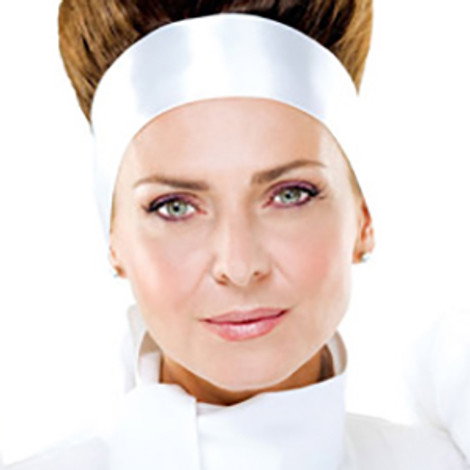
Vesna Trivalić
Biography
Known for
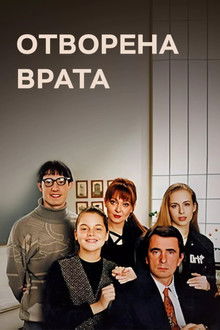
Open Doors
Otvorena vrata, is a Serbian comedy television series filmed in 1994-1995. Broadcast on state television RTS, it ran for 2 seasons featuring a regular family living in Belgrade during the 1990s. The show was created by Biljana Srbljanović and Miloš Radović, starring Vesna Trivalić, Milan Gutović, Bogdan Diklić, Nikola Đuričko, Sofija Jović, Bojana Maljević, Olivera Marković and Zoran Cvijanović, with guest stars such as: Mirjana Karanović, Nikola Simić, Seka Sablić, Branka Katić, Mira Stupica. The show had many reruns over the following years, and acquired a cult following. In spring of 2012, after the Serbian presidential election results were announced, Bojana Maljević announced on her Twitter account that she and Biljana Srbljanović were thinking about doing another season of the show. In the following days the idea of the third season was officially confirmed and members of the original cast started announcing that they would take part in the project.
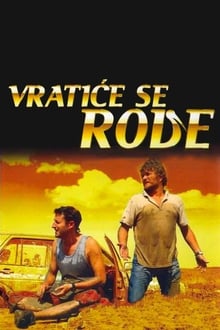
The Storks Will Return
It follows the two lead characters, Svaba and Ekser, as they try to make a living on the streets of Belgrade through the life of petty crime. Making matters worse is the fact that Shvaba owes a lot of money to a local big-shot criminal. And just when things seem lost for the two men, Shvaba's mother inherits a house in Baranda - a village near Belgrade no one's ever heard of. As Shvaba and Ekser happily rush to Baranda, hoping to sell the house and solve all their problems, the villagers are equally happy to see them, thinking that two businessmen from Belgrade are finally taking an interest in their village...
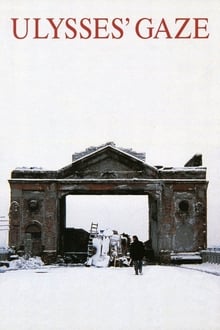
Ulysses' Gaze
An exiled filmmaker finally returns to his home country where former mysteries and afflictions of his early life come back to haunt him once more.
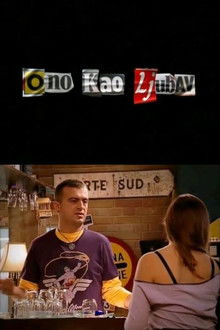
Things Like Love
A sitcom that follows intertwined lives of three couples set mostly in the building in which they live and the café owned by one of these people.

The Woman from Čurug
A family gathers in their home to bury their grandmother, but the situation takes a surreal turn when she suddenly comes back to life.
The Wedding 2
Three years after the events of the first film, the Dimitrijević and Lončarić families have, once again, fallen on hard times. Miljenko finds himself guilty of financial fraud and seeks refuge, along with his family, in an isolated mountain town in Herzegovina. At the same time, Vuk's political career is swiftly heading south, as he once again finds himself at the mercy of the ruthless oposition. Too hotheaded to think things through, both parties decide that the only way to fix things might just be to organize yet another wedding.
Telephonomania
A slang-filled urban comedy involving a group of youths who call their friends over the telephone to chit-chat and spread gossip.
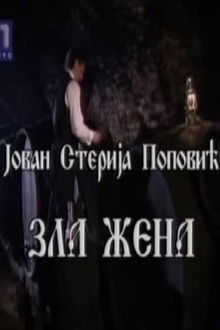
Evil Woman
Sultana and the bootmaker's wife Pela looks very much like each other, with replacement clothing and residence, Sultana becomes Pela and Pela becomes Sultana. The consequence of disguise is that the Sultana are undergoing torture from Pela's husband which changes her nature, which makes positive impact on her environment. The script abounds with musical numbers that contribute to the atmosphere, establish era and the place of action, and in this play bring vaudeville jollity.
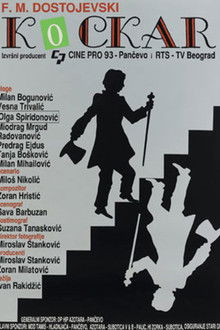
The Gambler
An impoverished Russian aristocrat spends his days in a fashionable German town waiting for news from Russia about the death of his rich grandmother, so that he can repay his debts to a troubled French adventurer and marry his troubled cousin. His stepdaughter Polina also expects the inheritance.
Ko je kod Koje
Summer
This TV drama is the graduate work of a screenwriter which deals with the maturation process of three characters of different age: a 12-year-old girl, a 30-year-old man and the 50-year old girl's granddad.
Dudes!
Urban comedy, happening during a night in Belgrade. Mare, Pop and Gojko are three friends who grew up together. Mare and Pop have always been musicians, while Gojko (who was harassed by them in school and nicknamed 'Sissy') became a 'guy in suit', boss of his own club and recording studio.
Maternal Half-Brothers
This story about two maternal half-brothers, a Croat and a Serb. Although they never met, and both lose their loved ones in ethnic clashes, there is a bond between them. Filmed in 1988, it prophetically forsees the war that would engulf former Yugoslavia three years later.
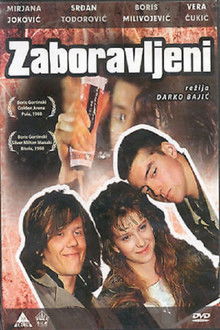
The Forgotten Ones
A story about three teenagers rejected by their parents, who leave their reform school for a wild weekend. 11 episodes in total.