
Personal Info
Known For
Gender
Birthday
Place of Birth
Alexandre Rodrigues
Biography
Known for

Precious Pearl
In 1934 two supposed brothers survived an avalanche in the Himalayas: the millionaire Franz Hauser (Bruno Gagliasso), who is saved by Buddhist monks, and Manfred (Carmo Dalla Vecchia), rescued by a team of climbers. Manfred returns to Brazil with a terrible secret: he sabotaged Franz’s equipment in order to take his place in the family business. After an exhaustive search, Ernest Hauser gives his son up for dead and appoints his bastard son as the director of the Hauser Group.

Written in the Stars
Ricardo Aguillar, a powerful physician, loses the only and beloved son, the young Daniel, in an accident. After some time he discovers that the boy had frozen the semen before he died. From there he decides to go hunting for the "ideal woman", worthy of being inseminated and become the mother of his grandson. Only fate is about to play a part. When the insemination is finally done and the young woman chosen - the young Viviane - becomes pregnant, the man discovers himself hopelessly in love with her. From then on an unusual and surprising situation will give an electrifying direction to the story: the boy's spirit begins to prowl the family and, although they are in different plans, father and son will dispute the love of the same woman. It will be a clash between the impossible love, therefore idealized, and the realizable love, carnal, with all that it brings of joy and fulfillment, but also of hurts and uncertainties.

City of God
In the poverty-stricken favelas of Rio de Janeiro in the 1970s, two young men choose different paths. Rocket is a budding photographer who documents the increasing drug-related violence of his neighborhood, while José “Zé” Pequeno is an ambitious drug dealer diving into a dangerous life of crime.

Little Missy
Little Missy, daughter of the slave owner Colonel Ferreira, falls in love with the lawyer Rodolfo Fontes. Together they face the difficulties in the campaign for the abolition of slavery.

Cabocla
Brasil República, 1918. Luís Jerônimo is a rich young man. Womanizer, spends all night on the street drinking and having fun with prostitutes, the boy finds out that he has an injury to his right lung. Advised by Edmundo Esteves, his doctor, he decides to spend a season at a cousin's farm in the small town of Vila da Mata in Espírito Santo, in search of fresh air, to prevent the disease from developing into tuberculosis.

Paradise City
Zeca and Maria Rita experience a forbidden love in the fictional city of Paraíso, where faith and tradition clash amidst land disputes and popular beliefs.

Habeas Corpus
A renowned law professor and a team of students attempt to prove the innocence of a convicted man, but the brightest student is secretly connected to his past.

City of God: The Fight Rages On
Twenty years after City of God, Buscapé recounts how conflicts between police, traffickers, and militias impacted the community.
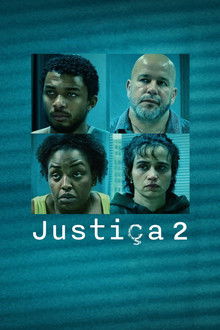
Justice: Misconduct

As Vinganças de Clara

Mexico 86
When a last-minute chance to host the 1986 World Cup appears, a cunning Mexican bureaucrat, armed with nothing but guts and audacity, cons his way through FIFA to beat the United States, but in a country of power games, every victory has a price.
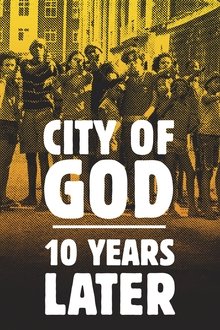
City of God: 10 Years Later
City of God – 10 Years Later investigates what happened to the actors who took part in the award-winning film directed by Fernando Meirelles and Katia Lund. This documentary shows what City of God’s worldwide success meant to their lives. Were the actors prepared for the film’s success? Did the social background of some of them prove stronger than the opportunity that came their way?

Christabel
A new look at the poem, "Christabel" (1816), by the British S. T. Coleridge. The only daughter of a rural worker, Christabel meets Geraldine, a mysterious woman who claims to have been attacked by men and needs help. In her innocence and purity, Christabel welcomes Geraldine into her father's house. From then on, the two protagonists relate in a way that Geraldine has a great influence on Christabel, destabilizing her convictions and promoting rupture of the traditions, but that bring a feeling of passion and freedom never experienced by her. In this adaptation, instead of England, the history takes place in the rural zone, in the middle of the closed Goian; The character Geraldine is a mysterious, free and independent woman who appears to swing the established structure and pre-framed relationships, which weigh on Christabel and her father.
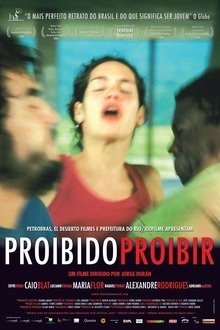
Forbidden to Forbid
Three young Brazilian try to help a terminally ill woman who lives in the slums of Rio de Janeiro. Their youthful idealism is shattered with the cruel reality of police brutality.

O Pântano do Morto
Horror film inspired by the comic book "O Morto do Pântano" by Eugênio Colonnese (1929–2008).