Personal Info
Known For
Gender
Birthday
Place of Birth
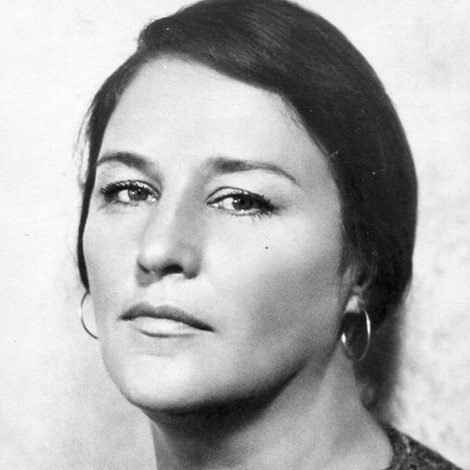
Nonna Mordyukova
Biography
Known for

Legends of Cinema

Young People
She is smart, surrounded by parental attention and therefore not completely independent, and he is one of those who cannot imagine himself without creation, since he is a builder. They are very different people, but the young are united by a keen sense of responsibility for everything that happens around. And so, having parted, they will definitely meet again...

Restricted Area
Central Russia. The deputy chairman of the district executive committee, Tretyakova, was instructed to organize work to eliminate the consequences of a tornado that suddenly hit the village. She has to come to terms with the indifference of summer residents from a neighboring village, untouched by the disaster. Relying on her own experience and the will of the victims, Tretyakova will do her best...

The Diamond Arm
A diamond smuggling operation goes wrong when an ordinary Soviet citizen becomes unwittingly involved, and the criminals are forced to court him to retrieve their diamonds.

War and Peace
The love story of young Countess Natasha Rostova and Count Pierre Bezukhov is interwoven with the Great Patriotic War of 1812 against Napoleon's invading army.

Pavlukha
Twelve-year-old Pavlukha lives on a fishing farm with his mother. His father left his family long ago, in which, apart from Paulukha, he has two other children. To help his mother somehow, the boy goes to town to earn money...

Étude for Dominoes and Grand Piano
Life in an apartment house changes dramatically when a new lodger arrives with his grand piano.


What a Mess!
A Russian criminal steals a giant diamond from the Mafia, hides it, and suddenly runs into his unknown brothers; unexpected, absurd events with participation of the mob, doctors, musicians, Americans, militia, and gypsies ensue.

The Ivanov Family
Aleksei comes to Chelyabinsk from Moscow — a young student who proclaims a free lifestyle, not constrained by everyday hard labor. Aleksei falls in love with a young singer Lyudmila, the daughter of hereditary workers. When a Moscow student enters the family of noble steelworkers — people who are proud of their working roots, his self-identity changes. From now on, to Aleksei idleness already seems shameful, and idleness is shameful. To be worthy of such highly respected people as the Ivanov family, Aleksei goes to work as a steelworker.

The Commissar
Klavdia Vavilova, a Red Army cavalry commissar, is waylaid by an unexpected pregnancy. She stays with a Jewish family to give birth and is softened somewhat by the experience of family life.

The Polynin Case
A story about a love between a Soviet Army officer and an actress set during the WWII.

War and Peace, Part II: Natasha Rostova
As 1809 nears its end, Natasha attends her first ball, where Andrei falls in love with her with the intent of marriage. However, as her father demands they wait, the prince travels abroad, leaving Natasha in desperate longing. But she meets Anatol Kuragin and forgets Andrei. Part two of the four-part adaptation of Leo Tolstoy's 1869 novel.
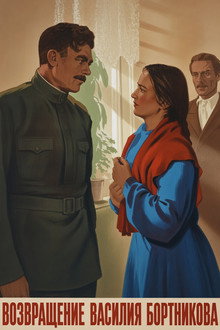
The Return of Vasili Bortnikov
A veteran of World War II returns to civil life and the collective farm he once led, only to find his wife has re-married.

Kin
The story follows Maria Konovalova who travels from her rural village to visit her daughter Nina in the city. Maria's arrival exposes the stark contrasts between rural and urban lifestyles and reveals deep-seated family tensions. Interestingly, Родня (Rodnya) in Russian sounds very similar to the word Родина (Rodina), which means "Motherland." The film features three generations of women — Maria, her daughter Nina, and her granddaughter Irina — symbolizing three different Russias: one from the past, one modern, and one representing the future.