
Personal Info
Known For
Gender
Birthday
Place of Birth
Margarita Krinitsyna
Biography
Known for
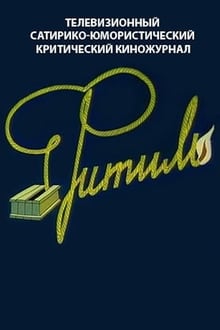
Fuse
Fitil is a popular Soviet/Russian television satirical/comedy short film series which ran for about 500 episodes. Some of the episodes were aimed at children, and were called Фитилёк, Fitilyok, Little Fuse. Each issue contained from the few short segments: documentary, fictional and animated ones. Directed by various artists, including Leonid Gaidai who presented his famous trio of Nikulin, Vitsin and Morgunov into the cast. It was called in USSR as "the anecdotes from the Soviet government".
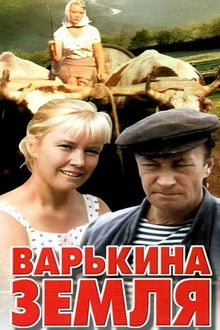
Varka's Land
Varya Kravets remains on her native collective farm after graduating from school. Her first love also came to her. The death of her beloved is all the more unexpected for her. Fellow villagers are helping to overcome the crisis.
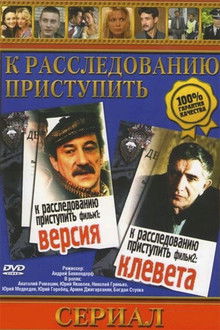
Proceed to the Investigation. Film 2: Slander
For several years, the head of a major construction trust Melnikov was accused of embezzlement, bribe-taking and immoral behavior in anonymous letters. As a result of inspections by numerous commissions, all these “signals” were not confirmed. Melnikov, unable to withstand the attacks and slander, died of a heart attack. Investigator Dzhangirov manages to expose the slanderer ...
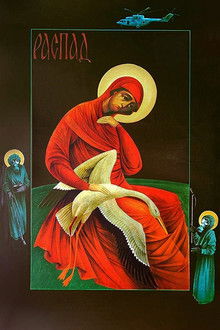
Collapse
1986, Chornobyl disaster. Couples, friends, and a risk-taking journalist are woven into the larger framework of the disaster. Panic follows.
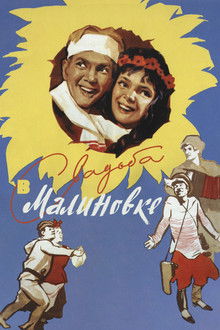
Wedding in Malinovka
The movie takes place during Russia's civil war between the Reds (Bolsheviks) and the Whites (Mensheviks). Andrejka and Yarinka are a young betrothed couple in the village of Malinovka, caught between the battle lines. Gritsian is the leader of a Menshevik band who are planning to attack the village. Yarinka appeals to the local Bolshevik commander for his faction's help. The Bolsheviks quickly come up with a plan to save the village... but the plan requires Yarinka to enter into a pretend marriage with Gritsian.
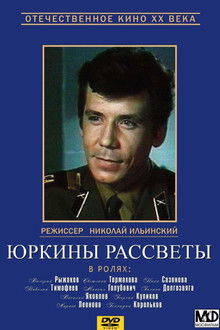
Yurka's Sunrises
A story about the working life of rural youth in the 1970s. About the conflict between young specialist Yuri Khmel and the chairman of the collective farm, and his young wife Zhenya with her mother-in-law.

The Vigil of the Outcast
About an ordinary collective farm worker, the Moldovan George Kruchanu. He is no longer alive, but he is remembered in the village. From the sharp, vivid character sketches of his fellow villagers, a picture of a rural truth-seeker emerges — a unique and complex man with a sharp, untamed character and a big heart.
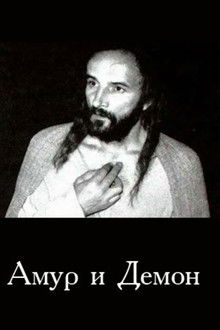
Cupid and Demon
The story is based on the true story of a Lviv antique collector who collaborated with the KGB in the postwar years in Western Ukraine. The property seized from the masters was deposited in his collection and, at his will, after the owner's death, was transferred to the Hermitage.
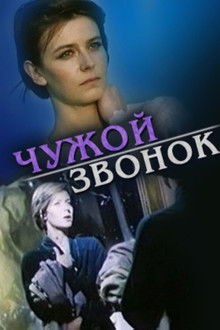
A Stranger's Call
Natalia Kuznetsova, a young, outwardly prosperous and successful woman artist, lives in the centre of Moscow. A plumber comes to fix a clogged sink in her bathroom, who turns out to be a man from her distant past... The meeting evokes memories of her first love: in her youth she was friends with Igor Turbin, who was from a large family, and although he had abilities and talent, he did not go to university, but went to work for the sake of his two younger brothers. She married Makarkin, a carefree and successful classmate. She, the daughter of the creative intelligentsia, was self-assured a place in the art academy and a secure career and future, and the husband should have been appropriate. But happiness did not turn out. Years later she realised that she had betrayed her love and married a complete stranger....
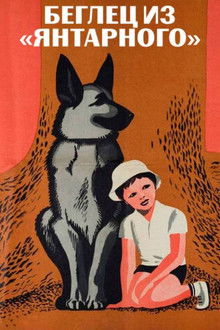
The Fugitive from "Yantarny"
Based on the story "The Chicken God" by Y. Zbanatsky. Six-year-old Sergei from the Yantarny kindergarten finds a magical stone – "the chicken god." When he looks through a hole in the stone, the world becomes magical and beautiful. With this treasure, Seryozha sets off on a journey, meeting all kinds of people, until his teachers find him.
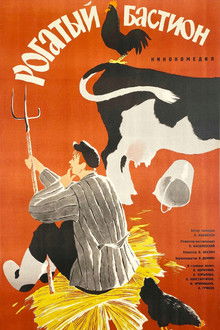
Horned Bastion
Collective farmer Lyavon Chyh prefers private farming to public farming. For his beloved cow Krasuli, he tries to steal hay from a collective farm stack, refuses to consent to the wedding of his daughter Sonya with a zootechnician Misha, because the young people are going to live in a new comfortable house without a private plot. After all, he hoped that in the person of his son-in-law he would acquire a new employee in his vast household. Worried about rumors that household plots will be cut off, he complains to the regional committee.
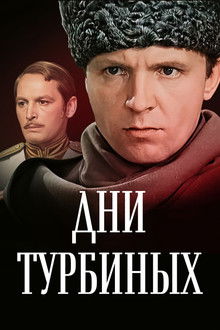
The Days of the Turbins
Winter of 1918-1919. The power in the city passes from the hetman to the Directorate of Ukraine, then from Petliura to the Bolsheviks. Turbins and their acquaintances have to make their choice. Colonel Alexei Turbin and his brother Nicholas remain loyal to the White Movement and bravely defend it, without worrying about their lives. Elena's (née Turbin) husband, Vladimir Talberg flees shamefully from the city with the retreating German troops. In this troubled time, the family and close friends gather and celebrate the New Year. A strange and slightly ridiculous person comes to visit them, a distant relative of the Turbins: Larion Surzhansky
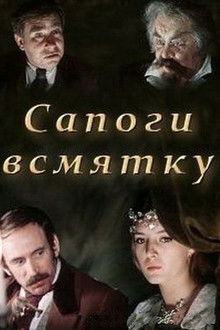
Soft-Boiled Boots
The film is based on the stories Anton Chekhov. It is a tribute to the actor Boris Andreyev. He plays a major role that keeps up for the duration of the film. Lively and intelligent Valery Spout largely mitigates underline the drama of the protagonist, while Michael Sveta's role, though small, is bright and memorable.
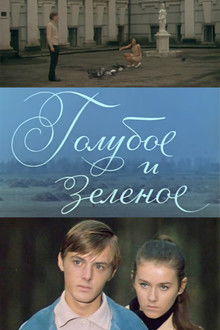
Blue and Green
Screen adaptation of the story of the same name by Yuri Kazakov: about love, about youth and sad farewell to it.
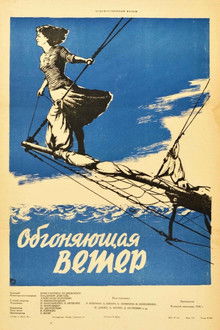
Overtaking the Wind
About the harsh and courageous work of fishermen, about love for the sea.