
Personal Info
Known For
Gender
Birthday
Place of Birth
Tamara Nosova
Known for
Fuse
Fitil is a popular Soviet/Russian television satirical/comedy short film series which ran for about 500 episodes. Some of the episodes were aimed at children, and were called Фитилёк, Fitilyok, Little Fuse. Each issue contained from the few short segments: documentary, fictional and animated ones. Directed by various artists, including Leonid Gaidai who presented his famous trio of Nikulin, Vitsin and Morgunov into the cast. It was called in USSR as "the anecdotes from the Soviet government".
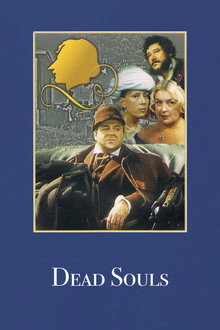
Dead Souls
Pavel Ivanovich Chichikov plans to buy the titles to “dead souls” and use them as collateral to obtain a large loan. He comes to a small provincial town and begins to proposition the local landowners. These landowners are revealed to be so petty and avaricious that not even Chichikov’s amazing offer can be worked to his advantage on them. Some stall, some refuse for no obvious reasons, some promise and then renege, and others want “in on the deal.” In the end, Chichikov, having concluded that the landowners are a hopeless lot, leaves for other regions.
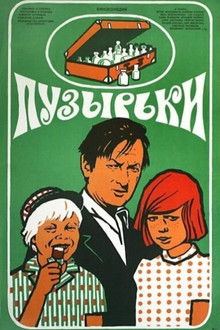
Vials
Students collect scrap metal, waste paper, vials. It is competition between the two classes. Hooked guys sometimes forget that the competition is not a goal but a means. They remove caps from someone else's car, watered grandmother's medications to collect more vials, interfere with the Garik Evrumyan's friendship with a girl.
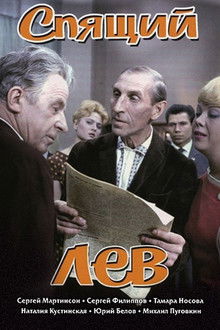
The Sleeping Lion
After a shy bank employee helps to catch two robbers he becomes a totally different person.
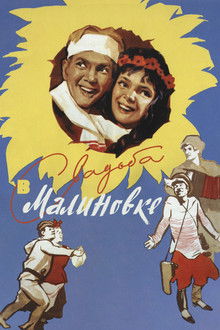
Wedding in Malinovka
The movie takes place during Russia's civil war between the Reds (Bolsheviks) and the Whites (Mensheviks). Andrejka and Yarinka are a young betrothed couple in the village of Malinovka, caught between the battle lines. Gritsian is the leader of a Menshevik band who are planning to attack the village. Yarinka appeals to the local Bolshevik commander for his faction's help. The Bolsheviks quickly come up with a plan to save the village... but the plan requires Yarinka to enter into a pretend marriage with Gritsian.
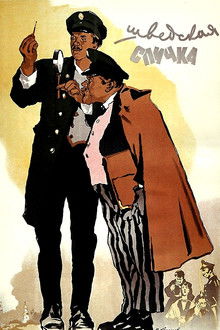
The Safety Match
A man of big status disappears in a small provincial town. An old bored investigator and his young hyperactive assistant are on a trail of a bloody murderer.
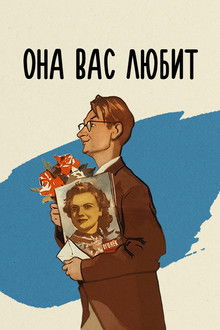
She Loves You
A shy Zoo worker falls in love with a girl from a magazine cover and decides to send her a letter.
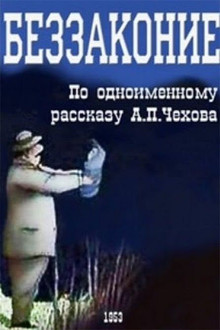
Iniquity
College assessor Miguev, returning home, finds a foundling at the porch. Having mistaken him for his son from the former maid Agnia, the frightened Miguev, in turn, is trying to toss the baby, but to no avail. Tired dad decides to confess to his wife Anna Filippovna, and, meanwhile, the true parents begin to search for their child left “for a second” at the threshold of a respectable house ...
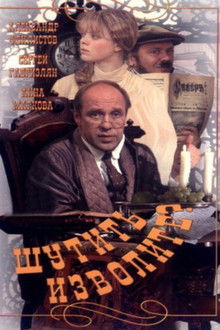
You Must Be Joking!
Based on the stories by Arkady Averchenko. Short stories: "Morning," "Ninochka," "Service," "The Exhibition," "The Ichneumon," "Bless You!", "Iron Memory," "The Lady in Black," "A Man’s Fate," "Before Sleep."
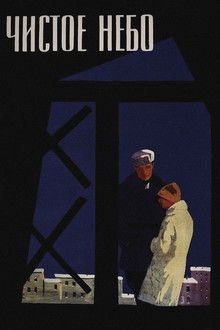
Clear Skies
For many years, Sasha Lvova has been waiting for the return of her lover, pilot Aleksei Astakhov, refusing to believe in his death at the front. And he really returns to her and his son after captivity, but this is a completely different person, rejected by society, expelled from the profession. It is difficult to say how Aleksei’s fate would have been if it hadn’t for Sasha’s love, her ability to survive in the most difficult circumstances.
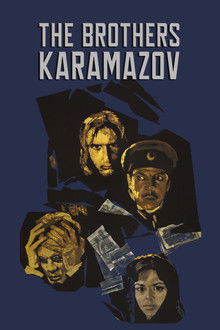
The Brothers Karamazov
The tragic story of the Karamazov family takes place in a Russian province in the late 19th century. The relations of their father and three brothers are very complicated and contradictory. One of the brothers is accused of killing his father, whom he did not commit. The brothers are unable to help him, and only a loving girl follows him to hard labour.
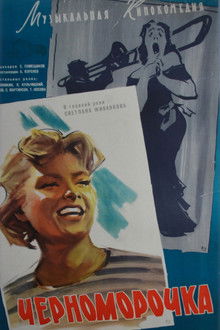
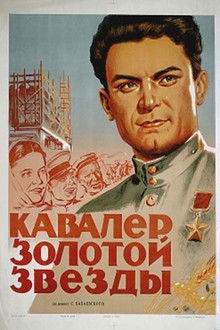
Dream of a Cossack
Soviet filmmaker Yuri Raisman once more combines political dogma with solid entertainment values in Dream of a Cossack (aka Cavalier of the Golden Star). The title character, played by future director Sergei Bondarchuk (and billed for obscure reasons as Semyon Bondarchuk), is an ex-soldier who returns home to the Kuban region, there to take up life as a farmer. Instead, he galvanizes the local citizenry into participating in a massive construction project, which will result in a new power station and canal. Thus does Raisman offer an prime example of Russian collectivism while making it seem as though it had sprung from individual initiative. Dream of a Cossack is based on a popular novel by S. Babayefsky.
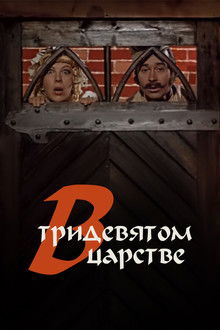
In the Kingdom of Far Far Away
A story about a young girl Oksana from Soviet Union who is mistakenly identified as a queen of a far away kingdom.
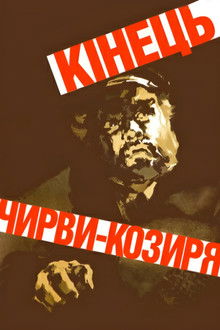
The End of Chirva-Kozyr
In order not to hand over grain to the state at fixed prices, a rich peasant (kulak) buries 600 pounds of grain in the ground. Meanwhile, a communist worker arrives in the village of Gorbani to organize grain procurements. In the fight against kulaks, he manages to win over the poor villagers to his side.