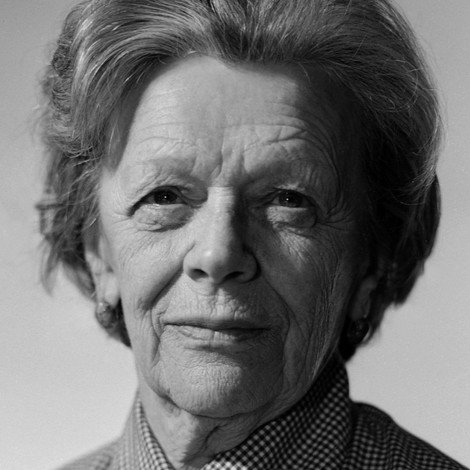
Personal Info
Known For
Gender
Birthday
Place of Birth
Tatyana Pelttser
Known for

Fuse
Fitil is a popular Soviet/Russian television satirical/comedy short film series which ran for about 500 episodes. Some of the episodes were aimed at children, and were called Фитилёк, Fitilyok, Little Fuse. Each issue contained from the few short segments: documentary, fictional and animated ones. Directed by various artists, including Leonid Gaidai who presented his famous trio of Nikulin, Vitsin and Morgunov into the cast. It was called in USSR as "the anecdotes from the Soviet government".

Yeralash
The children's humorous film magazine "Yeralash" is a one-of-a-kind work of cinematography that ironically approaches the solution of everyday problems, focusing on the views and needs of modern society, allowing different generations to achieve mutual understanding.

Null kolm
Olga is a doctor of an ambulance crew - she is a sincere, straightforward and warm-hearted woman who has firm views on human relationships, medical duties, friendship and love. When Olga falls in love with doctor Aleksandr Tennov, she expects him to share the same views with her.

The Twelve Chairs
Set in late-1920s Soviet Union, Ostap Bender and Ippolit "Kisa" Vorobyaninov are after a stash of diamonds hidden in one of the chairs in 12-chair set. They are forced to go on a cross-country chase when the chairs are auctioned off.

Legends of Cinema

Young People
She is smart, surrounded by parental attention and therefore not completely independent, and he is one of those who cannot imagine himself without creation, since he is a builder. They are very different people, but the young are united by a keen sense of responsibility for everything that happens around. And so, having parted, they will definitely meet again...

Night Accident
A resident of Magadan, Ukladova, was robbed in a Moscow alley. She claims that she was hit on the head with a hammer and robbed of a large amount of money by a taxi driver. The investigator finds a taxi driver who has already been imprisoned for hooliganism. All the facts are against the suspect, but he does not confess. People who knew him convince him that the guy is not capable of such a crime. Ukladova, however, recognizes the taxi driver in a confrontation.

Hello River!
Little boy Stepan loved listening to fairy tales his mother made up before bedtime. One day, she told him about the river near where they lived. It was a large and mighty river, but it needed human protection and care. In the morning, his mother couldn't find Stepan — he had gone to look for the source of the river. Thus began Stepa's adventures.
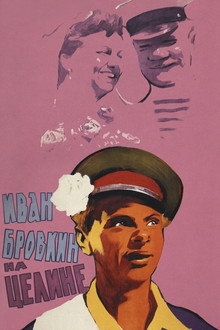
Ivan Brovkin on the State Farm
Ivan Brovkin finishes serving in the army with the rank of sergeant and, together with a group of comrades after demobilization, decides to go to the development of state farm. He arrives at his native collective farm and meets there a cool welcome: the chairman of the collective farm, the bride Lyubasha and mother — consider him a traitor. The planned wedding is canceled, and Brovkin leaves for the state farm. Brovkin comes to the state farm at the time of plowing the land. He joins the team. Winter passes after working days. In letters home he writes that everything is fine with him. News about how Ivan lives is spreading throughout the village. Lyubasha is seriously thinking about running away from home to the state farm...

The End of Old Beryozovka
Once at Borka, a big prankster and fidget, an adult friend appeared — the builder Ivan Degtyarev. Former sailor directed Borkin's energy in the right direction and made him his assistant. Soon a disaster happened in the Borkin family. His sister Liza will soon become a mother, and the father of the unborn child did not want to marry her and avoided meeting. Ivan tried to unite the young, but his attempts were unsuccessful. Having fallen in love with Lisa, he proposed to her — and soon the young happy family moved to a new home.

Formula of Love
A young aristocrat, Aleksei Fedyashev, is languishing in his family's country estate, spending his days reading poetry and confessing his love... to a statue. Upon hearing that famous Count Cagliostro is touring Russia and has created quite a buzz in high society with his "magic", he decides to ask the Count to bring the statue to life...
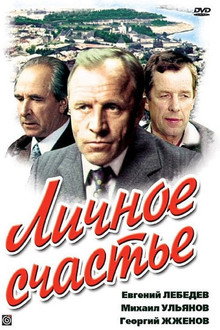
Personal Happiness
The distinctive traits of the Doroshin family are hard work, courage, and principledness. Pavel Nikolaevich is a war veteran and the chief engineer of a factory, while Anastasia Mikhailovna is the head of a university department and an active participant in the partisan movement. Their eldest son, Ilya, a sanitary doctor, demands the closure of one of the city's enterprises. However, war criminals, who are hiding from retribution, know that the Gestapo archives are hidden in the building's basement and fear that the documents might be discovered. Terrified of exposure, they try to prevent Ilya from carrying out this action and attempt to discredit the Doroshins.

Soldier Ivan Brovkin
This exhilarating two-part film (“Soldier Ivan Brovkin” and “Ivan Brovkin on the State Farm”) presented to the country a new national hero – kind, modest, charming and… ne’er-do-well. That “ne’er-do-well-ness” proved “Kharitonov’s special key to audiences’ hearts”. Following Brovkin’s appearance on the screen, Kharitonov had become a star of the national cinema, an idol for millions of people. His incredible popularity may be compared to that of another national hero – the world’s first cosmonaut Yuri Gagarin. And not surprisingly, it was Kharitonov who made a cameo appearance going up the festival stairs and followed with the adoring eyes of the heroines in V. Menshov’s Oscar-winning melodrama “Moscow Does Not Believe in Tears”.

Three Men in a Boat
Three London gentlemen take vacation rowing down the Thames, encountering various mishaps and misadventures along the way.
