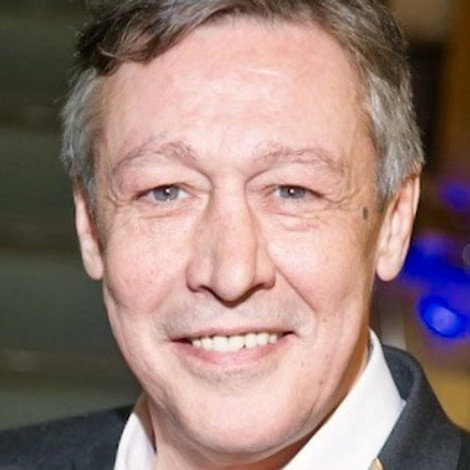
Personal Info
Known For
Gender
Birthday
Place of Birth
Mikhail Efremov
Known for

Wedding Ring

KVN Major League
KVN is a Russian humour TV show and competition where teams compete by giving funny answers to questions and showing prepared sketches. The programme was first aired by the First Soviet Channel on November 8, 1961. Eleven years later, in 1972, when few programmes were being broadcast live, Soviet censors found the students' impromptu jokes offensive and anti-Soviet and banned KVN. The show was revived fourteen years later during the Perestroika era in 1986, with Alexander Maslyakov as its host. It is one of the longest-running TV programmes on Russian Television. It also has its own holiday on November 8, the birthday of the game, which KVN players celebrate every year since it was announced and widely celebrated for the first time in 2001.

Big Difference
The "Big Difference" is created not only for the audience, but also for those who became the hero of the parody - TV presenters and actors. A guest who comes to the studio seems to see himself through a magnifying glass, because all the details are taken into account in the parody: the character's manner of dressing, speaking, diction features, plastic, makeup, hairstyle. The uniqueness of the project is that in addition to entertainment, the program also has a developmental function. After all, our guest, who is being parodied, has a chance to look at himself from the outside, to see his shortcomings and advantages. Some people like themselves, and some don't. But the main thing is that no one remains indifferent.


Kamenskaya
Crime has spiraled out of control for law enforcement in Moscow, and Police Major Anastasiya Kamenskaya conducts investigations into criminal activities. Frequently, the crimes she investigates involve or are even linked to influential individuals: politicians, businessmen, heads of major criminal organizations. Adapted from novels of Alexandra Marinina.

Region
Policeman Pavel Kravtsov is a rather strange man. If he has to handcuff someone, he apologizes and asks if he is pressing. He is ambitious but honest; he is young but thoughtful. With such inclinations, you can't really make a career in the city police. So a city man, senior Lieutenant Kravtsov, gets through to the remote village of Anisovka by an ordinary district police officer.

Investigator Tikhonov

Evening Urgant
Evening show Ivan Urgant. Movies, sports, new gadgets, art. What is happening in the country and in the world? Actual characters discussing the day's events and new music.

The Thaw
The series is set in 1961. Cameraman Viktor Khrustalyov is in a difficult situation; he is suspected of being involved in the death of his friend, talented screenwriter Kostya Parshin, who committed suicide during a drinking-bout. The authorities try to put Khrustalyov in prison by any means. Viktor needs to shoot the comedy "The Girl and the Brigadier" in order to get permission to make the film "Shards" after the wonderful scenario left from his deceased screenwriter friend. Young director Yegor Myachin wants to adаpt this screenplay. Khrustalyov arranges him as a trainee to the venerable director Krivitsky for a comedy. In the same film act Khrustalev's ex-wife Inga and his young sweetheart Maryana, with whom Yegor Myachin is also in love.

The Golden Calf
The history of Bender's hunt for the underground millionaire Koreiko develops in the 1920s. Bright characters, adventurous adventures and a light veil of a bygone era in a new version of the classic work of Soviet literature.

Офицеры

The Saboteur
1942. Young men, graduates of a reconnaissance school, develop and carry out extremely complex operations behind enemy lines.
