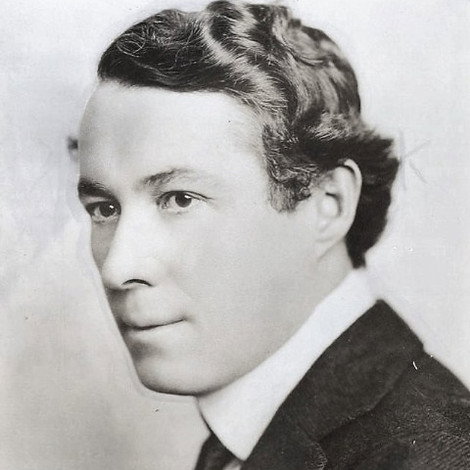
Personal Info
Known For
Gender
Birthday
Place of Birth
Henry B. Walthall
Biography
Known for

Wings
Two young men, one rich, one middle class, both in love with the same woman, become US Air Corps fighter pilots and, eventually, heroic flying aces during World War I. Devoted best friends, their mutual love of the girl eventually threatens their bond. Meanwhile, a hometown girl who's the lovestruck lifelong next door neighbor of one of them pines away.

Dollar Down
Just before he propelled the crime melodrama to new, macabre heights in The Unholy Three, Browning directed this partially lost morality tale pertaining to a different kind of horror: that of a middle-class family living beyond their means and falling prey to moneylenders. Produced by and starring Ruth Roland for FBO Studios, a small operation that later became RKO Pictures, Dollar Down follows Roland as the spendthrift daughter of a manufacturing firm’s general manager (Henry Walthall), who pawns a ring purchased on credit to throw an extravagant party and sends the family’s livelihood into a tailspin. Because its last reel completely disintegrated before it could be copied, the film remains an ultra-rare curio that nonetheless captures an important chapter in Browning’s career before his successful string of films made for MGM.

The Raven
After a brief view of Edgar Allan Poe's family background, his grandfather, David Poe, Sr., an Irish immigrant to America, and his father, David Poe, Jr., the poet's life is depicted from the death of his mother and his subsequent adoption by John Allan, to his own tortured death in 1849. Expelled from the University of Virginia for incurring too many debts, Poe nonetheless courts and marries Virginia Clemm but is disowned by his foster father. While residing in Fordham, New York, Poe tries to earn a living as a writer but meets with little financial success. Overwhelmed by their impoverished state, Virginia dies and Poe sinks into a profound depression. Always a victim of alcohol and subject to hallucinations, Poe first imagines that his neighbor, Helen Whitman, is Virginia, then plunges himself into an elaborate delusion in which his wife's spirit, various other spectres and a raven finally drive him to his own death.

Single Wives
As her first wedding anniversary approaches, a young wife begins to believe that her husband doesn't love her anymore, and she turns to a former suitor for comfort. Soon she makes up her mind to leave her husband, but when he is seriously injured she must decide if she really wants to end her marriage.

1776, or The Hessian Renegades
During the American Revolution, a young soldier carrying a crucial message to General Washington is spotted and pursued by a group of enemy soldiers. He takes refuge with a civilian family, but is soon detected. The family and their neighbors must then make plans to see that the important message gets through after all.

The Birth of a Nation
Two families, abolitionist Northerners the Stonemans and Southern landowners the Camerons, intertwine. When Confederate colonel Ben Cameron is captured in battle, nurse Elsie Stoneman petitions for his pardon. In Reconstruction-era South Carolina, Cameron founds the Ku Klux Klan, battling Elsie's congressman father and his African-American protégé, Silas Lynch.

Classmates
Bert Stafford, who is in love with Sylvia Randolph, his mother's ward, despises Duncan Irving, a poor boy who is the object of Sylvia's affections.


Strongheart
STRONGHEART (1914) is a Native American Indian drama. Based on a famous play of the time, the film features an all-star cast. Originally five reels, the film was reissued at three reels in 1916.

Her Forgotten Past
A compulsive gambler, thought to have been killed in an automobile crash, reappears when his wife remarries.

Three Friends
Each night, after the day's work at the factory, the three bachelor friends met and declared anew their attachment over a social glass. They bound themselves to remain thus as long as life might last, never to marry. But one was a traitor, while the other two were called away. A widened breach, a quarrel, fanned the resentment, but true friendship at last claimed its own.

One Clear Call
An outcast who runs a road house of ill repute leads his mother to believe him dead. His only friend, a doctor, falls for a married woman.

42nd Street
Broadway director Julian Marsh needs just one more hit show so he can retire and recover his health. It looks like he just may pull it off until temperamental star Dorthy Brock breaks her ankle on the eve of the show's premiere and has to be replaced by her understudy Peggy.

The Strange Case of Mary Page
A 15-episode dramatic action movie serial only two of which survive.

Ride Him, Cowboy
John Drury saves Duke, a wild horse accused of murder, and trains him. When he discovers that the real murderer, a bad guy known as The Hawk, is the town's leading citizen, Drury arrested on a fraudulent charge.